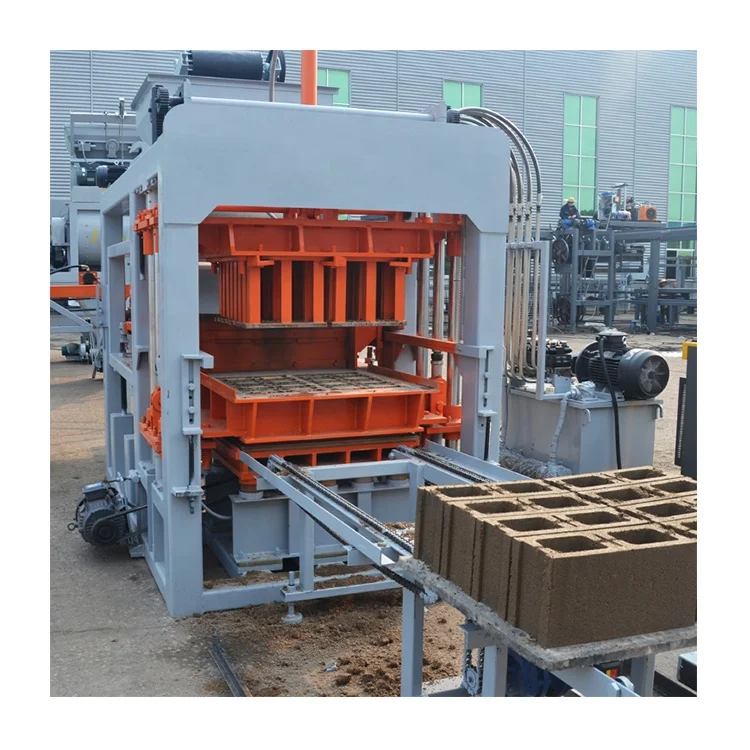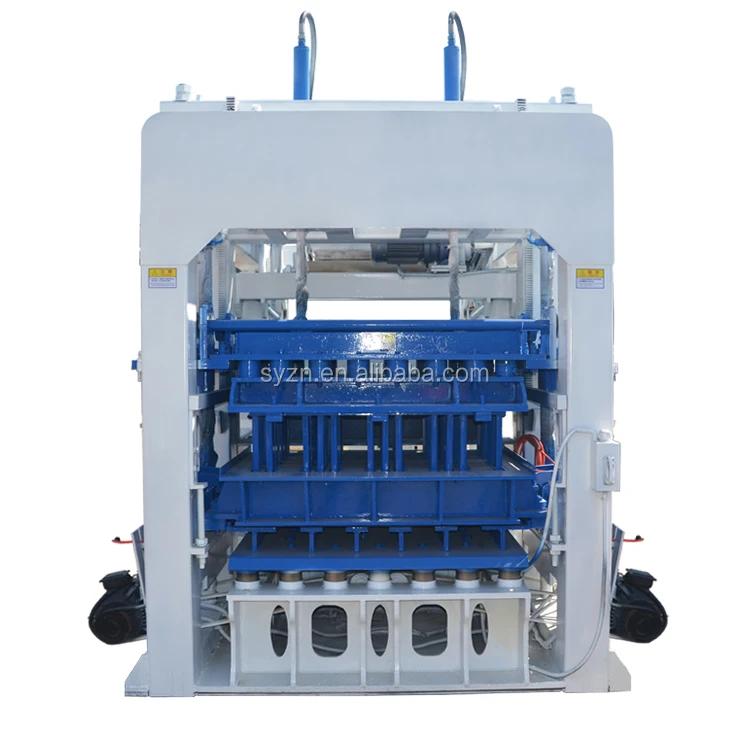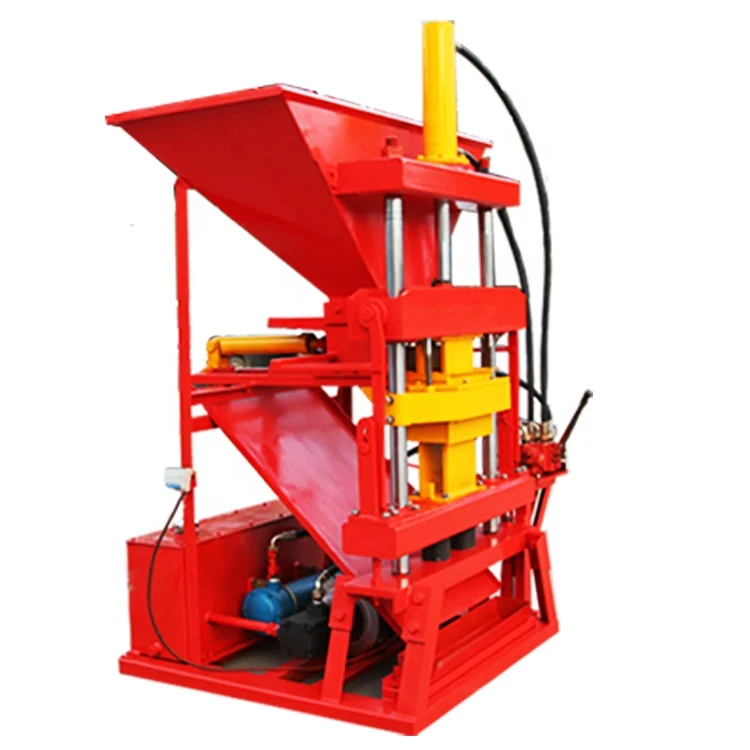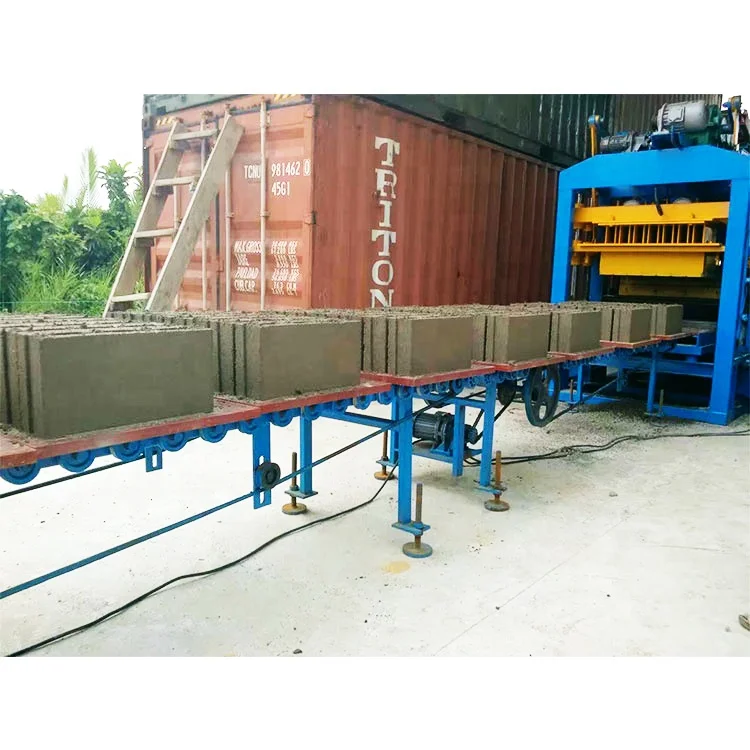
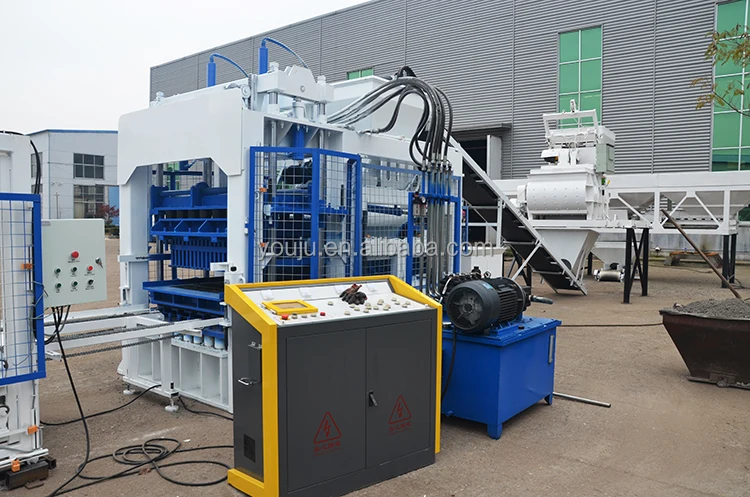
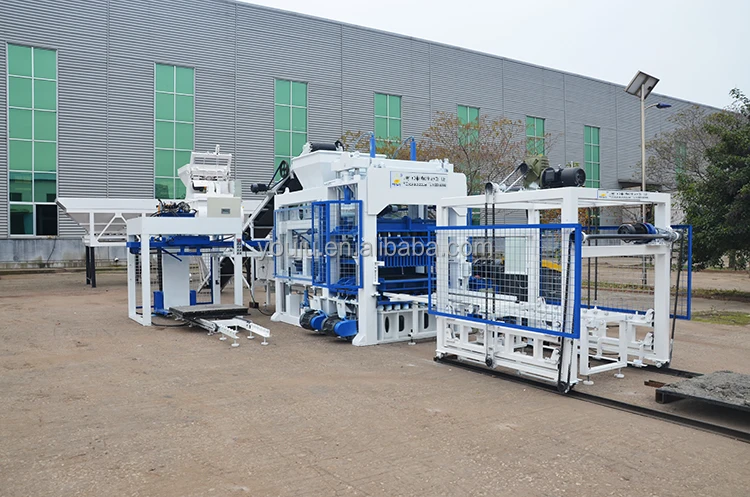
Description
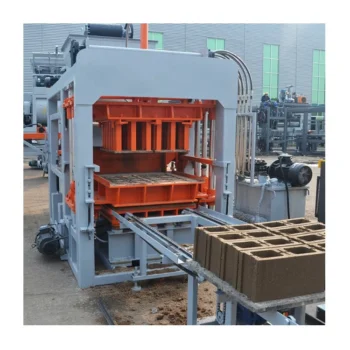
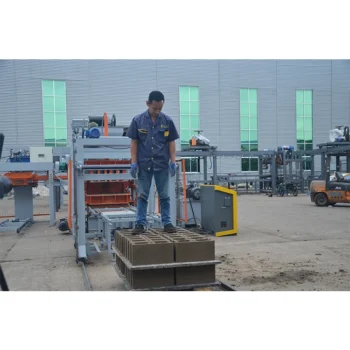
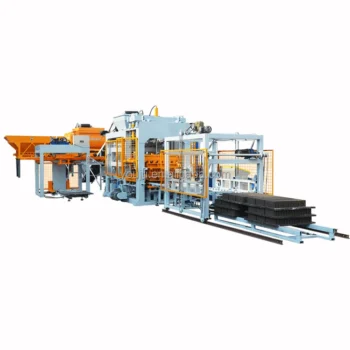
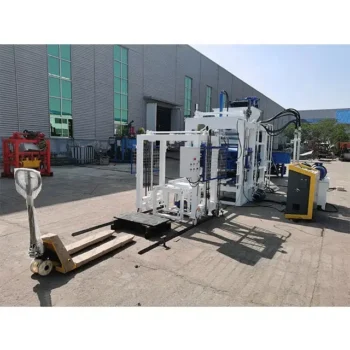
Honest capacity sizing — the QT10-15 block machine capacity is stated per block format rather than as a single headline figure, so buyers can match output to the product their market actually demands.
Technical Specifications
| Parameter | Value |
|---|---|
| Model | QT10-15 |
| Product Type | Fully Automatic Concrete Block Making Machine |
| Overall Dimensions (L×W×H) | 9350×2320×2950 mm |
| Rated Pressure | 21 MPa |
| Main Vibration Form | Platform vibration |
| Vibration Frequency | 4500–5100 r/min |
| Pallet Size | 1100×900 mm |
| Moulding Area | 1025×810 mm |
| Forming Height Range | 40–250 mm |
| Molding Cycle | 15–25 s |
| Overall Power | 44 kW |
| Mixer Model | JS750 |
| General Water Consumption | 12 T/day |
| Voltage | Customized to local request (basis not stated in source — confirm voltage/frequency) |
| Control System | PLC (Mitsubishi) |
| Hydraulic Unit | Taiwan Jiugang |
| Switches | Omron |
| Electrical Elements | Schneider |
| Host Machine & Mixer Motor | Siemens |
| Mould Treatment | High-temperature carburizing heat treatment |
| Automation Level | Fully automatic |
Application Suitability
| Application | Material or Output |
|---|---|
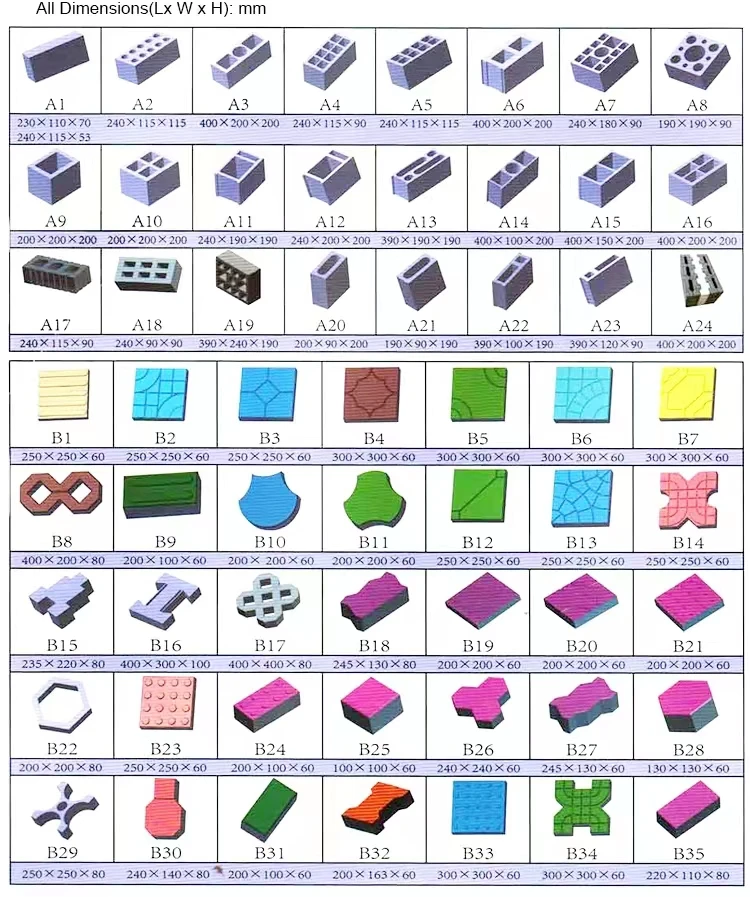
| Hollow block production for commercial and residential walls | Concrete and cement mix with local aggregate (400×200×200 mm or 400×150×200 mm formats) |
| Solid brick manufacturing for load-bearing structures | Cement, sand, and crushed stone blend (240×115×90 mm format) |
| Paving and interlocking brick production for hardscape projects | Concrete mix with fine aggregate and pigment additives |
| Curbstone and kerb production for road and infrastructure works | High-density concrete mix requiring 21 MPa hydraulic pressure |
What "1800 Pieces per Hour" Leaves Out
Capacity numbers are meaningless without the block format they assume.
When a supplier quotes a single output figure for an automatic block machine, the buyer rarely knows which block size, cycle time, or mix design was used to calculate it. I have seen plants arrive on site expecting a certain daily volume, only to discover the quoted capacity was based on a small solid brick while the market actually needed 400×200×200 mm hollow blocks — where the real output is fundamentally different. The QT10-15 automatic block machine specifications list separate outputs for each format: 10 pcs/mould at 1800–2400 pcs/h for 400×200×200 mm hollow blocks, 12 pcs/mould at 2160–2880 pcs/h for 400×150×200 mm hollow blocks, and 52 pcs/mould at 9360–12480 pcs/h for 240×115×90 mm solid bricks, all based on a 15–25 s molding cycle. [NEED_CITE: concrete block production capacity calculation standards]
Mould Format and Realistic Daily Output
Buyers in block production know that the machine press is only one station in the line. What matters is whether the QT10-15 block machine capacity by format aligns with the curing rack space, pallet circulation speed, and stacking logistics already in place. Platform vibration at 4500–5100 r/min paired with 21 MPa hydraulic pressure must be tuned to the buyer’s specific mix, especially when local aggregate has high clay content that absorbs vibration energy and reduces compaction density.
Pallet Specification Against Your Curing Infrastructure
The 1100×900 mm pallet size on this press defines how many blocks cure per rack level and which forklift can handle the loaded pallets. Choosing a pallet dimension without checking against existing curing area dimensions and material handling equipment leads to costly retrofitting after the machine arrives. The moulding area of 1025×810 mm and forming height range of 40–250 mm cover hollow blocks, solid bricks, pavers, and kerbstones, but the pallet material and thickness must be confirmed to withstand the vibration frequency and hydraulic pressure over thousands of cycles. [NEED_CITE: pallet material durability under vibration compaction]
Reading the QT10-15 Specifications Against Your Production Reality
The rated pressure of 21 MPa combined with platform vibration at 4500–5100 r/min determines the compaction density and therefore the compressive strength of the finished block. If the local aggregate contains high fines or clay, the vibration frequency may need adjustment within the available range to ensure proper particle rearrangement before the hydraulic pressure locks the shape. The JS750 mixer must produce a consistent batch within the 15–25 s molding cycle so the press never waits for material. Overall power of 44 kW requires a stable supply matching the voltage and frequency specified for the destination market — the Mitsubishi PLC, Schneider electrical elements, Siemens motors, and Omron switches all depend on correct incoming power to function within their rated tolerances. The high-temperature carburizing heat treatment on moulds extends service life under abrasive concrete mixes, but the mould drawing and format list must confirm compatibility with the buyer’s target block dimensions.
The Hidden Cost of Unmatched Configuration
A fully automatic press configured for a mix the buyer cannot source locally forces an immediate and expensive material substitution. I have watched plants run at half their expected output because the vibration force and hydraulic pressure were set for a clean river sand that was unavailable at the site, and the local crushed stone with high dust content simply would not compact to the required strength. Mould change procedures that take most of a shift cancel the format flexibility the buyer paid for, and pallets specified without regard to the existing curing racks end up requiring a complete handling system redesign. [NEED_CITE: aggregate gradation impact on block compaction strength]
Why Source the QT10-15 Through This Supply Channel
Block machinery is a single focus here, so the QT10-15 is specified as one matched system — machine, mould, pallet, and handling equipment — rather than assembled from separate suppliers. Configuration is set against the buyer’s actual mix design, local aggregate, and target block format, not a catalogue default. Mould design covers the formats the buyer’s market sells, including custom drawings when standard sizes do not match local building codes. Automation level is selectable so a plant can start semi-automatic and add automatic stacking and cubing later. Installation and commissioning support includes operator training on the Mitsubishi PLC interface and hydraulic pressure adjustment. [NEED_CITE: integrated block line configuration versus component assembly]
Documentation & Verification
- Line layout and capacity calculation stating which block format each QT10-15 output figure assumes
- Mould drawing and format list covering hollow, solid, paver, and curbstone dimensions
- Pallet specification matched to the buyer’s curing area and forklift capacity
- Voltage, frequency, and PLC display language confirmed in writing before production
- Factory test record with actual cycle times per requested block format
Installation, Commissioning & Support
- Foundation must support 9350×2320 mm footprint and dynamic vibration loads from platform vibration system
- Dedicated power circuit required for 44 kW total draw with confirmed voltage and frequency
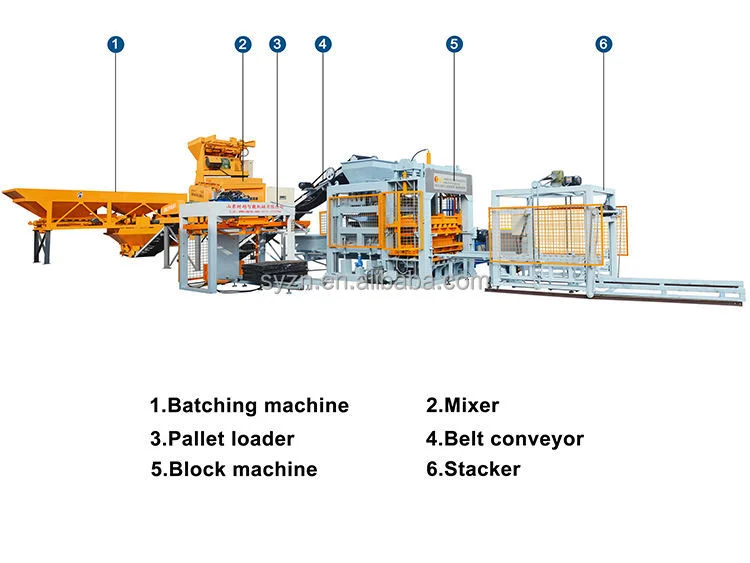
- Host machine and JS750 mixer arrive as separate units requiring on-site alignment and belt tensioning
- Mitsubishi PLC programmed with confirmed display language before dispatch to avoid commissioning delays
- Mould change training covers hydraulic clamp release and platform re-leveling for each format
- Wear parts list identifies high-temperature carburized mould components and Taiwan Jiugang hydraulic seals
Preparing Your Inquiry
Specify the block format your market sells most — hollow, solid, paver, or curbstone — along with the daily volume you need per format. Confirm your local aggregate type, cement source, and any existing curing racks or forklifts so the pallet size and handling equipment can be matched. State your site voltage and frequency, and indicate whether the Mitsubishi PLC display should be in English or another language for your operators.
Frequently Asked Questions
Q: How is the 1800–2400 pcs/h figure for the QT10-15 calculated, and which block format does it assume?
A: That range applies specifically to 400×200×200 mm hollow blocks at 10 pcs per mould within a 15–25 s molding cycle. Other formats such as 400×150×200 mm hollow blocks or 240×115×90 mm solid bricks have different mould counts and therefore different hourly outputs, all listed separately in the specifications.
Q: How do you match vibration force and hydraulic pressure to my local aggregate?
A: The 4500–5100 r/min platform vibration and 21 MPa rated pressure are adjusted based on the buyer’s mix design and aggregate sample. High-clay or high-fines aggregates absorb vibration energy differently, so the frequency and pressure settings are confirmed during the factory test using the buyer’s specified material proportions.
Q: What is the realistic mould change time between hollow block and paver formats?
A: Mould change time depends on the procedure and operator familiarity, which varies by format complexity. The QT10-15 uses hydraulic clamping for mould retention, and the change process includes platform re-leveling. Exact times are confirmed during commissioning and operator training on the buyer’s specific format sequence.
Q: Can the moulding area accommodate my custom paver or curbstone drawing?
A: The 1025×810 mm moulding area and 40–250 mm forming height cover most standard and custom formats. Mould design is available from buyer drawings, and the high-temperature carburizing heat treatment is applied to all custom moulds to match the durability of standard tooling.
Q: How is pallet size selected, and is it included in the quotation?
A: The 1100×900 mm pallet is selected against the buyer’s curing rack dimensions and forklift capacity. Pallets and handling equipment are part of the line configuration and can be included in the quotation. Confirming existing equipment before ordering prevents costly mismatches at commissioning.