

Description
Mould-to-Market Match — Every QMR4-45 capacity figure is tied to a specific hollow block format and cycle count, so your output projection holds up on the first day of production.
Technical Specifications
| Parameter | Value |
|---|---|
| Model | QMR4-45 |
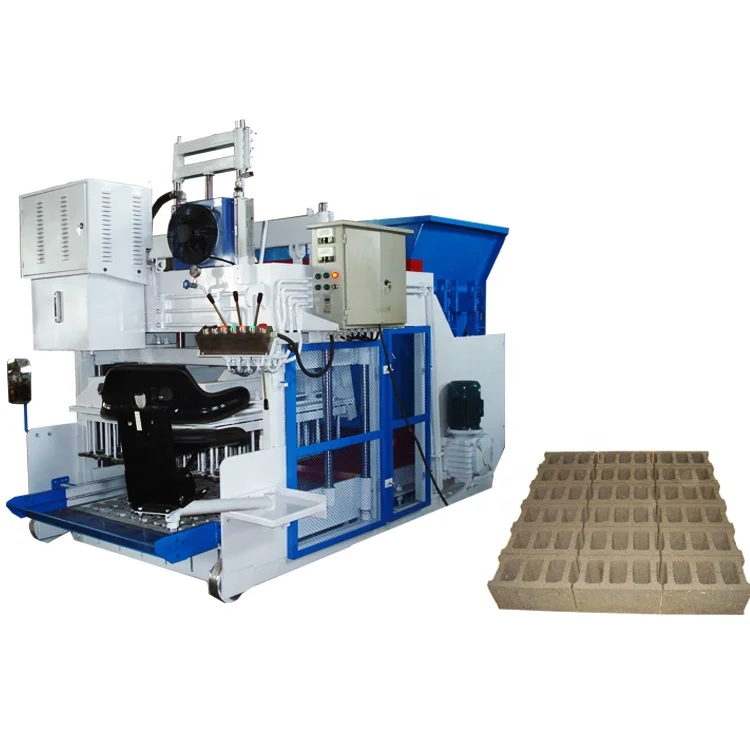
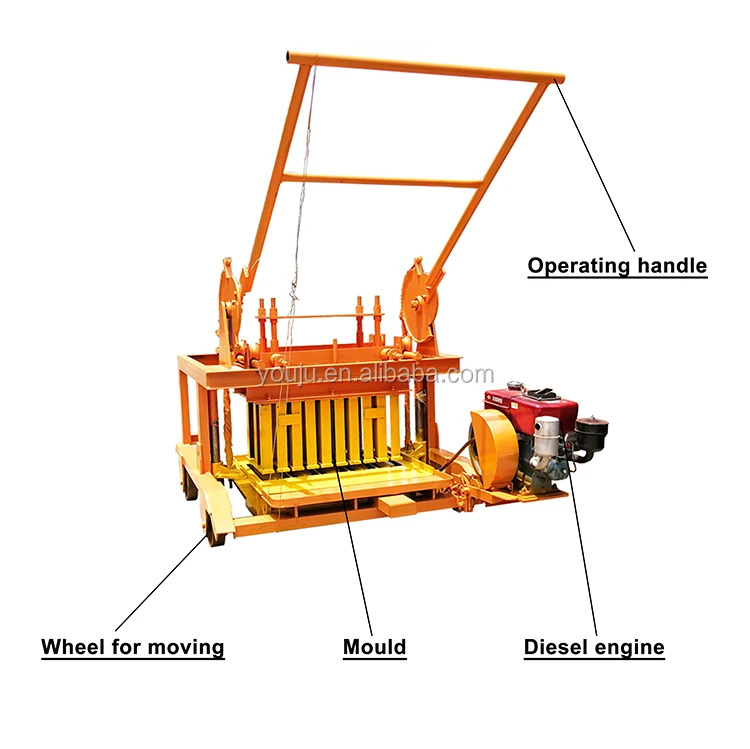
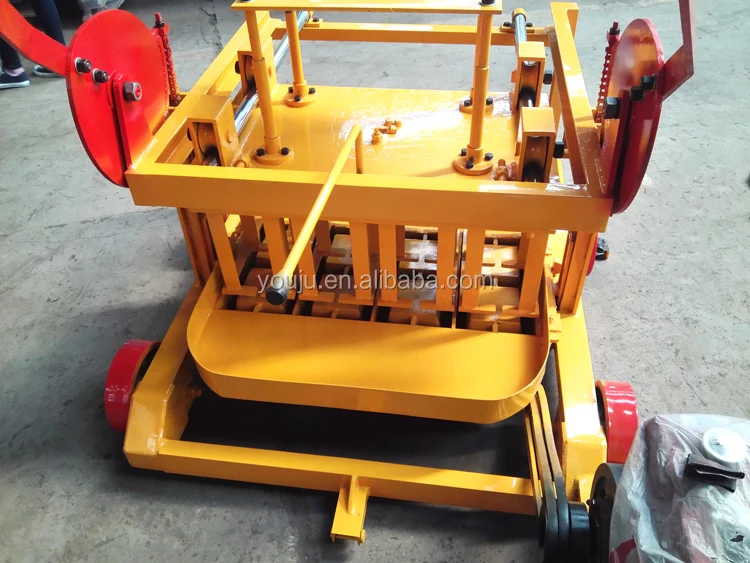
| Product Type | Mobile Diesel Engine Egg Laying Block Making Machine |
| Overall Dimensions (L×W×H) | 2420 × 1320 × 1650 mm |
| Net Weight | 810 kg |
| Moulding Cycle | 40–45 s |
| Diesel Engine | 6 kW / 6–8 HP |
| Rated Power | 6 kW |
| Voltage Options | 220 V / 380 V / configurable to local supply |
| Output — 400×200×200 mm hollow block | 3,000 pcs / 8 h shift (4 pcs per mould) |
| Output — 400×150×200 mm hollow block | 3,500 pcs / 8 h shift (5 pcs per mould) |
| Output — 400×120×200 mm hollow block | 4,500 pcs / 8 h shift (6 pcs per mould) |
| Pallet Requirement | None — egg laying on prepared ground |
| Automation Level | Semi-automatic |
| Stacking Method | Manual |
| Warranty | One year for the whole machine |
Application Suitability
| Application | Material or Output |
|---|---|
| On-site hollow block production for building contractors | Crushed stone, river sand or volcanic ash blended with cement |
| Remote project sites without reliable grid power | Diesel-powered operation independent of electrical infrastructure |
| First-stage block plant for entrepreneurs | Low-capital entry producing 400×200×200 mm, 400×150×200 mm and 400×120×200 mm hollow blocks |
| Paving brick and standard brick runs via mould change | Interlocking and solid formats where local market demand exists |
| Distributed production for building material distributors | Mobile deployment across multiple project locations |
What "3,000 Blocks a Day" Actually Means When You Change the Mould
Daily output drops the moment you switch to a wider block format, and most quotations never mention that.
Capacity numbers on mobile block machines are almost always stated for the smallest format in the catalogue. The QMR4-45 produces 4,500 hollow blocks per eight-hour shift at 400×120×200 mm, but that figure falls to 3,000 when you run 400×200×200 mm blocks because fewer cavities fit on the same mould plate. A buyer who sizes their entire material procurement and labour plan around the headline number will run short before the first week is out [NEED_CITE: common discrepancy between quoted and actual mobile block machine output]. Knowing the cycle time and mould cavity count for each format you intend to sell is the only honest way to plan production.
Matching Block Format to Local Market Demand
The mobile block machine specifications that matter most are the ones tied to the format your buyers actually order. In Southeast Asia, 400×200×200 mm hollow blocks dominate load-bearing wall construction, while 400×120×200 mm is common for partition walls. The QMR4-45 handles all three standard sizes through mould interchangeability, but the daily output varies from 3,000 to 4,500 pieces depending on cavity count. Choosing how to choose the right mould starts with confirming which format moves fastest in your local market.
Diesel Power and the Sites That Need It
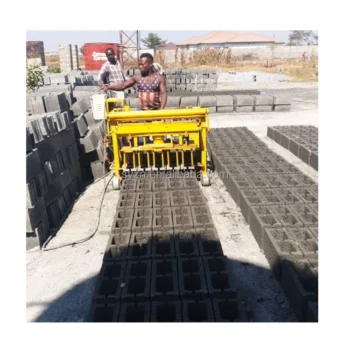
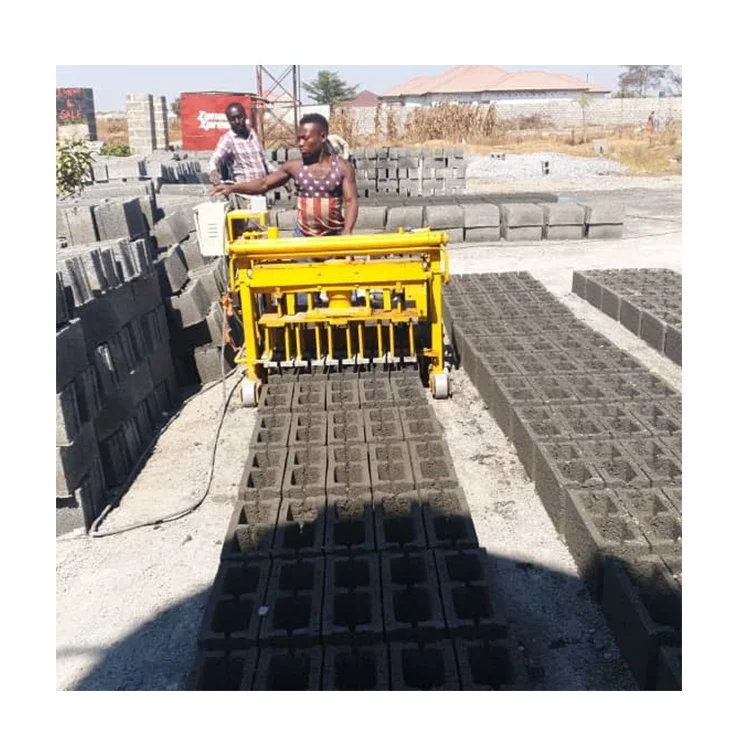
Grid electricity on remote construction sites is often unavailable or limited to single-phase supply insufficient for a block press. The diesel engine option — rated at 6 kW or 6–8 HP — removes that constraint entirely. The egg laying design means blocks are deposited directly onto prepared ground, eliminating the need for a pallet return system. This keeps the machine footprint small enough to operate inside a partially completed structure or on a compacted area beside a foundation trench [NEED_CITE: diesel-powered mobile block machine deployment on infrastructure projects].
Reading the Specs That Shape Your Output
The moulding cycle of 40–45 seconds sets the rhythm for every format the machine produces. At four cavities per mould for 400×200×200 mm blocks, the press completes roughly 75 cycles per hour, translating to around 300 blocks per hour under continuous operation. Vibration force and hydraulic pressure are not published in the available specification sheet, which means these values must be confirmed against your local aggregate type before commissioning. A mix designed for river sand will not compact the same way when volcanic ash or crusher dust replaces part of the fine aggregate, and the vibration setting that works for one blend may leave another under-densified. The 810 kg net weight gives the frame enough mass to resist walking during vibration, but ground preparation still matters — a soft or uneven surface will produce blocks with uneven base contact and compromised early strength.
The Cost of Skipping the Mix Trial
I once watched a contractor lose an entire week because the mobile block machine they received had been tested with standard river sand at the factory, while their local aggregate was volcanic ash with completely different moisture absorption. Every vibration and timing parameter had to be recalibrated on site before the blocks met compressive strength requirements. That delay pushed back a housing project handover and cost the contractor penalty fees [NEED_CITE: aggregate variation effects on block compressive strength]. Requesting a mix trial with your actual raw material before the machine ships avoids this entirely.
Why Sourcing From a Block-Machinery Specialist Matters
Block machines are the only product category this manufacturer builds, which means the QMR4-45 is specified as a matched system — mould, frame and vibration parameters are set together rather than assembled from unrelated components. Mould design covers the hollow block formats your market demands, and custom mould drawings are available if your region uses a non-standard size. The semi-automatic configuration allows buyers to start with manual stacking and upgrade later without replacing the press. Voltage and control language are confirmed before dispatch, preventing the commissioning delays that arise when a 380 V machine arrives at a 220 V site. Installation support includes on-site operator training so your crew understands mould change procedure and daily maintenance from day one.
Documentation & Verification
- Capacity calculation sheet stating output per hollow block format with cycle time assumption
- Mould drawing and format list confirming available cavity counts and block dimensions
- Voltage and frequency confirmation record signed before production begins
- Factory test record run on buyer-supplied raw material sample where provided
- Wear parts and mould availability list with lead times for first replacement order
Installation, Commissioning & Support
- Compacted and level ground area of at least 20 m² required for egg laying operation with the QMR4-45
- Diesel engine fuel supply and daily oil check procedure covered in operator training
- Voltage selection confirmed pre-dispatch so auxiliary systems match local supply on arrival
- Mould change procedure trained on site to keep format switching within a single shift
- One-year warranty covering the full machine with wear parts list provided at handover
What We Need to Size This Machine to Your Project
To prepare an accurate configuration, share the hollow block formats your market requires along with your target daily output per format. Provide a sample or lab report of your local aggregate so vibration and compaction parameters can be matched before the machine leaves the factory. Confirm your site voltage and whether grid power is available at all, since that determines whether the diesel engine or electric motor configuration suits your operation.
Frequently Asked Questions
Q: How is daily output calculated and which block format does each figure assume?
A: Each output figure is based on an eight-hour shift running a specific hollow block size. The QMR4-45 produces 3,000 pieces at 400×200×200 mm with four cavities per mould, 3,500 at 400×150×200 mm with five cavities, and 4,500 at 400×120×200 mm with six cavities, all at a 40–45 second moulding cycle.
Q: What mould formats are available and how long does a mould change take on site?
A: Standard hollow block moulds cover 400×200×200 mm, 400×150×200 mm and 400×120×200 mm. Custom formats can be manufactured to buyer drawings. The mould change procedure is covered during on-site operator training to ensure your crew can switch formats efficiently without external assistance.
Q: Can the machine run without grid electricity?
A: Yes. The QMR4-45 is available with a 6 kW or 6–8 HP diesel engine, making it suitable for sites where grid power is unavailable or unreliable. Electric motor operation at 220 V or 380 V is also available where supply permits, and voltage is confirmed before dispatch.
Q: What ground preparation is needed for egg laying operation?
A: The egg laying design deposits blocks directly onto the ground, so no pallets are required. The surface must be compacted, level and clean of debris. A prepared concrete floor or well-compacted hardcore base gives the best results for consistent block geometry and early curing strength.
Q: How is block strength verified against local aggregate and mix design?
A: Buyers are encouraged to send a raw material sample before production so that vibration and compaction settings can be adjusted to match local aggregate characteristics. A factory test record is then generated using that material, giving confidence that compressive strength targets will be met on site from the first production run.