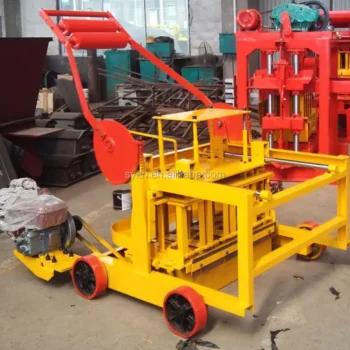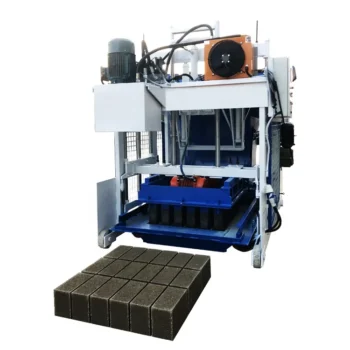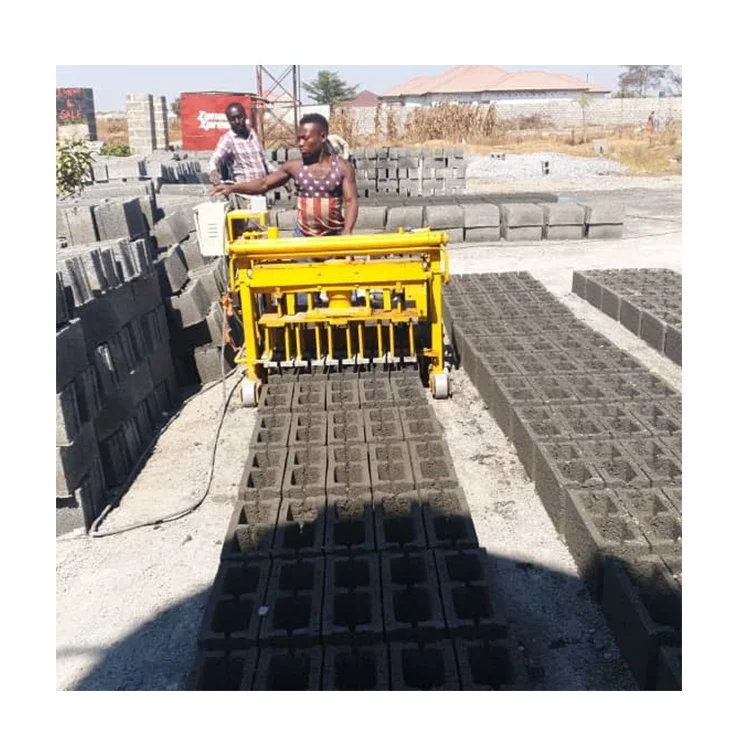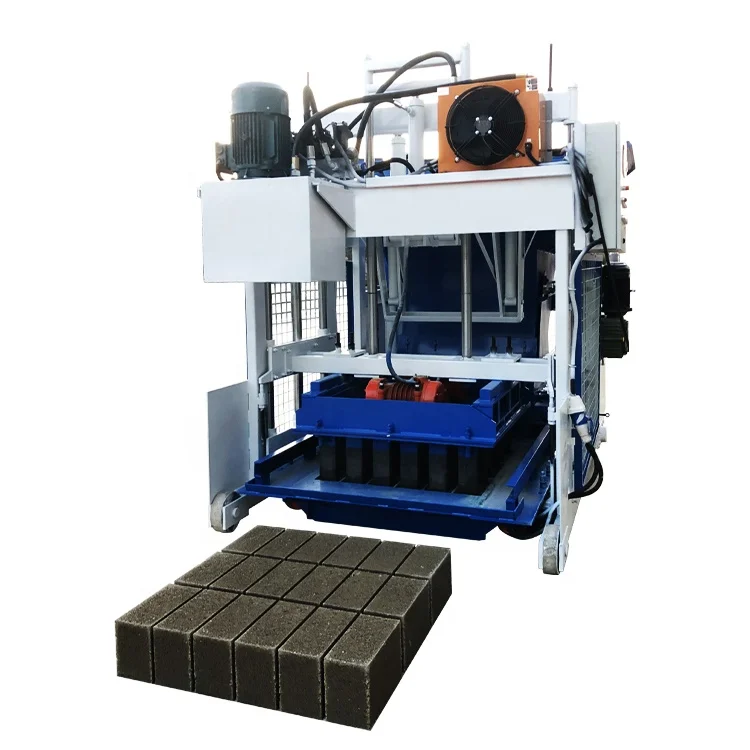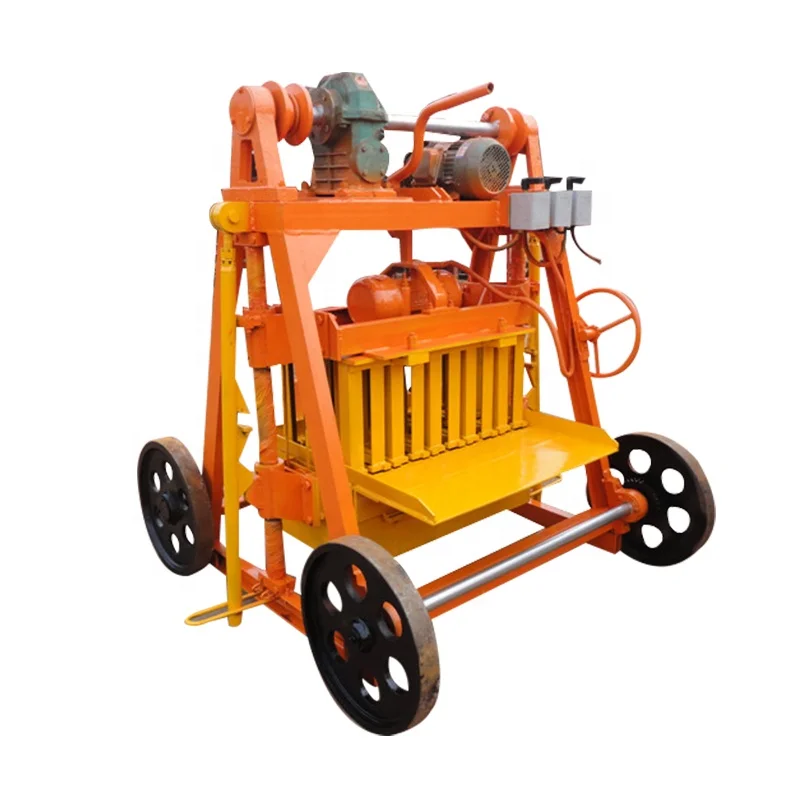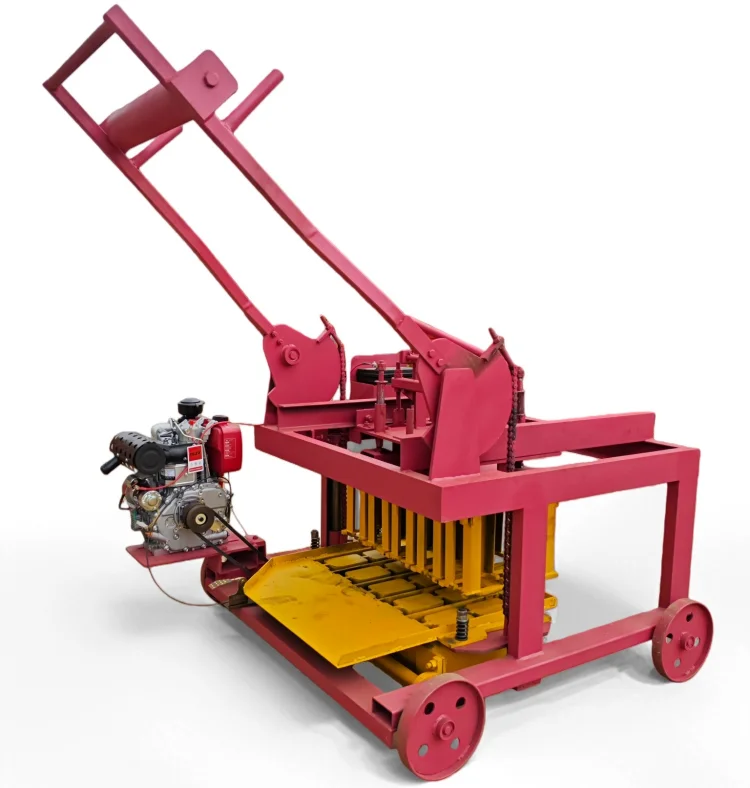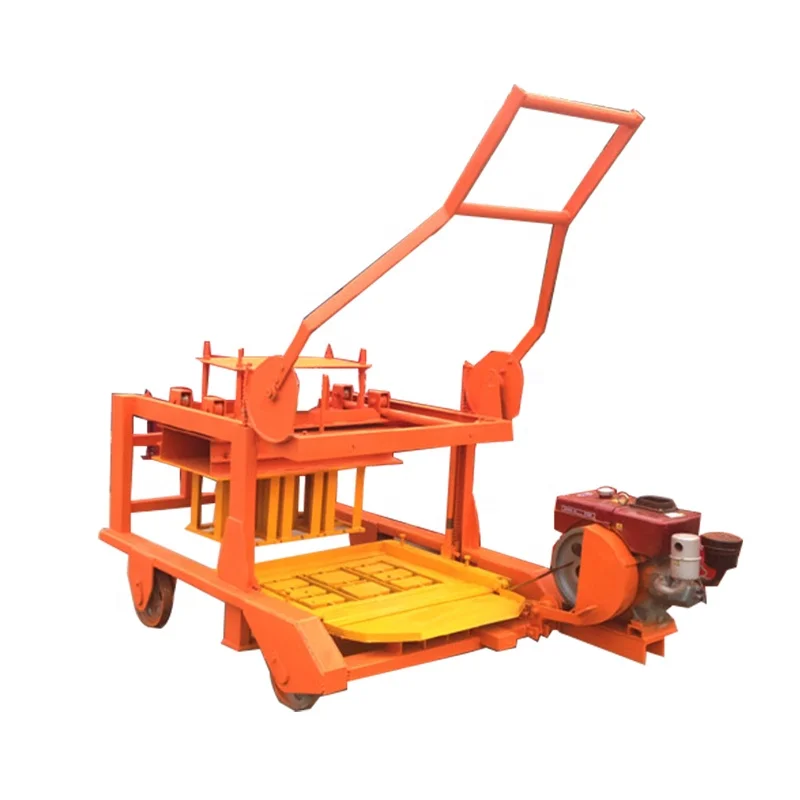
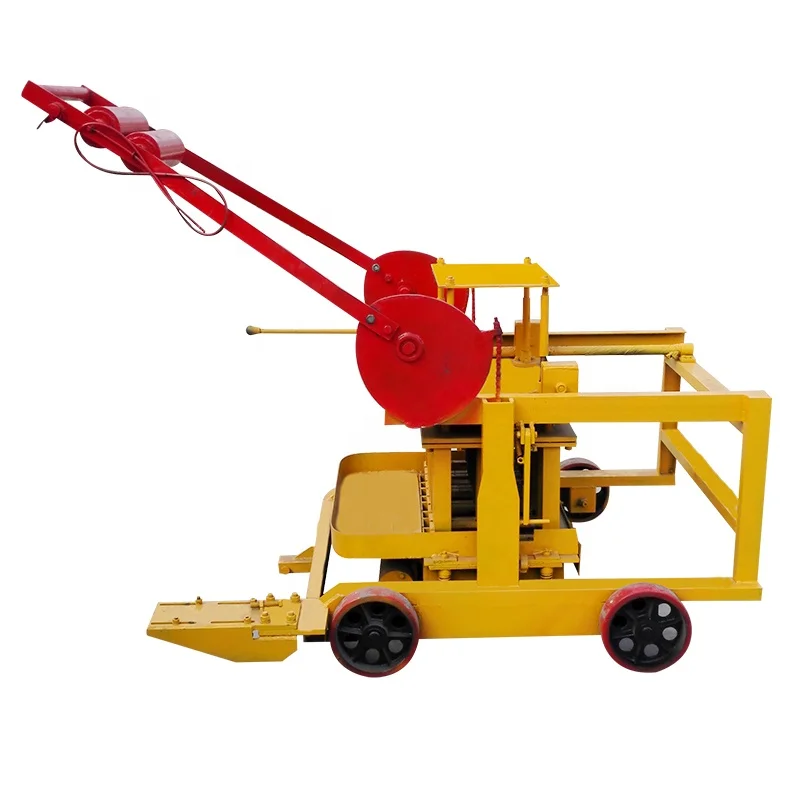
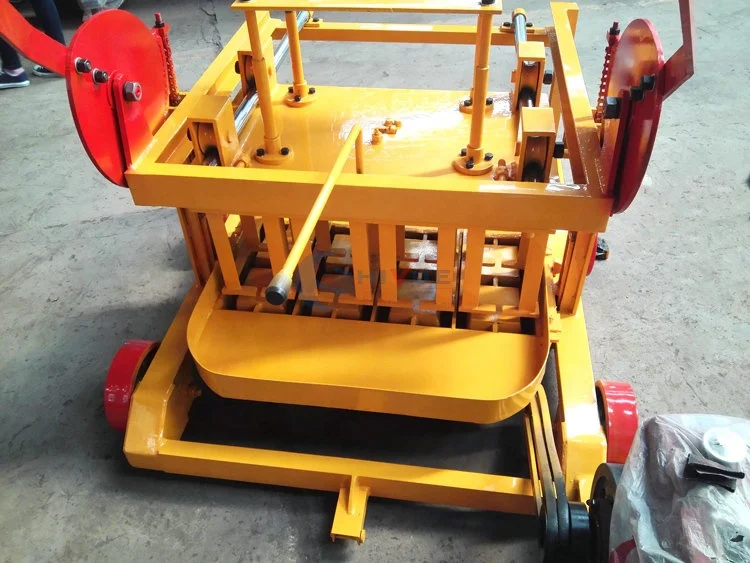
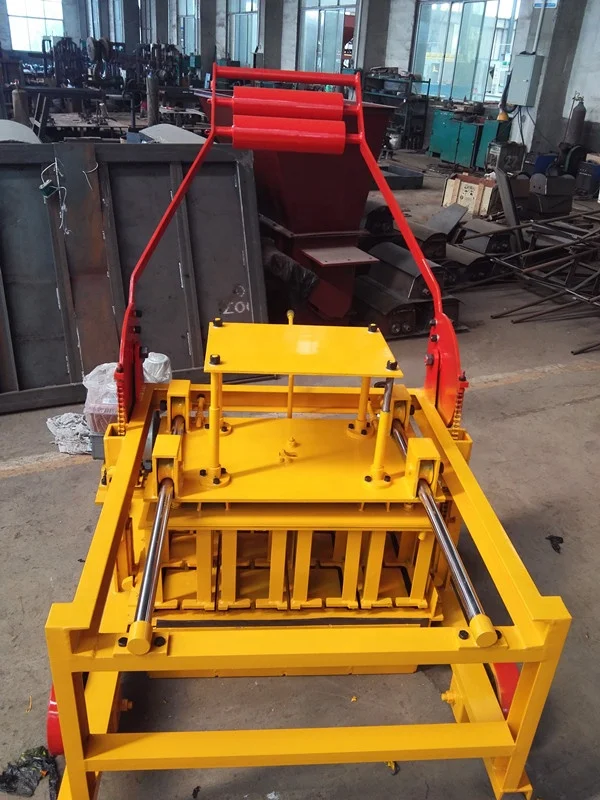
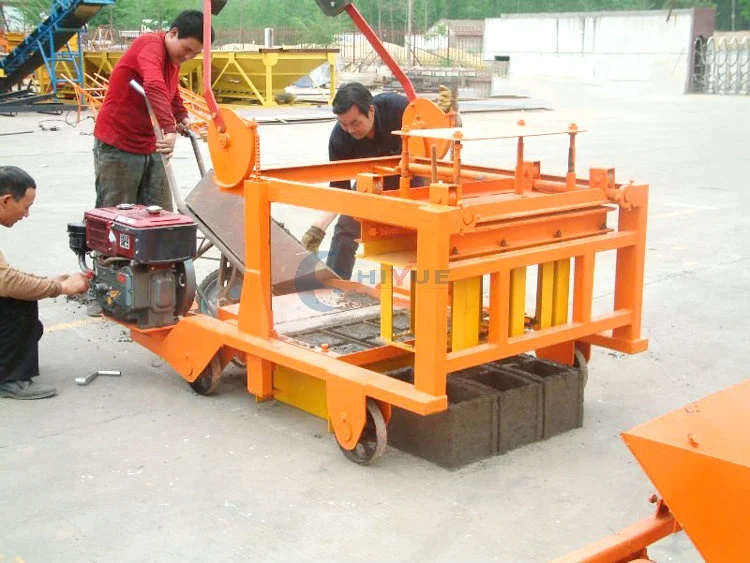
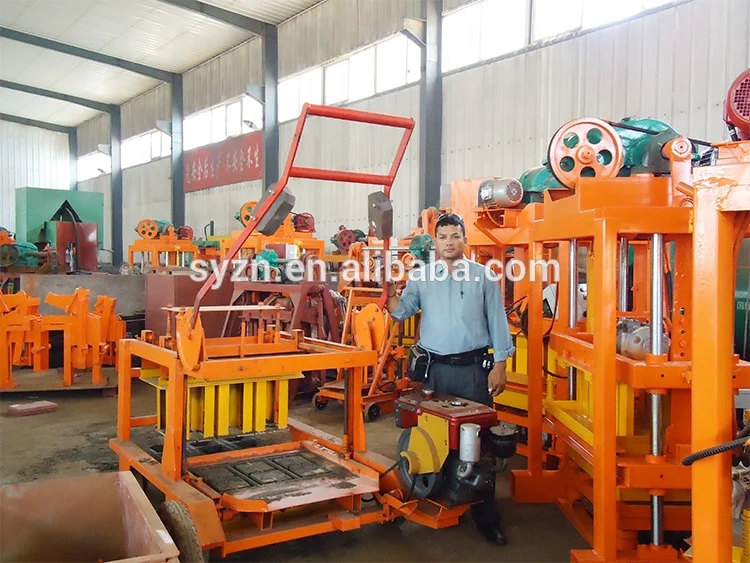
Description
Mould-Matched Mobile Production — the QMR4-45 is sized against your target block format, local aggregate gradation, and on-site curing conditions rather than offered as a fixed catalogue default.
Technical Specifications
| Parameter | Value |
|---|---|
| Model | QMR4-45 |
| Product Type | Diesel Engine Mobile Concrete Block Making Machine |
| Overall Dimensions (L×W×H) | 1300 x 1500 x 1000 mm |
| Net Weight | 950 – 1000 kg |
| Hydraulic Method | Mold Vibration |
| Exciting Power | 28.6 KN |
| Excitation Frequency | 4500 r/min |
| Power Source | Diesel engine (rated kW to be confirmed per engine specification) |
| Molding Cycle | 30 s per cycle |
| Output Capacity | 3000 pcs/day over 8 hours (basis to be confirmed — depends on block format, wall thickness, and mix design) |
| Raw Material Compatibility | Concrete, sand, cement, fly ash, lime, gypsum, stone dust, construction waste, slag, mine tailings, river sand, coal gangue, porcelain granule, sandrock |
| Mould Format Options | Customizable per buyer design — interlock, paver, hollow block referenced |
| Control System | Manual handle operation with vibratory motor and oil pump motor |
| Automation Level | Manual / semi-manual |
| Voltage & Frequency | To be confirmed per target market |
| Pallet Size | To be confirmed based on curing area and handling setup |
Application Suitability
| Application | Material or Output |
|---|---|
| On-site hollow block production for housing projects | Crushed stone, river sand, and cement blended to local aggregate gradation |
| Interlocking paver production at remote development sites | Stone dust, fly ash, and cement with colour oxide pigment |
| Small contractor block supply in off-grid locations | Mine tailings, construction waste, or coal gangue with cement binder |
| Rural and suburban masonry supply | Sand, lime, and gypsum mixes for solid and hollow formats |
| Coastal and desert construction staging areas | Saline-tolerant aggregate blends with adjusted cement ratios |
Why "3000 Pieces per Day" Means Nothing Without the Block Format
A capacity number detached from the block format it assumes is the single most misleading line on any mobile block machine spec sheet.
The QMR4-45 completes a molding cycle every 30 seconds. Multiply that by an eight-hour shift and you arrive at the published daily figure — but only if every cycle produces the same format at the same wall thickness. A 150 mm solid block and a 200 mm hollow block do not occupy the same mould volume, do not press at the same dwell, and do not cure at the same rate. I once stood on a West African job site watching a mobile line churn out hollow blocks that looked perfect on the pallet and crumbled twenty minutes later because the vibration force had been tuned for a different aggregate profile entirely [NEED_CITE: relationship between vibration frequency and aggregate moisture absorption in laterite soils]. When buyers ask about mobile block machine specifications how to choose the right configuration, the first honest answer is always: tell me exactly which block your market pays for, and I will tell you what the machine actually produces in that format.
Matching Excitation Force to Your Local Aggregate
The 28.6 KN exciting power at 4500 r/min sits in a range that works well for medium-density concrete mixes using crushed stone or river sand. However, aggregate gradation and clay content shift the effective compaction behaviour significantly. In my experience commissioning mobile machines across Southeast Asia, the same vibration setting that produces a clean hollow block with granite chip aggregate will leave a river-sand mix under-compacted and friable. The excitation frequency must be read together with the buyer’s actual material source, not treated as a standalone performance claim. This is where mobile block machine specifications how to choose becomes a conversation about your quarry, not just the press.
Diesel Power and the Reality of Off-Grid Block Production
The QMR4-45 runs on a diesel engine, which removes grid dependency entirely. That matters for project sites in mountainous, desert, or coastal staging areas where power supply is either absent or fluctuates beyond what electrical motors tolerate [NEED_CITE: voltage fluctuation tolerance ranges for industrial vibratory motors in developing grid infrastructure]. Diesel operation also means fuel consumption becomes a direct production cost that shifts with engine load — pressing dense interlock pavers draws more fuel per cycle than lighter hollow blocks. Buyers planning off-grid production should factor fuel logistics into the daily operating calculation alongside cement, sand, and labour.
Reading the Numbers That Actually Matter on Site
The 1300 x 1500 x 1000 mm footprint and sub-1000 kg weight mean the QMR4-45 can be relocated by a standard site forklift or small crane, which is the defining advantage of a mobile egg-laying configuration. The 30-second molding cycle determines your hourly rhythm, but only when paired with the mould change time and the manual pallet handling that a semi-manual setup requires. The exciting power of 28.6 KN and the excitation frequency of 4500 r/min together determine the compaction density of the green block — if the local block standard demands a minimum compressive strength, these two values must be validated against trial mixes before the buyer commits to a production schedule. The raw material list is broad, but each material changes the water-to-cement ratio, the vibration response, and ultimately the block strength that comes off the pallet.
What Happens When the Mould Does Not Fit the Market
A mobile block machine configured for a mould format that the local construction market does not specify is an expensive static asset. I have seen contractors invest in interlock capability when their housing project demanded hollow block, forcing them to source a second mould set weeks into the project timeline [NEED_CITE: typical lead times for custom block mould fabrication and international shipping]. The QMR4-45 mould is customizable to buyer drawings, but that option only has value if the buyer identifies the correct format before the order is placed. Getting the wrong pallet size compounds the problem further — pallets that do not match the curing rack dimensions or the site forklift tine spacing turn automated handling back into manual labour.
Why Sizing It Here Reduces On-Site Guesswork
Block machinery is the single focus at Shandong Shiyue Intelligent Machinery, which means the QMR4-45 is specified as a matched system — machine, mould, and pallet selected together rather than assembled from separate suppliers. Configuration is set against the buyer’s actual mix design and target block format instead of a default catalogue entry. Mould design and supply covers the formats the buyer’s market actually sells, including custom drawings submitted by the buyer. The automation level is selectable, so a contractor can start with manual handle operation and assess whether a future upgrade path is warranted. Installation and commissioning support includes operator training on the actual mix and mould in use.
Documentation & Verification
- Line layout and capacity calculation stating the specific block format and cycle time assumed
- Machine specification sheet with diesel engine rating confirmed for target operating conditions
- Mould drawing and format list matching the buyer’s local market requirements
- Hydraulic and electrical schematic for on-site maintenance reference
- Factory test record conducted on the buyer’s specified mix and block format before dispatch
- Operation and maintenance manual with wear parts and mould replacement schedule
Installation, Commissioning & Support
- Level compacted ground surface required; the 1300 x 1500 mm footprint needs clearance for manual pallet handling on all sides
- Diesel engine fuel supply and filtration setup confirmed before first start to protect the vibratory motor circuit
- Machine arrives partially assembled; on-site mounting of mould set and handle mechanism completed during commissioning
- First production run validates 30-second cycle timing against the buyer’s actual mix and block format
- Operator training covers manual handle operation, vibration motor engagement sequence, and mould change procedure
- Wear parts list and first-replacement timeline provided so that high-wear mould components are available when needed
Before You Request a Quote
Share the exact block format, wall thickness, and compressive strength standard your project or market requires. Confirm the raw materials available locally, including aggregate type and any known clay or moisture content issues. State whether the production site has grid power for ancillary equipment or will operate entirely on diesel.
Frequently Asked Questions
Q: How is the 3000 pcs/day capacity calculated, and what block format does it assume?
A: The published figure is derived from a 30-second molding cycle across an eight-hour shift, but the block format, wall thickness, and mix design that underpin this number are not stated in the source documentation. We provide a capacity calculation sheet that names the exact format and cycle assumptions so the buyer can validate the figure against their own production target before ordering.
Q: Which mould formats are available, and can I supply my own drawing for a custom mould?
A: The QMR4-45 accepts customizable moulds including interlock, paver, and hollow block formats. Buyers can submit their own drawings for a format that matches local construction specifications. We confirm mould dimensions, cavity count, and compatibility with the machine’s vibration table and pallet size before production begins.
Q: What raw materials and aggregate gradations is the QMR4-45 configured for?
A: The machine processes concrete, sand, cement, fly ash, stone dust, construction waste, slag, mine tailings, and other listed materials. However, vibration force and press dwell must be tuned to the specific aggregate gradation and moisture content at your site. We configure the machine against sample material data provided during the inquiry stage.
Q: How long does a mould change take, and what tools are required on site?
A: Mould change time depends on the format transition and operator familiarity, and the exact duration is confirmed during commissioning. The manual handle configuration means changeover relies on basic hand tools and the mould securing mechanism built into the machine. We provide a step-by-step changeover procedure during operator training on site.
Q: What is the actual fuel consumption of the diesel engine per shift?
A: Fuel consumption varies with engine load, which itself changes depending on block density, mould format, and cycle rhythm. A rated kW figure for the specific diesel engine fitted to your unit is confirmed at quotation stage, and typical consumption ranges are provided once the block format and mix design are locked in.