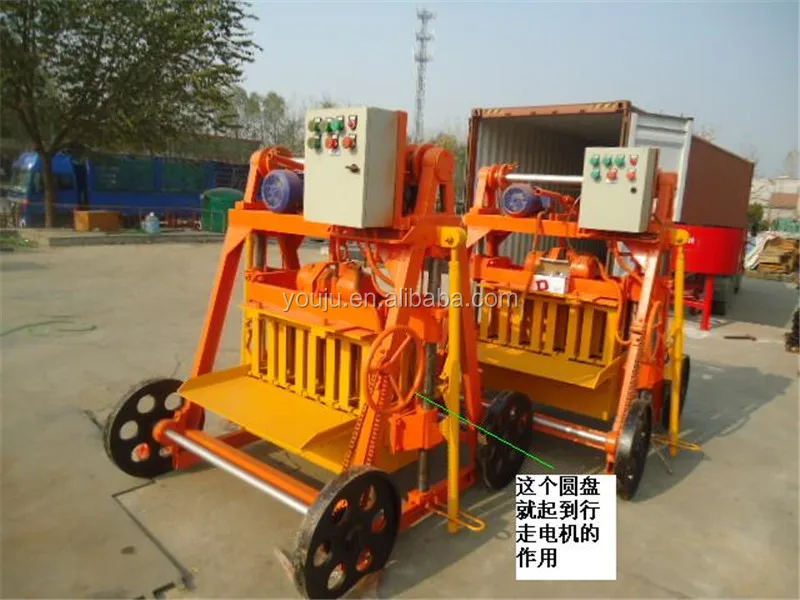
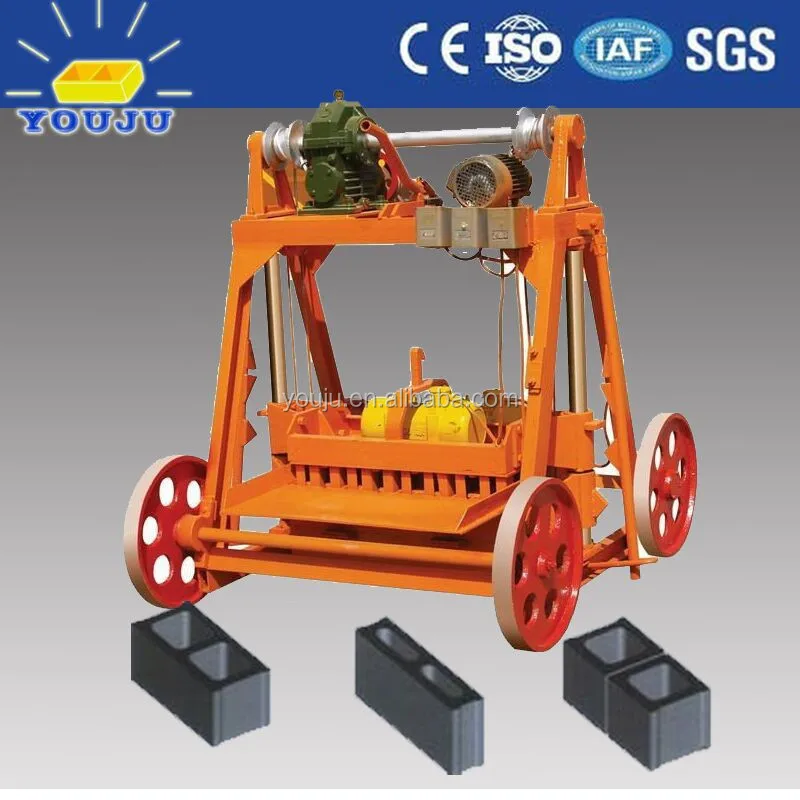
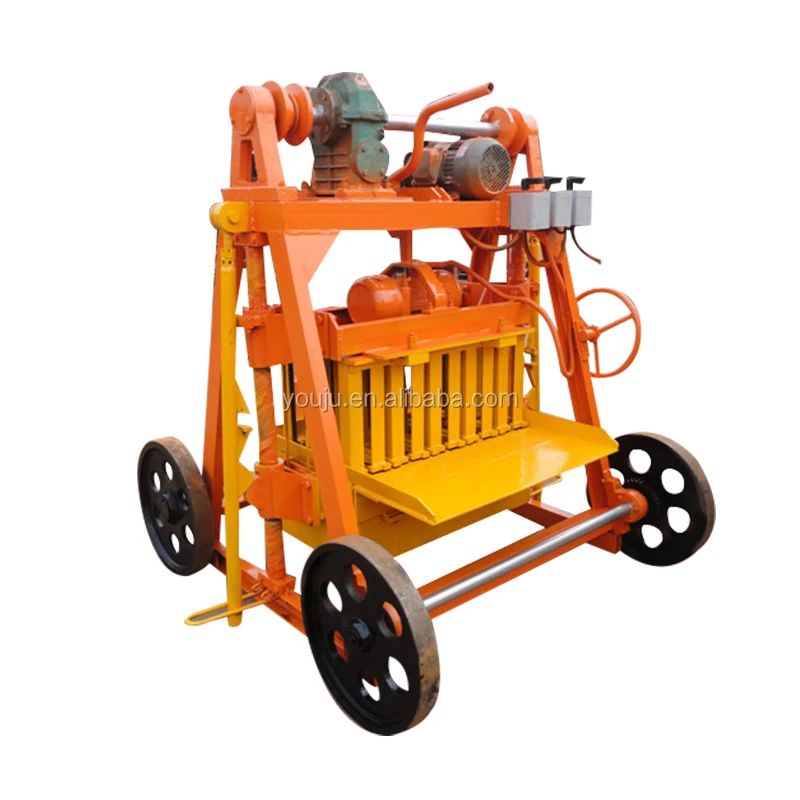
Description
Format-Matched Capacity Data — every output figure for the QMJ4-45 mobile egg-laying block machine is tied to a specific hollow block size, mould cavity count, and verified cycle time so your daily target is never a guess.
Technical Specifications
| Parameter | Value |
|---|---|
| Model | QMJ4-45 |
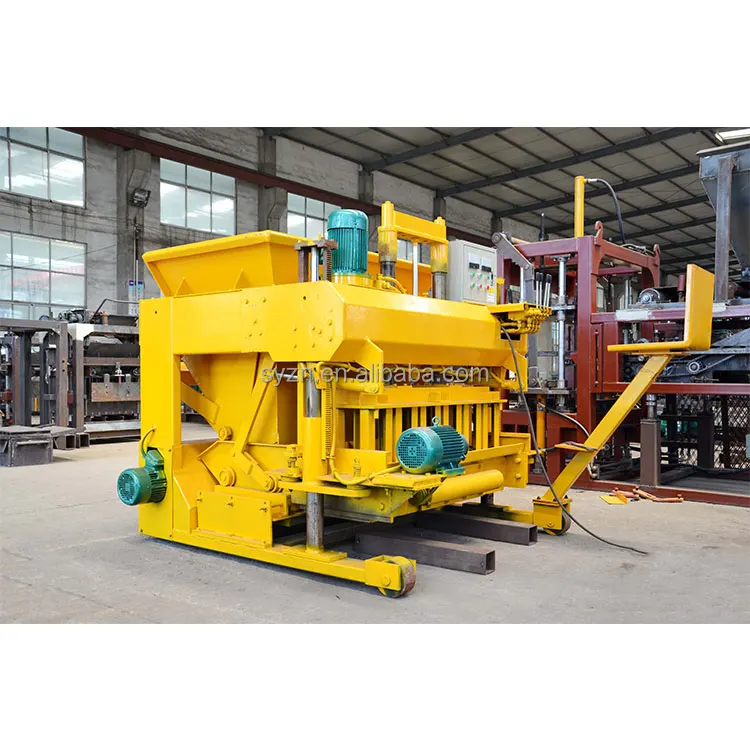
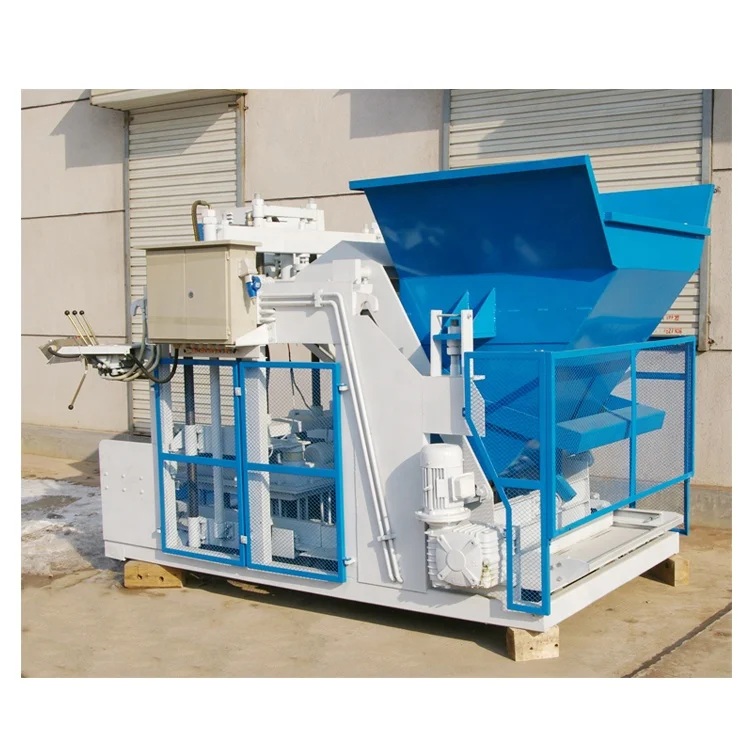
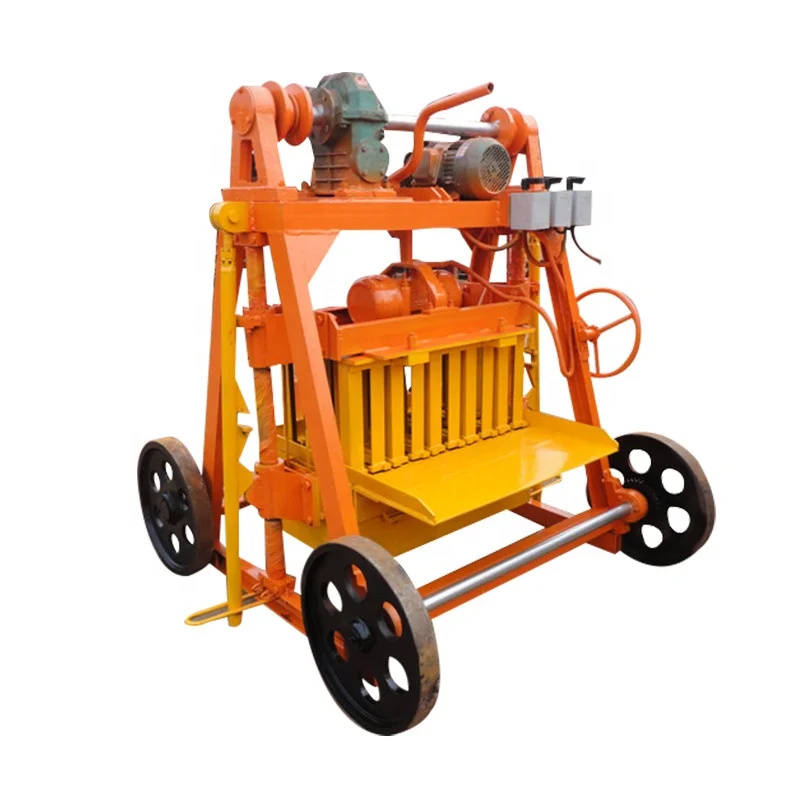
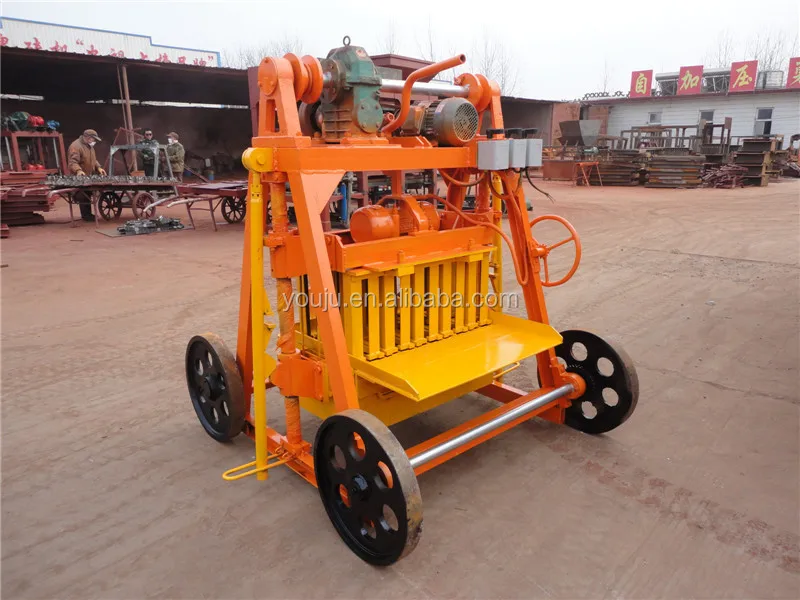
| Product Type | Mobile Egg Laying Concrete Block Making Machine |
| Molding Capacity per Cycle | 4 pcs/mould (based on 400×200×200mm hollow block) |
| Molding Cycle Time | 40–45 s (basis: hollow block formats listed below) |
| Daily Productivity | 3000 pcs/day (based on 400×200×200mm hollow block, 8-hour shift) |
| Daily Productivity | 3500 pcs/day (based on 400×150×200mm hollow block, 8-hour shift) |
| Daily Productivity | 4500 pcs/day (based on 400×120×200mm hollow block, 8-hour shift) |
| Vibration Frequency | 2400 r/min |
| Vibration Method | Mold vibration (twice-vibration system) |
| Demold Method | Manual |
| Turning Method | Manual (egg-laying / mobile) |
| Total Power | 6 kW |
| Power Source | Diesel/petrol engine or electric motor (configurable) |
| Pallet Consumption | Not applicable (pallet-free egg-laying operation) |
| Automation Level | Manual / semi-manual |
| Hydraulic Pressure | Not stated in source (basis to be confirmed) |
| Vibration Force (kN) | Not stated in source (basis to be confirmed) |
| Overall Dimensions | Not stated in source (basis to be confirmed) |
| Net Weight | Not stated in source (basis to be confirmed) |
| Voltage & Frequency | Configurable (to be confirmed with buyer) |
| Certification | Not stated in source (certifications section image only) |
| Warranty | One year guarantee |
Application Suitability
| Application | Material or Output |
|---|---|
| On-site hollow block production for building contractors | 400×200×200mm hollow blocks from crushed stone, sand, and cement |
| Small-yard first production setup for entrepreneurs | 400×150×200mm hollow blocks from local aggregate and cement |
| Housing project local block supply | 400×120×200mm hollow blocks produced in volumes matched to construction phases |
What "3000 Blocks a Day" Actually Means on the QMJ4-45 Mobile Block Machine
Output only exists relative to the block format you are actually selling.
When a supplier quotes a daily number without naming the block size, the mould cavity count, and the cycle time behind it, the real production floor almost always disappoints. I have seen buyers plan a housing project around a headline capacity figure, only to discover that their primary selling format — a thinner 120mm wall block — runs faster, while the larger 200mm block they also need ties up the machine for longer cycles. The QMJ4-45 mobile block machine specifications here state the format for every number: 3000 pieces per 8-hour shift assumes the 400×200×200mm hollow block at 4 pieces per cycle and a 40–45 second molding time. Switch to the 400×120×200mm format and the figure rises to 4500 pieces per shift because the same cycle time yields the same pieces but the lighter block handles faster in manual demolding. Without this level of detail, capacity planning is guesswork [NEED_CITE: importance of format-specific capacity calculation in block machinery procurement].
Honest Cycle Times Across Three Hollow Block Formats
The QMJ4-45 operates on a 40–45 second molding cycle across all three standard hollow block formats. This cycle includes concrete feeding into the mould, the twice-vibration sequence that consolidates the mix, and the manual demolding step where the operator lifts the machine and walks it forward. Because demolding and repositioning are manual, actual shift output depends as much on operator rhythm and ground conditions as on the machine itself. The twice-vibration system at 2400 r/min gives each block two consolidation passes rather than one, which helps maintain wall density in the larger 200mm format where single-pass vibration often leaves voids in the core.
Where the QMJ4-45 Fits in a Site Production Plan
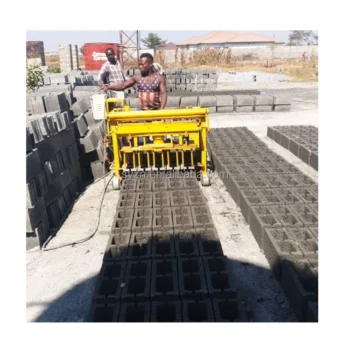
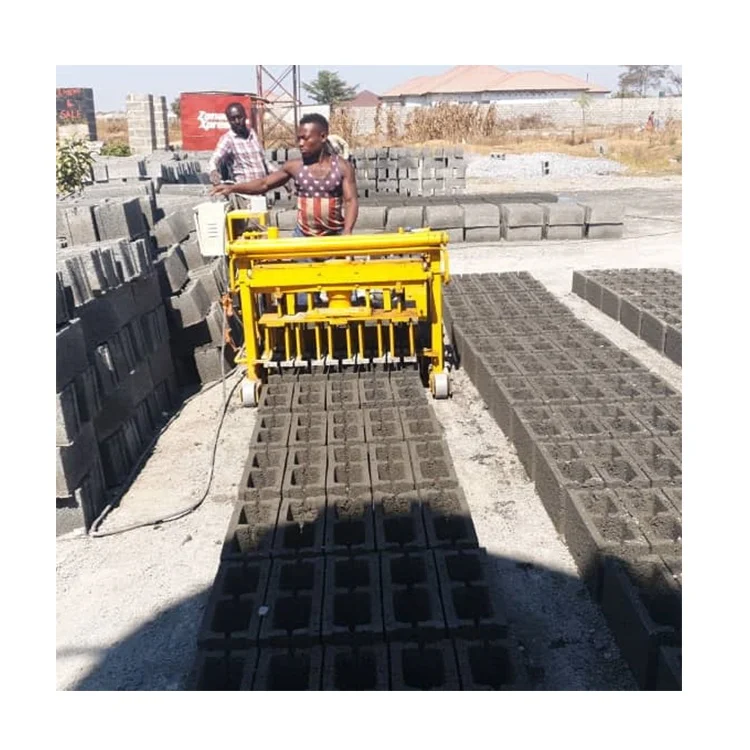
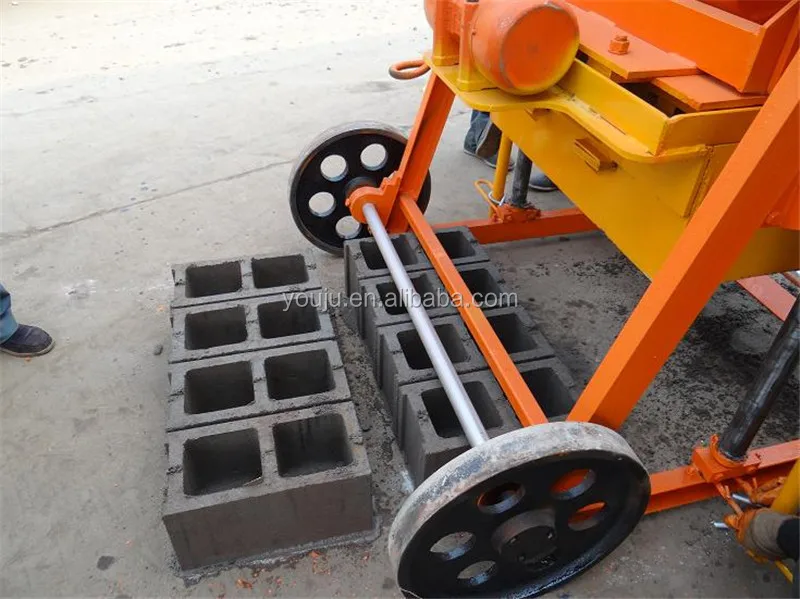
This machine suits buyers who need hollow blocks at the construction site without investing in a fixed block plant, pallet inventory, or curing rack system. The egg-laying method means blocks are placed directly on a prepared ground surface and left to cure in place. For a contractor working a multi-phase housing development, the QMJ4-45 can be relocated between building zones as demand shifts, producing the format each phase requires by swapping the mould. The 6 kW total power draw is low enough that a portable diesel generator can supply the site, removing dependency on grid connection — a practical consideration in areas where three-phase power is not yet extended to the building plot [NEED_CITE: power supply challenges at remote construction sites in developing regions].
Reading the Specs That Matter for Block Strength
Vibration frequency at 2400 r/min and the twice-vibration method together determine how thoroughly the concrete mix is compacted inside the mould cavity. Higher frequency alone does not guarantee strength; the amplitude and the duration of vibration must match the water-cement ratio and aggregate gradation of the local mix. On a machine without adjustable hydraulic pressure — the QMJ4-45 relies on mould vibration rather than hydraulic press force — the mix design becomes the primary variable controlling block density. If your local sand is fine-graded and retains more water, a 40-second cycle may over-vibrate and push fines to the surface, weakening the block core. Testing the mix on a sample batch and adjusting cycle time within the 40–45 second window is standard practice before committing to full-shift production. Mould cavity count, listed at 4 for the 400×200×200mm format, directly sets the pieces-per-cycle figure, so any future mould change to a different block size must be recalculated from the new cavity drawing.
The Cost of Skipping the Power Source Conversation
I shipped a mobile unit to a small yard in West Africa without confirming the diesel grade they could source locally. The engine choked on high-sulphur fuel within a week, and the yard spent a month hand-feeding blocks while waiting for a replacement injector pump. The QMJ4-45 is available with either a diesel/petrol engine or an electric motor, but the choice involves more than just availability of grid power. Diesel engines require fuel filtration matched to local sulphur content, and petrol engines have different altitude derating curves. Electric motors need voltage and frequency confirmed against the site supply — a 50 Hz motor on a 60 Hz grid runs at higher RPM, shortening bearing life and altering vibration frequency. Confirming the power source specification before production starts avoids commissioning failures that no amount of operator training can fix on site.
Why Sourcing This Machine Here Reduces Configuration Risk
The QMJ4-45 mobile block machine specifications are not pulled from a generic catalogue. The mould design, vibration setting, and power configuration are matched to your stated block format, local aggregate, and site conditions before the machine enters production. Capacity calculations are delivered per format, not as a single headline figure, so you can verify daily output against your project schedule. Mould drawings are provided for review before manufacture, allowing you to confirm cavity dimensions against the block sizes your market actually buys. The machine, mould, and any supporting handling equipment are specified as one system from a single supplier focused entirely on block machinery, eliminating the coordination gaps that occur when the press, the moulds, and the pallets come from different sources [NEED_CITE: risks of multi-supplier block line assembly]. Factory testing covers actual cycle times and block density on your target format, and results are documented before the machine is released for shipment.
Documentation & Verification
- Line layout showing egg-laying curing area dimensions matched to QMJ4-45 output
- Mould drawing and format list confirming cavity count for each hollow block size
- Factory test record showing actual cycle time and block density on your target format
- Power source specification sheet confirming engine type or motor voltage and frequency
- Operation and maintenance manual with mould change procedure and lubrication schedule
- Packing photographs and customs documentation support for shipment clearance
Installation, Commissioning & Support
- Ground surface must be level and compacted to support egg-laying block placement without tilting
- 6 kW power draw confirmed against site generator rating or grid circuit capacity before connection
- Diesel engine variant requires fuel filtration review matched to local sulphur content at first refuel
- Mould change procedure demonstrated during commissioning with operator practicing format switch
- Vibration system bearings greased per schedule in maintenance manual to preserve 2400 r/min frequency
- Wear parts list provided covering mould liner and vibration motor components for first-year spares planning
What to Include in Your Inquiry
To receive a configuration proposal that reflects your actual production needs, provide the primary hollow block format your market sells, the target daily output for that format, and the local aggregate and cement types available. Confirm whether your site has stable three-phase grid power or requires a diesel engine supply. State the ground conditions where blocks will be laid — concrete floor, compacted earth, or sand bed — because this affects curing consistency and may influence the pallet option discussion if egg-laying is not practical for your site [NEED_CITE: ground preparation standards for egg-laying block production].
Frequently Asked Questions
Q: How is daily output calculated and which block format does each figure assume?
A: Each daily output figure is based on an 8-hour shift with a 40–45 second molding cycle. The 3000-piece figure assumes 400×200×200mm hollow blocks at 4 pieces per cycle. The 3500-piece figure assumes 400×150×200mm blocks, and 4500 pieces assumes 400×120×200mm blocks. All figures include manual demolding and repositioning time within the cycle.
Q: What block formats and mould options are available for the QMJ4-45?
A: The standard configuration includes moulds for 400×200×200mm, 400×150×200mm, and 400×120×200mm hollow blocks. Custom mould designs can be produced to buyer drawings for other hollow formats. Mould cavity count varies by format, and each cavity drawing is provided for buyer review before manufacture.
Q: How do I choose between diesel engine and electric motor for my site?
A: If your site has stable three-phase power at a confirmed voltage and frequency, the electric motor is simpler to maintain. For sites without grid supply or with frequent outages, a diesel engine with fuel filtration matched to local diesel grade is the practical choice. Confirm the available fuel specification before ordering.
Q: What is the mould change procedure and how long does a format switch take?
A: The mould is unbolted from the vibration platform and lifted off, then the replacement mould is positioned and secured. On manual machines of this class, the change is typically completed within a portion of one shift by trained operators. The exact procedure and recommended tools are documented in the operation manual provided with the machine.
Q: What mix design and local aggregate conditions affect block strength on this machine?
A: The QMJ4-45 relies on mould vibration at 2400 r/min rather than hydraulic pressure for compaction, so mix water content and aggregate gradation directly control block density. Fine sand with high water retention may require cycle time adjustment. We recommend a test batch with your local materials during factory testing to verify strength before shipment.