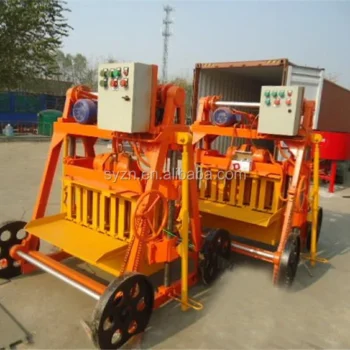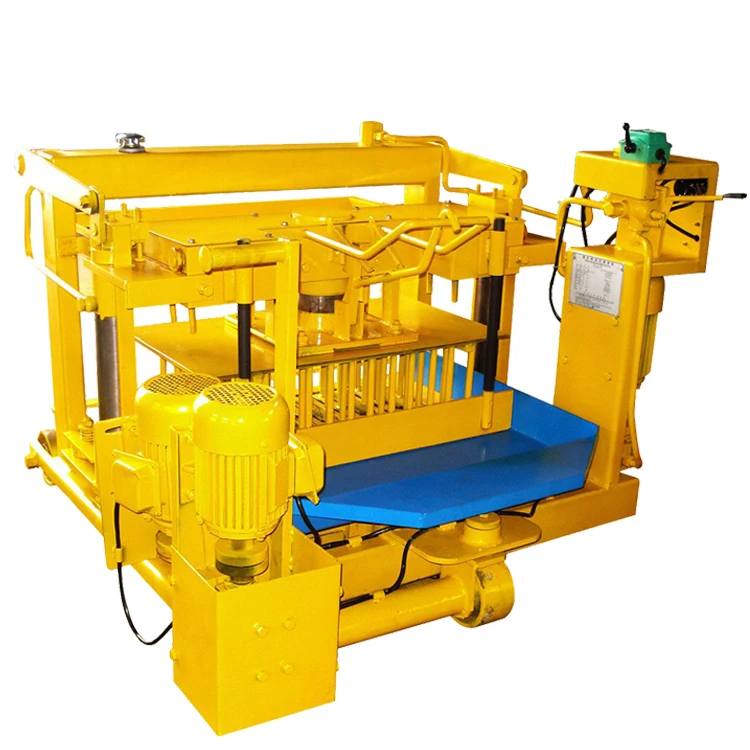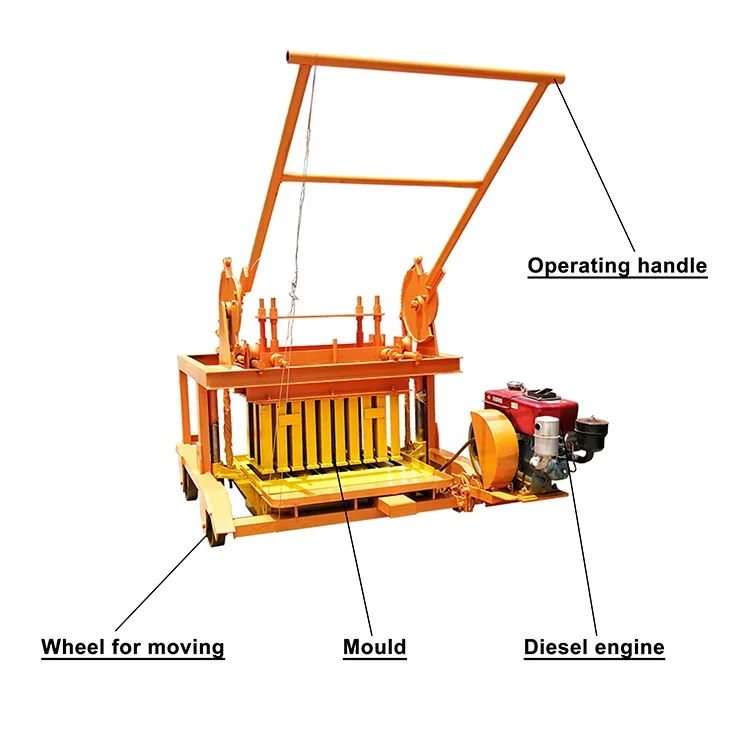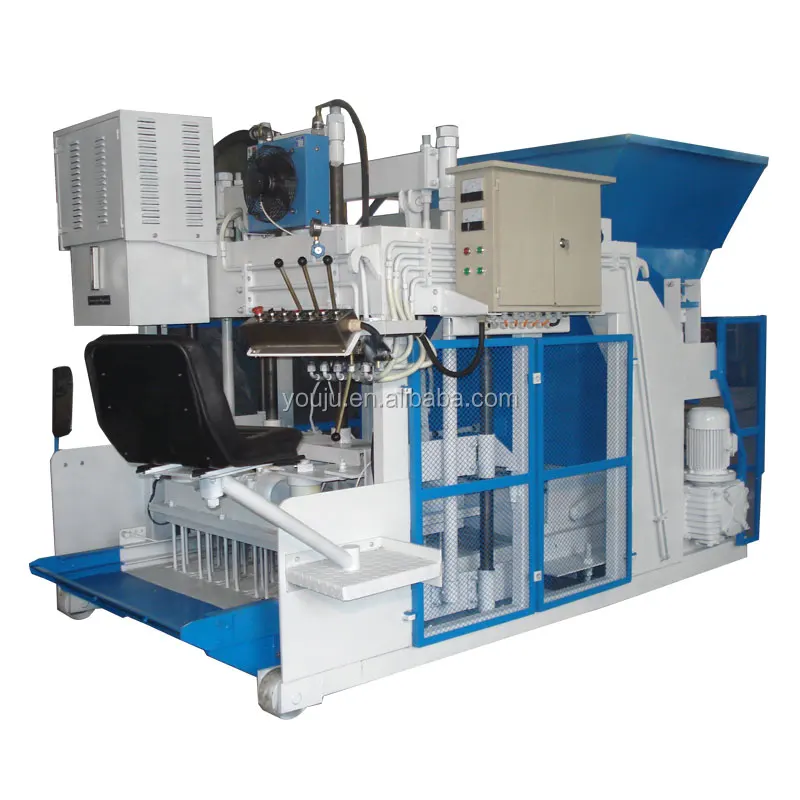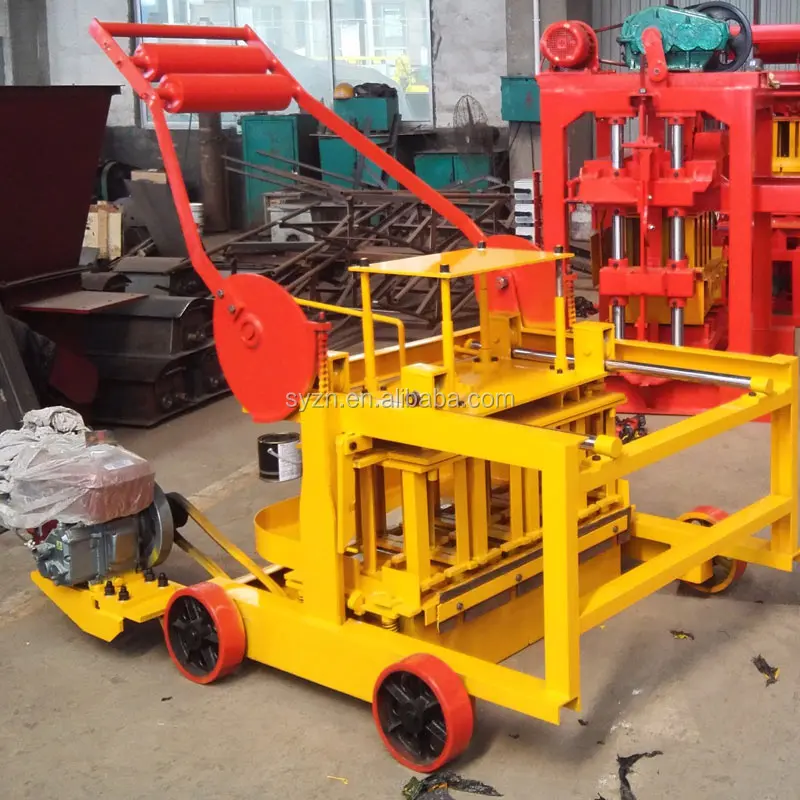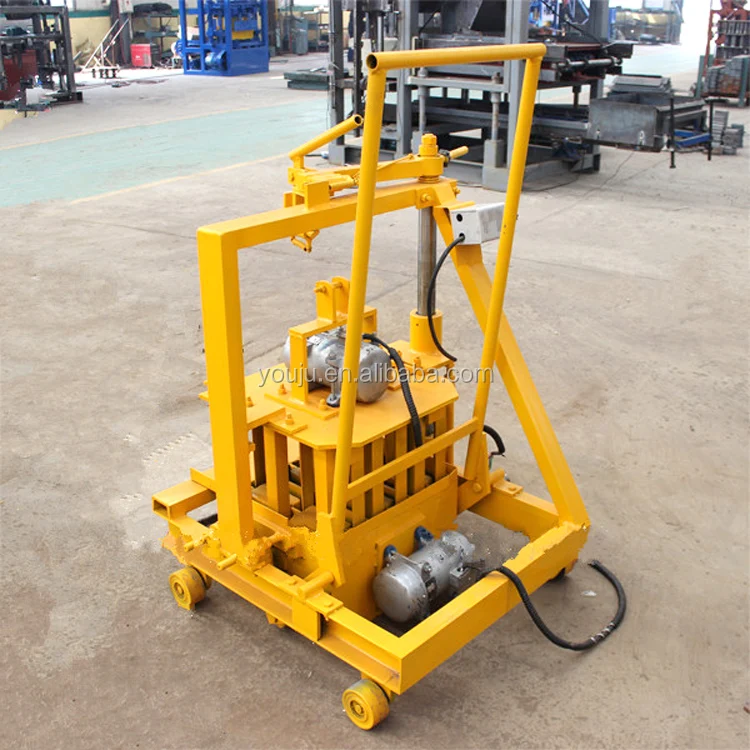
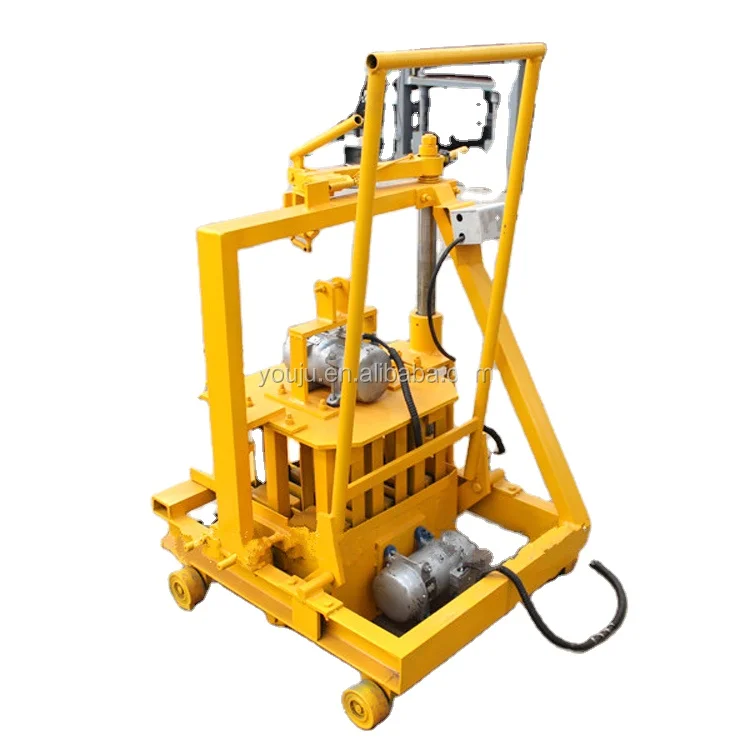

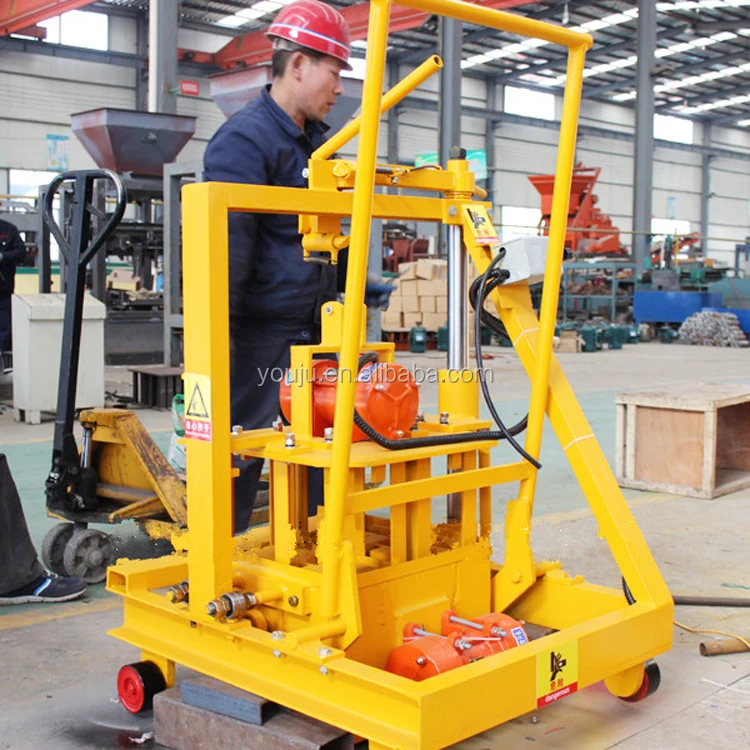
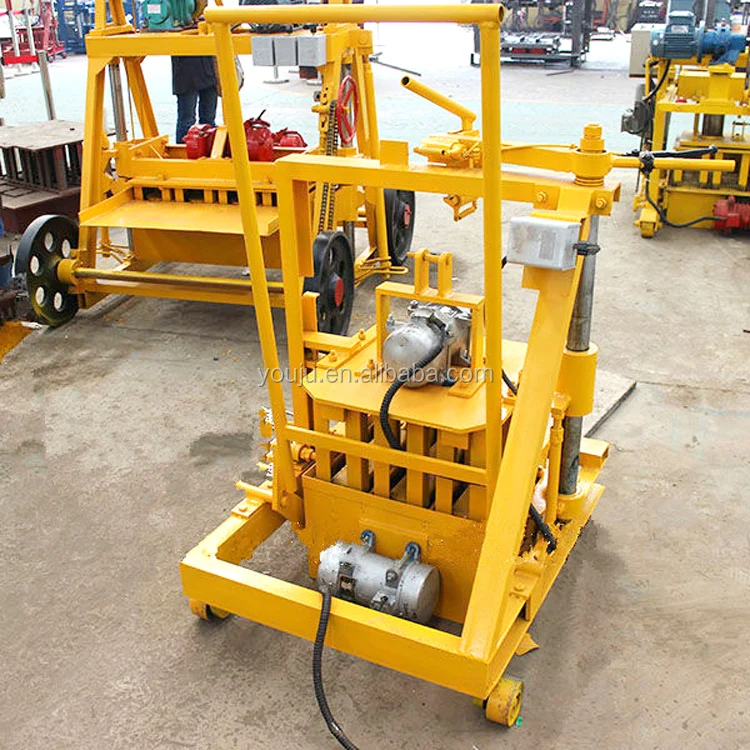

Description
Honest Capacity by Format — every output figure for the QMJ2-45 is tied to a named block size and a measured 25-30 second cycle, so the number you plan against is the number you actually see on the ground.
Technical Specifications
| Parameter | Value |
|---|---|
| Model | QMJ2-45 |
| Product Type | Mobile Block Making Machine |
| Machine Type | Egg-laying / pallet-free mobile press |
| Automation Level | Manual operation |
| Pallet Requirement | None — blocks laid directly on ground |
| Labour Requirement | 1 to 3 workers |
| Mould Change | Quick-change system for hollow brick formats |
| Included Mould Formats | 400×200×200 mm / 400×150×200 mm / 400×100×200 mm hollow brick |
| Cycle Time | 25–30 seconds per moulding cycle |
| Output at 400×200×200 mm | 2 pcs/mould, 160 pcs/hour, 1 280 pcs per 8-hour shift (basis: stated block format and 25–30 s cycle) |
| Output at 400×150×200 mm | 3 pcs/mould, 240 pcs/hour (basis: stated block format and 25–30 s cycle; daily shift total to be confirmed against actual operating time) |
| Output at 400×100×200 mm | 4 pcs/mould, 320 pcs/hour, 2 560 pcs per 8-hour shift (basis: stated block format and 25–30 s cycle) |
| Power Source | Engine type, diesel or electric — basis not stated in source, confirm before order |
| Voltage & Frequency | To be confirmed before commissioning |
| Hydraulic Pressure | Rating not stated in source — confirm MPa before order |
| Vibration Force | Rating not stated in source — confirm kN before order |
| Overall Dimensions | Not stated in source |
| Net Weight | Not stated in source |
| Mobility | Free-moving on site, no fixed power connection required |
| Assembly State | Fully assembled on arrival |
| Standards | ISO 9001:2000, CE |
Application Suitability
| Application | Material or Output |
|---|---|
| On-site hollow block production | Crushed stone, river sand, stone dust and cement mixed to local aggregate availability |
| Housing and infrastructure project supply | 400×200×200 mm and 400×150×200 mm hollow blocks laid directly on prepared ground |
| Small-scale block enterprise start-up | Low-investment operation with 1–3 workers and no pallet fleet |
| Rural or remote building sites | Off-grid production where diesel power and open-air curing are the only options |
| Format diversification for existing yards | Quick mould swap between three hollow formats to follow local demand |
What "Pieces per Hour" Hides When the Format Is Missing
A capacity number without a block format attached is not a capacity number — it is a guess.
I once watched a contractor in West Africa plan a housing project around a quoted hourly output, only to discover on day one that the figure assumed a 100 mm wall block while his market needed 200 mm. His real daily volume dropped to less than half of what he had scheduled labour and materials for. The QMJ2-45 mobile block making machine specifications sheet we issue lists output per format — 2, 3 or 4 pieces per mould — so the number you bid against is the number the machine actually delivers on your site [NEED_CITE: capacity calculation transparency in mobile block machine tenders]. When the format is named, the cycle time is measurable, and the shift length is yours to control.
Cycle Time Measured Against the Block You Actually Sell
The 25–30 second moulding cycle applies across all three hollow formats, but what comes out of each cycle changes with the mould installed. At 400×200×200 mm you get two blocks per cycle; at 400×100×200 mm you get four. This is why mobile block making machine specifications must always pair cycle time with mould cavity count — quoting one without the other tells you nothing about daily output.
Pallet-Free Operation and What It Removes From Your Budget
An egg-laying press lays each block directly on the ground and moves forward, leaving the product in place for open-air curing. There is no pallet purchase, no pallet return conveyor, and no curing rack system to build. For a contractor working a single project site or an entrepreneur starting out with limited capital, that elimination of pallet logistics is often the difference between a viable first plant and one that runs out of cash before the first wall goes up [NEED_CITE: pallet cost share in small block plant start-up budgets].
Reading the Pressure and Vibration Figures That Are Missing
The spec sheet does not yet state hydraulic pressure in MPa or vibration force in kN. These two values, taken together, determine whether your local aggregate — whether river sand, stone dust or crushed gravel — will compact into a block that meets the compressive strength your market requires. Before confirming an order, ask for both numbers and match them against a trial mix made from the materials you will actually feed the machine. A mobile block making machine that vibrates hard but presses lightly will produce a block that looks dense on the outside but crumbles under load; the reverse produces a block that is strong but too heavy for local handling norms [NEED_CITE: vibration and hydraulic pressure matching in mobile block production].
The Cost of Skipping the Aggregate Conversation
I shipped a QMJ2-45 to a site in West Africa where our factory test on river sand produced clean, strong hollow blocks. The customer’s yard had only stone dust. On day one the bricks fell apart by hand. We spent three days adjusting the mix ratio and the vibration settings before production could resume. The machine was not at fault — the configuration conversation had simply not covered the material that would actually enter the hopper. Whenever mobile block making machine specifications are reviewed, the aggregate source must be part of that review, not an afterthought once the crate is open [NEED_CITE: aggregate variability impact on block strength in field operations].
Why Buyers Source This Machine Through Our Line
Block machinery is our single focus, so the QMJ2-45 arrives as a matched set — press, moulds, and handling logic specified together rather than assembled from separate catalogue pages. We configure the machine against the buyer’s actual mix design and target block format, not a default setting. Mould design covers the three standard hollow formats and extends to custom drawings when a local market demands a size we do not already carry. Automation is selectable: a buyer can begin with manual operation and add pallet feeding or stacking later as volume grows. Installation includes on-site commissioning and operator training so the crew understands mix ratios and cycle discipline from the first shift.
Documentation & Verification
- Line capacity calculation naming each block format and the cycle time behind every output figure
- Mould drawing pack confirming included hollow formats and listing available custom additions
- Factory test record run on your specified mix before the machine leaves the workshop
- Voltage, frequency and control language confirmation document signed before dispatch
- Operation and maintenance manual matched to the QMJ2-45 manual control layout
- Wear parts and mould interchange list for first-year procurement planning
Installation, Commissioning & Support
- Prepared ground surface required — level, compacted, and free of standing water for egg-laying travel
- Power source confirmation for diesel or electric drive matched to site availability before dispatch
- Machine arrives fully assembled; only mould installation and control check needed on site
- First-day commissioning covers mix ratio trials against local aggregate with vibration adjustment
- Operator training on manual mould change sequence and 25–30 second cycle discipline
- Wear parts list supplied at handover covering vibration pads, mould liners and hydraulic seals
What to Prepare Before You Request a Quote
Send the block format your local market actually buys, including wall thickness and length. State the aggregate materials you have access to — river sand, stone dust, crushed granite, or a blend — along with any test results you hold. Confirm the voltage and frequency available at your site, or whether you will run the press on a diesel generator. With those three points we can return a configuration that matches your ground conditions, not a catalogue default.
Frequently Asked Questions
Q: How is the daily output calculated, and which block format does each figure assume?
A: Every output figure on the QMJ2-45 sheet is tied to a specific hollow block size and a 25–30 second cycle. At 400×200×200 mm the press produces two pieces per cycle, giving 160 per hour. At 400×100×200 mm it produces four per cycle, giving 320 per hour. The eight-hour shift total follows from that hourly rate.
Q: What mould formats come with the machine, and can I order other sizes?
A: The standard package covers 400×200×200 mm, 400×150×200 mm, and 400×100×200 mm hollow bricks. Custom moulds for solid blocks or interlocking pavers are available to buyer drawings. We confirm cavity count and cycle compatibility before any custom mould enters production.
Q: How long does a mould change take, and do I need special tools?
A: The quick-change system allows a trained operator to swap between the three hollow formats within a single shift break using standard hand tools. No hydraulic disconnection is required. We cover the change sequence during on-site commissioning so your crew is self-sufficient.
Q: What raw materials does the QMJ2-45 need, and will it work with my local aggregate?
A: The press works with crushed stone, river sand, stone dust and cement in ratios matched to your target block strength. We ask for a sample of your actual aggregate before confirming vibration and pressure settings. A machine configured for one sand type may underperform on another without adjustment.
Q: What does the site need before the machine arrives?
A: You need a level, compacted ground surface for egg-laying travel, a cleared curing area, and covered material storage for cement and aggregate. Confirm whether you will run on grid power or a diesel generator so we can match the drive before dispatch.