


Description
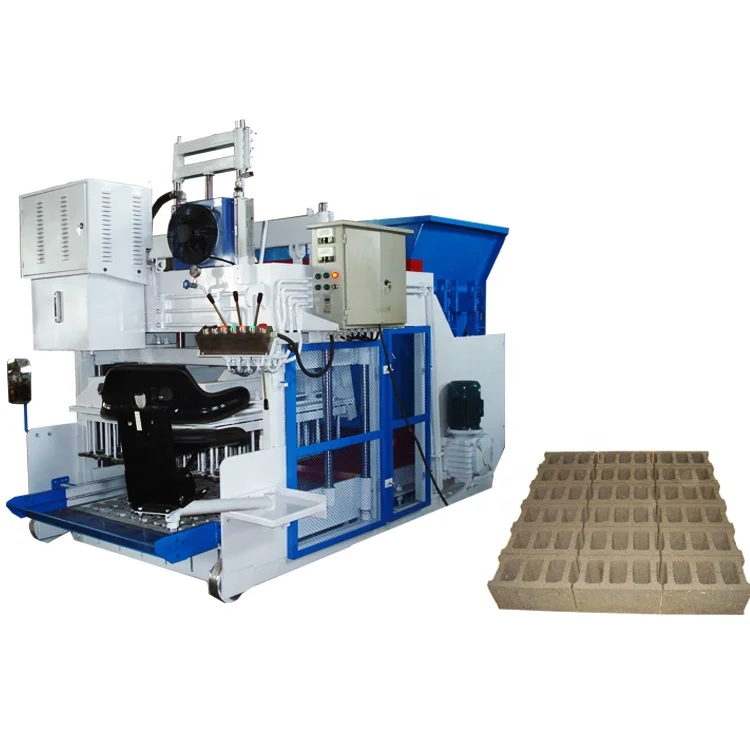
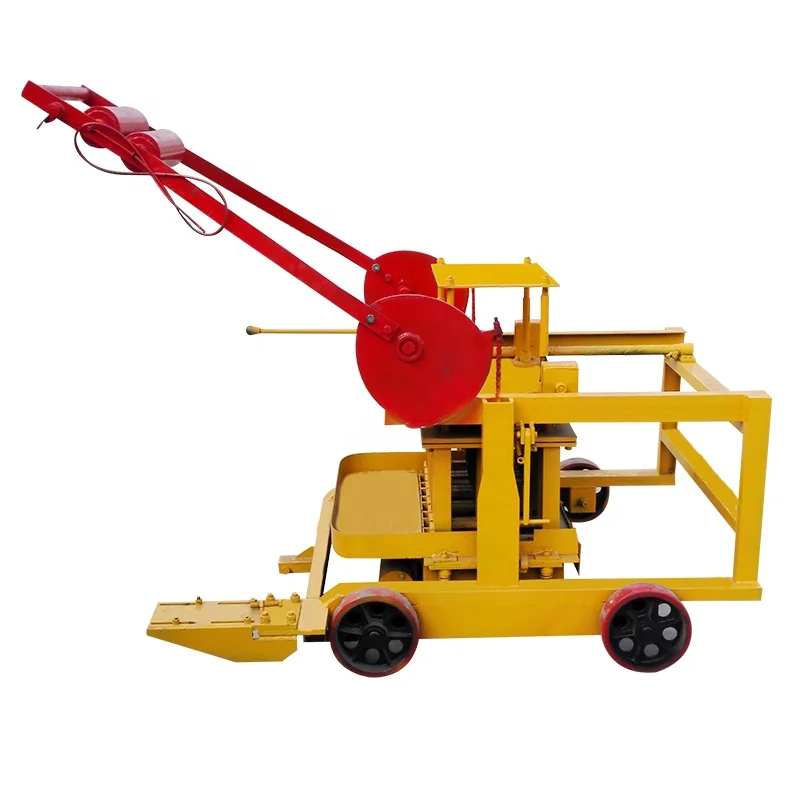
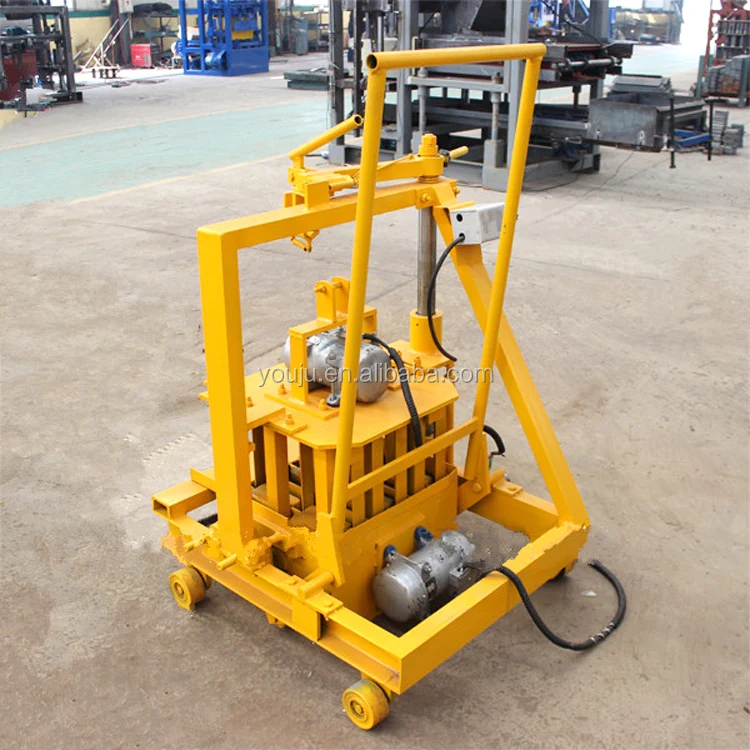
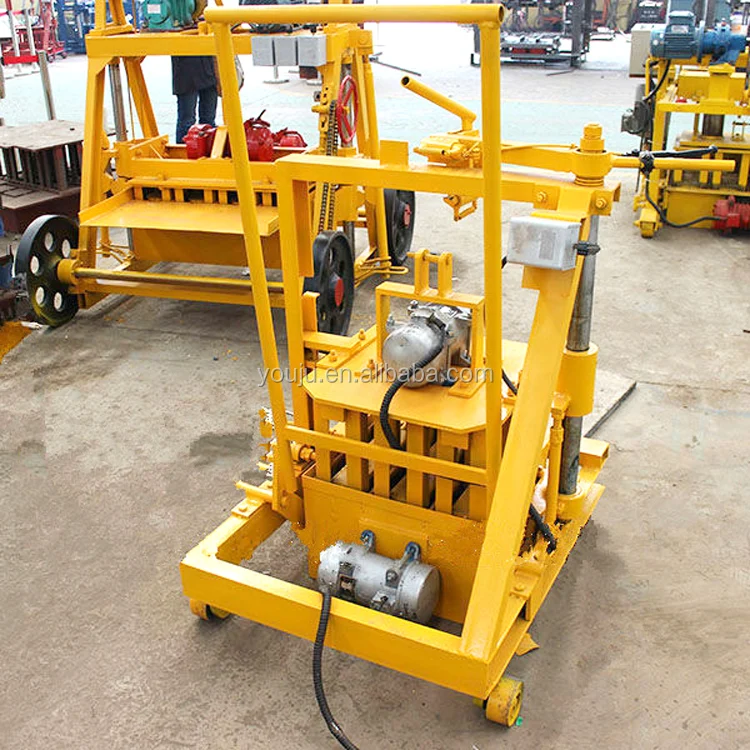
Honest Capacity by Format — every output figure for the QMJ2-45 mobile block making machine is tied to a specific hollow brick dimension and a measured cycle time, so the number on the page is the number you see on the site.
Technical Specifications
| Parameter | Value |
|---|---|
| Model | QMJ2-45 |
| Product Type | Mobile Block Making Machine |
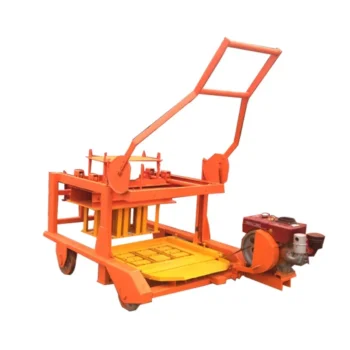
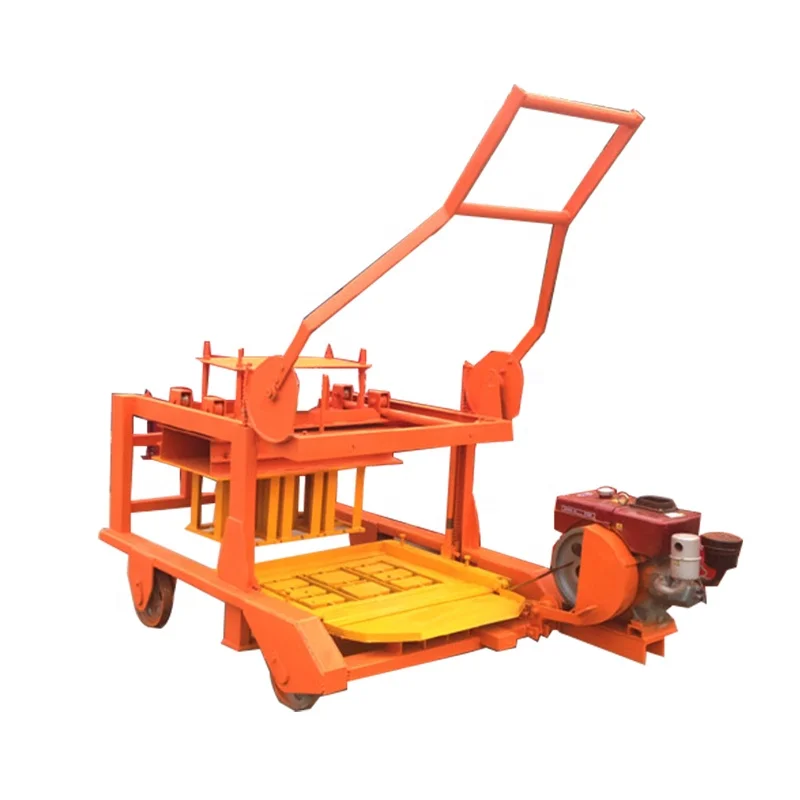
| Machine Design | Egg-laying type, pallet-free operation |
| Power Source | Electric motor (diesel not required) |
| Mould Format & Output | 400×200×200 mm hollow brick — 2 pcs/mould, 25–30 s cycle, 160 pcs/h, 1280 pcs/8 hr |
| Mould Format & Output | 400×150×200 mm hollow brick — 3 pcs/mould, 25–30 s cycle, 240 pcs/h (basis not stated in source), 4800 pcs/8 hr (basis not stated in source) |
| Mould Format & Output | 400×100×200 mm hollow brick — 4 pcs/mould, 25–30 s cycle, 320 pcs/h, 2560 pcs/8 hr |
| Mould Heat Treatment | Carburization technology |
| Labour Requirement | 1 to 3 workers |
| Pallet System | None required |
| Automation Level | Manual operation |
| Standards | ISO 9001:2000, CE |
Application Suitability
| Application | Material or Output |
|---|---|
| On-site hollow block production for housing projects | Crushed stone, sand, cement, water — mixed locally |
| First block plant for entrepreneurs with limited capital | Small footprint, no fixed plant infrastructure needed |
| Contractors producing blocks on their own construction site | Multiple hollow brick formats via interchangeable moulds |
| Building material distributors adding hollow block formats | Mould change across 400×200, 400×150, 400×100 mm sizes |
Why the Voltage Question Must Come Before the Price
Confirming site voltage and frequency before ordering prevents the single most expensive delay on a mobile block machine project.
I once shipped a QMJ2-45 to a job site in Iraq where the contractor ran a 440 V / 60 Hz generator. The motor was rated for a different supply. It burned out on the first start, and the replacement variable-frequency cabinet took three weeks to arrive. The crew sat idle, the project schedule collapsed, and the cost of the downtime dwarfed the machine price. That is why the mobile block making machine specifications you receive from us include a confirmed voltage and frequency line, matched to what actually powers your site. [NEED_CITE: voltage and frequency standards by export market]
Pallet-Free Design and What It Removes from Your Site
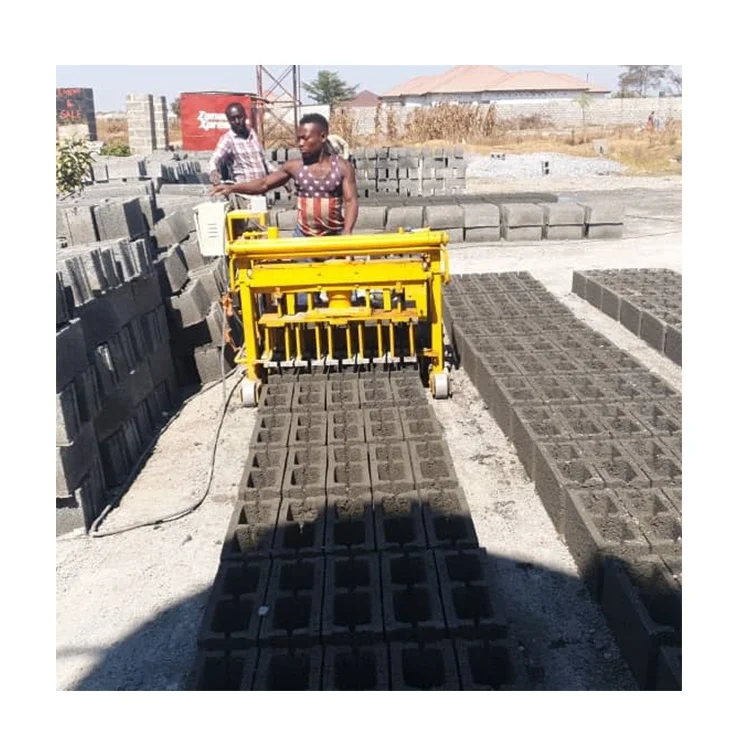
The QMJ2-45 lays blocks directly onto the ground and moves forward, which is why the industry calls this an egg-laying machine. There is no pallet feed system, no pallet return conveyor, no curing rack, and no forklift dependency for pallet handling. For a contractor working inside a tight compound or an entrepreneur renting a small yard, that design eliminates an entire layer of equipment cost and floor space that a stationary plant demands. The mobile block making machine specifications here reflect a system that arrives, plugs in, and starts producing.
Mould Interchangeability Across Hollow Brick Formats
Three standard mould formats ship for this machine: 400×200×200 mm, 400×150×200 mm, and 400×100×200 mm. Changing the mould is a mechanical swap — unbolt the current mould, lift it off, set the next one in place, and bolt it down. The carburization heat treatment on each mould extends surface hardness and wear life, which matters when local aggregate is abrasive. Every mobile block making machine specifications sheet we issue lists the exact moulds included in your quotation, so there is no ambiguity about which formats you can run on day one. [NEED_CITE: CE machinery directive requirements for industrial equipment]
Reading the Numbers That Actually Matter
The cycle time of 25–30 seconds is the core figure that drives all output calculations for the QMJ2-45. At 30 seconds per cycle you get 120 cycles per hour; multiply that by the number of cavities in the chosen mould and you have your hourly rate. For the 400×200×200 mm hollow brick at 2 cavities, that is 240 pieces per hour theoretical, with real-world factors pulling it toward the 160 pcs/h stated above. The 400×100×200 mm format at 4 cavities naturally yields higher volume per cycle. Labour is listed at 1 to 3 workers: one operating the machine, and up to two handling mixing and block curing. The carburization-treated moulds resist wear from angular aggregate, keeping cavity dimensions stable over a longer production run before replacement is needed.
What a Misconfigured Power Supply Costs on Site
A mobile block machine that arrives with the wrong motor rating does not partially work — it fails immediately. The motor either overheats within minutes or the contactor refuses to close. The crew then waits weeks for a replacement motor or a frequency converter shipped internationally, while the construction schedule keeps running. In my experience across Middle Eastern sites, this is the single most common reason a machine sits idle after delivery. Every unit we dispatch carries a motor nameplate that matches the buyer’s confirmed supply, documented before production begins. [NEED_CITE: common causes of motor failure in exported industrial machinery]
Why Sourcing This Machine Here Makes Sense
Block machinery is the only product line we build, which means the QMJ2-45 is specified as part of a matched system — machine, mould, and handling — rather than assembled from unrelated catalogue pages. Capacity calculations state the block format assumed, so the daily output figure you plan around is honest. Mould design covers the formats your market actually sells, and custom mould drawings are available if your region demands a non-standard dimension. Voltage, frequency, and control language are confirmed before the machine enters production, not discovered at commissioning. Wear parts and mould availability are listed with the first delivery so the first replacement does not become a sourcing crisis.
Documentation & Verification
- Capacity calculation sheet stating the hollow brick format behind every output figure
- Mould drawing and format list confirming which cavity sizes ship with your order
- Voltage and frequency confirmation record signed before production starts
- Factory test record run on your specified block format before dispatch
- Wear parts and mould replacement list included with shipment
- Operation and maintenance manual in your operator’s working language
Installation, Commissioning & Support
- Level ground area required; no concrete foundation or fixed plant infrastructure needed for the QMJ2-45
- Electric motor supply matched to your confirmed voltage and frequency, with dedicated circuit recommended
- Machine ships assembled; position on site, connect power, and begin commissioning same day
- First-run mould alignment and cycle timing verified by our technician during commissioning
- Operator training covers mould change procedure, mix consistency, and daily maintenance checkpoints
- Wear parts list provided at delivery with reorder lead times stated per item
Before You Send the Inquiry
Tell us which hollow brick format your market buys most, what daily volume you need to sustain, and the voltage and frequency available at your site. If you already have a mixer or a specific aggregate source, mention those as well — the mix design affects block strength and cycle consistency. With those details, we return a mobile block making machine specifications proposal that matches your actual conditions, not a generic catalogue page.
Frequently Asked Questions
Q: How is daily output calculated for the QMJ2-45, and which block format does it assume?
A: Daily output is derived from the cycle time of 25–30 seconds multiplied by the number of cavities in the chosen mould, then scaled to an 8-hour shift. Each output figure on this page states the hollow brick format it applies to — for example, 1280 pieces per 8 hours is based on the 400×200×200 mm mould at 2 cavities per cycle. No single "maximum output" is quoted without that format context.
Q: What hollow brick formats can the QMJ2-45 produce, and how long does a mould change take?
A: The machine supports 400×200×200 mm, 400×150×200 mm, and 400×100×200 mm hollow bricks through interchangeable moulds. A mould change involves unbolting the current unit, swapping it for the next, and re-securing — a mechanical procedure that a trained operator completes without specialised tools. Carburization treatment on each mould maintains dimensional accuracy across repeated changes.
Q: What voltage and frequency does the QMJ2-45 require, and can it match my site supply?
A: The electric motor is configured to the voltage and frequency you confirm before production — whether that is 380 V / 50 Hz, 440 V / 60 Hz, or another industrial supply. We document the agreed specification on the machine nameplate and in the electrical schematic. This confirmation step happens before the machine is built, eliminating the on-site mismatch that causes motor failure and project delays.
Q: Does the QMJ2-45 need pallets, curing racks, or a forklift to operate?
A: No. The QMJ2-45 is an egg-laying mobile machine that deposits blocks directly onto level ground and moves forward. There is no pallet feed, no pallet return system, and no curing rack requirement. This design removes forklift dependency for pallet handling and reduces the site footprint, making it practical for small yards and active construction compounds.
Q: What mix design and local aggregate work with this machine?
A: The QMJ2-45 is configured around your local aggregate type, cement grade, and target block strength. The vibration profile and mould cavity dimensions are matched to the mix you can actually source — not a generic laboratory formula. We review your material data before confirming the machine setup so that block density and surface finish meet your market requirements from the first production run.