

Description
Format-Matched Configuration — every QT10-15 quotation we issue lists capacity per block format the buyer actually sells, not a single catalogue headline number.
Technical Specifications
| Parameter | Value |
|---|---|
| Model | QT10-15 |
| Product Type | Interlocking Brick Machine |
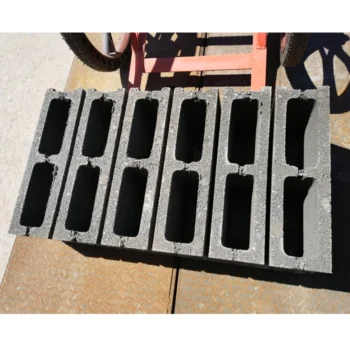
| Molding Cycle (400×200×200mm hollow block) | 15–20 s |
| Output (400×200×200mm hollow block, 10 pcs/mould) | 1,800–2,400 pcs/h; 14,400–19,200 pcs/8 hr |
| Output (400×150×200mm block, 12 pcs/mould) | 2,160–2,880 pcs/h; 17,280–23,040 pcs/8 hr |
| Output (240×115×53mm solid brick, 62 pcs/mould) | 8,928–11,160 pcs/h; 71,424–89,280 pcs/8 hr |
| Output (200×100×60mm paving block, 27 pcs/mould) | 5,184–6,480 pcs/h; 41,472–51,840 pcs/8 hr |
| Output (225×112.5×60mm interlocking brick, 24 pcs/mould) | 4,032–5,040 pcs/h; 32,256–40,320 pcs/8 hr |
| Control System | PLC control cabinet |
| Hydraulic System | Independent integrated hydraulic station |
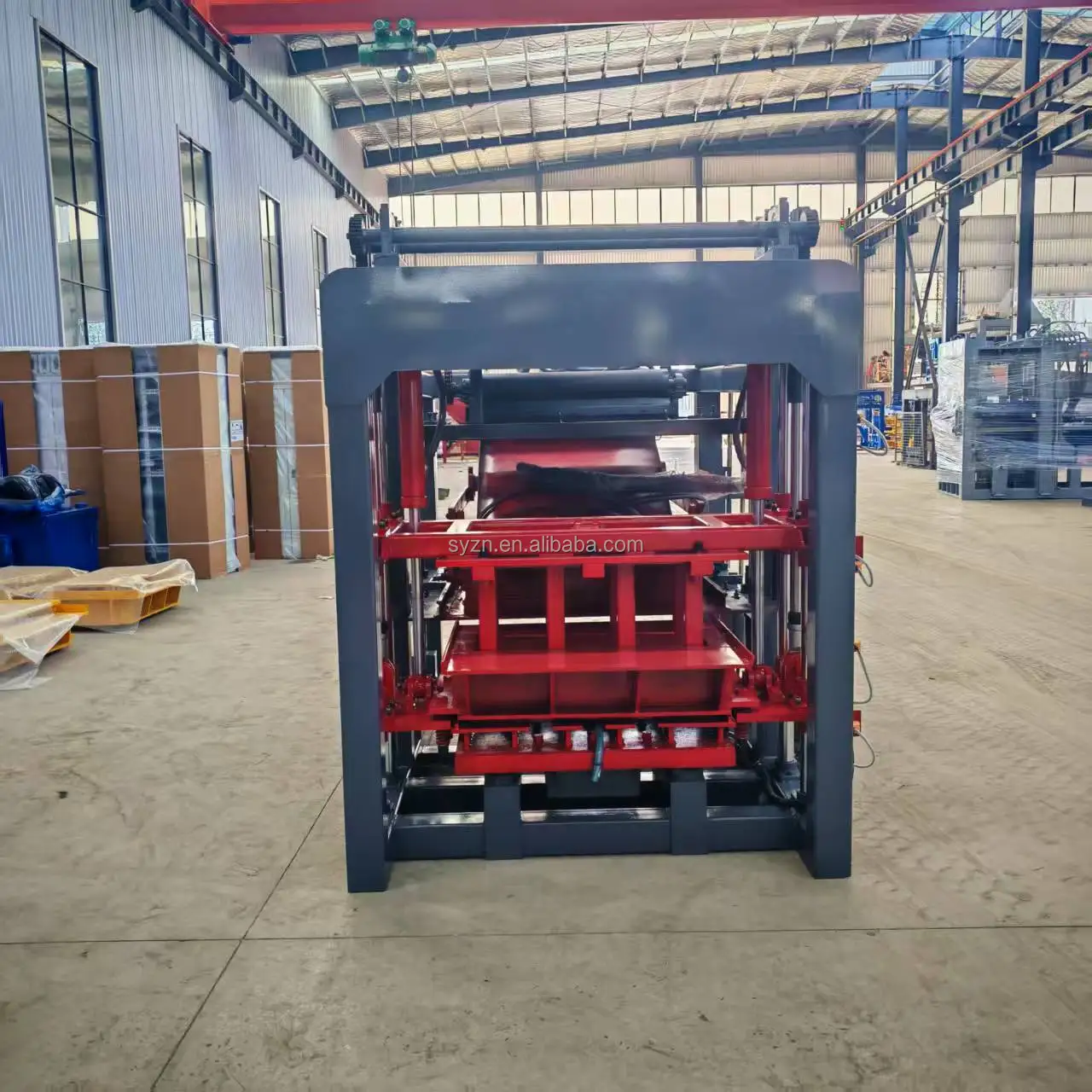
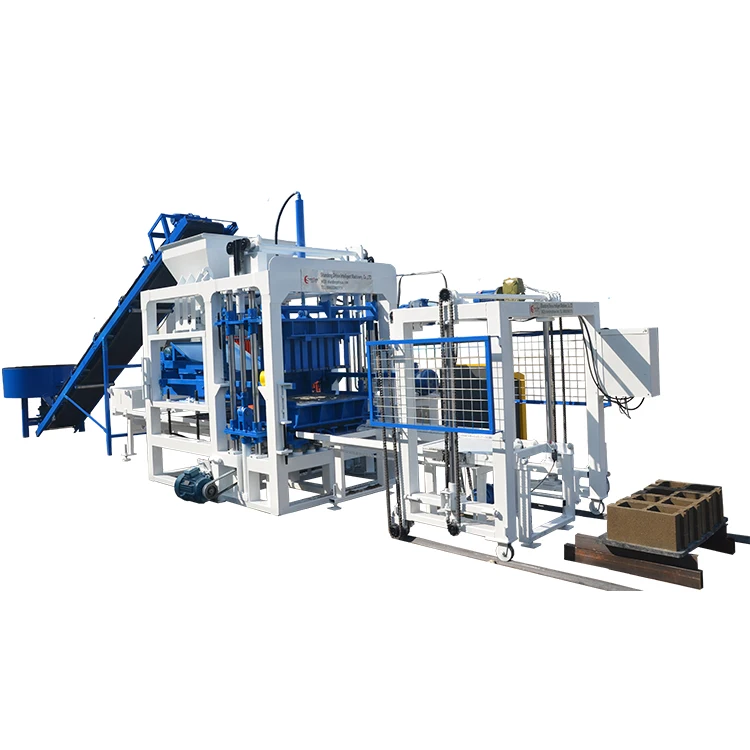
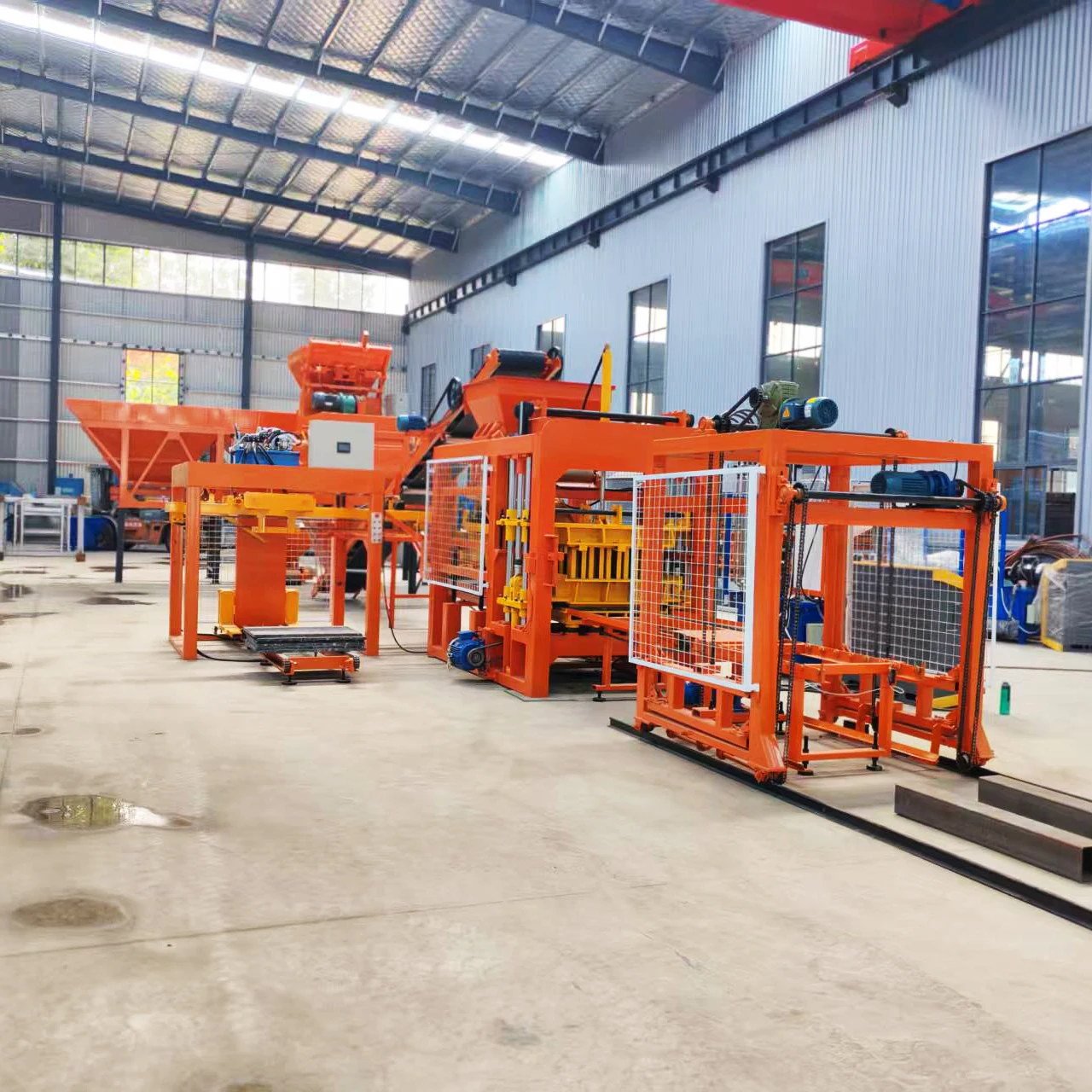
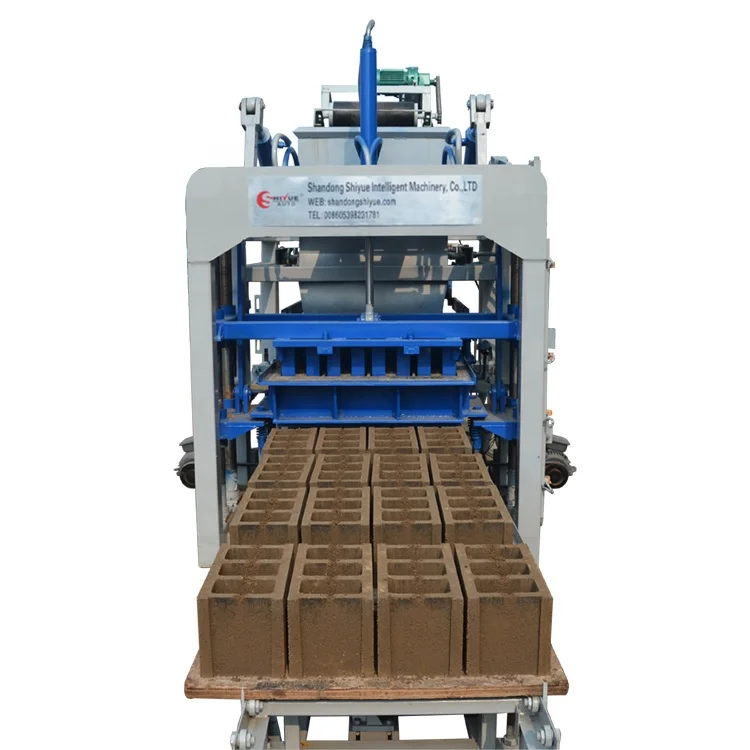
| Machine Configuration | Pallet feed machine, block making machine, storage hopper, conveyor, hydraulic unit, PLC control cabinet |
| Mould Change | Quick replacement design (multi-function with one machine) |
| Automation Level | Automatic (stacking and cubing inclusion basis to be confirmed) |
| Rated Power | Not stated in source |
| Voltage & Frequency | Not stated in source |
| Overall Dimensions | Not stated in source |
| Net Weight | Not stated in source |
| Pallet Size | Not stated in source |
| Vibration Force | Not stated in source |
| Hydraulic Pressure | Not stated in source |
| Warranty | 1 year for whole machine (excluding spare parts) |
Application Suitability
| Application | Material or Output |
|---|---|
| Hollow block production | Crushed stone, cement, sand, lightweight aggregate |
| Interlocking brick production | Laterite, volcanic ash, crusher dust, cement binder |
| Paving block production | Granite chip, river sand, pigment, cement |
| Standard solid brick production | Fly ash, quarry dust, cement |
| Multicellular brick production | Perlite, pumice, sand, cement |
What "QT10-15 Capacity" Really Means on Your Shop Floor
A cycle time only becomes daily output once the block format, mould cavity count, and pallet return speed are all stated together.
When a quotation shows a single headline capacity without naming the block format behind it, buyers often discover after installation that their target interlocking brick runs at less than half the promised volume. I learned this the hard way on a West African project where the local aggregate was volcanic scoria rather than standard quartz sand; vibration frequency and hydraulic pressure both needed retuning, and the first two months of output trailed the catalogue figure until we re-matched the parameters [NEED_CITE: effect of local aggregate density on block machine cycle time]. The interlocking brick machine specifications you evaluate must therefore spell out the format, cavity count, and assumed mix before the number means anything.
Mould Format Coverage Across One Press Platform
The QT10-15 handles hollow, solid, paving, and interlocking formats on a single press table by swapping moulds. Each format carries its own cycle window — 15–20 seconds for a 400×200×200mm hollow block, for example — so the interlocking brick machine specifications change the moment you switch cavities. Buyers adding a new format to an existing range can therefore plan shift output around the slower of the two cycles rather than guessing.
Quick Mould Change Without Losing a Shift
A bolt-on mould frame lets the operator release the existing tooling and seat the next one without dismantling the vibrator assembly. On sites running two or three formats in a single day, this means the press is back in production before the curing rack forklift finishes its second loop. Quick replacement keeps the QT10-15 earning across formats instead of sitting idle while fitters torque bolts [NEED_CITE: typical mould change procedure on hydraulic block presses].
How Hydraulic Pressure and Vibration Force Shape Block Density
The independent integrated hydraulic station sits away from the main vibration zone, keeping valves and seals out of the dust and shock that shorten component life. Hydraulic pressure and vibration force together determine how tightly the aggregate particles pack during the 15–20 second cycle; too little pressure on a stiff interlocking mix leaves friable edges, while excessive force on a lightweight hollow mix cracks the web. Matching both values to your local aggregate gradation is where the real block strength comes from.
Pallet Size, Curing Area, and the Forklift You Already Own
Pallet dimensions decide how many blocks travel per cycle, but they also decide whether your existing curing racks and forklift tines still fit. A pallet chosen without checking the curing bay width can force a buyer to rebuild rack spacing or purchase a different forklift — costs that never appear on the machine quotation [NEED_CITE: pallet and curing rack compatibility in block plant layout]. Confirming pallet size against your current site equipment before production starts avoids that surprise.
The Hidden Cost of a Default Mix Assumption
Factory testing on standard quartz sand produces clean cycle-time figures, yet many export markets rely on crusher dust, laterite, or volcanic ash. Running the QT10-15 on an untested local material typically shows up first as inconsistent block weight, then as pallet jamming when the mix sticks to the mould face. Re-tuning vibration frequency and hydraulic dwell after arrival can consume several weeks of production if the mix design was never part of the original specification conversation.
Why Source This Machine Through a Format-First Workflow
Every quotation we release lists per-format capacity, so the interlocking brick machine specifications you sign off on are the ones the machine actually delivers. Mould drawings and format lists are confirmed before cutting steel, preventing the situation where a paid-for cavity count never arrives. Voltage, frequency, and PLC display language are locked in writing before assembly, eliminating commissioning delays caused by a control panel the operator cannot read. Factory test records capture real cycle times on the agreed block format, not a catalogue average.
Documentation & Verification
- Line layout drawing naming the exact block format behind each capacity figure
- Mould drawing set listing cavity count and dimensional tolerances per format
- Hydraulic and electrical schematic matched to your confirmed voltage and frequency
- Factory test record showing actual cycle times on the agreed block format
- Voltage, frequency, and PLC display language confirmation sheet signed before assembly
Installation, Commissioning & Support
- Foundation plan showing load points for the QT10-15 press and hydraulic station
- Dedicated circuit sizing based on confirmed rated power and voltage
- On-site assembly of pallet feed, conveyor, and PLC cabinet after container unload
- First-run parameter tuning for vibration force and hydraulic pressure on your local mix
- Operator training covering mould change procedure and daily lubrication points
- Wear parts list identifying mould liners, hydraulic seals, and vibrator springs
Preparing Your Inquiry
Send the exact block format dimensions your market sells, along with the daily volume you need to hit per format. Include the local aggregate type and any existing curing racks or forklifts so pallet size can be matched before quotation. Finally, confirm your site voltage, frequency, and preferred PLC display language so the control cabinet is built right the first time.
Frequently Asked Questions
Q: How is QT10-15 capacity calculated per block format, and what is the realistic 8-hour output?
A: Each output figure is tied to a specific block dimension and cavity count — for example, 225×112.5×60mm interlocking bricks at 24 cavities yield 4,032–5,040 pieces per hour, or 32,256–40,320 pieces in an 8-hour shift. The quotation you receive lists every format you plan to run, so there is no single headline number hiding the slower cycles.
Q: Which mould formats are included in the base quotation, and what is the mould change time on-site?
A: The base package names every mould included, with drawings for each. The quick-replacement frame lets a trained operator swap tooling without dismantling the vibrator assembly, keeping downtime short enough to run multiple formats in one shift. Additional moulds can be ordered to the same frame standard.
Q: How do I confirm pallet size matches my existing curing area and forklift?
A: We ask for your curing rack bay width and forklift tine spacing before finalising pallet dimensions. This ensures the QT10-15 pallets slot straight into your current handling system without requiring new racks or a different forklift after the machine arrives.
Q: What voltage, frequency, and PLC language options are available for my market?
A: Voltage and frequency are configured to your site supply before the electrical panel is wired, and the PLC display language is selected at the same stage. Written confirmation of all three parameters is required before assembly begins, so commissioning is not delayed by an unreadable interface.
Q: How does vibration force and hydraulic pressure get matched to my local aggregate and mix design?
A: We request a sample or lab report of your local aggregate and proposed mix ratio before the factory test. Vibration frequency and hydraulic pressure are then adjusted on the QT10-15 during testing, and the resulting settings are recorded in the test report shipped with the machine.