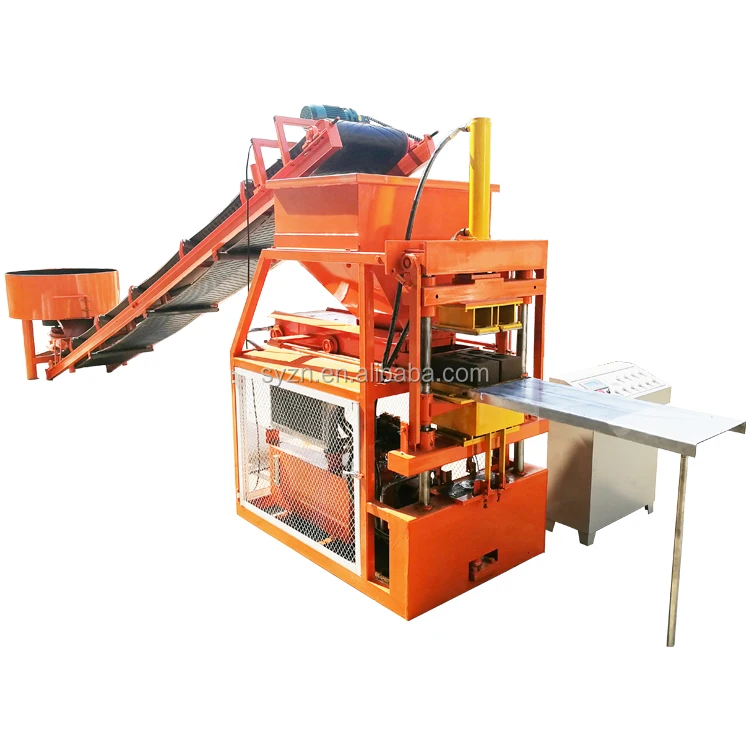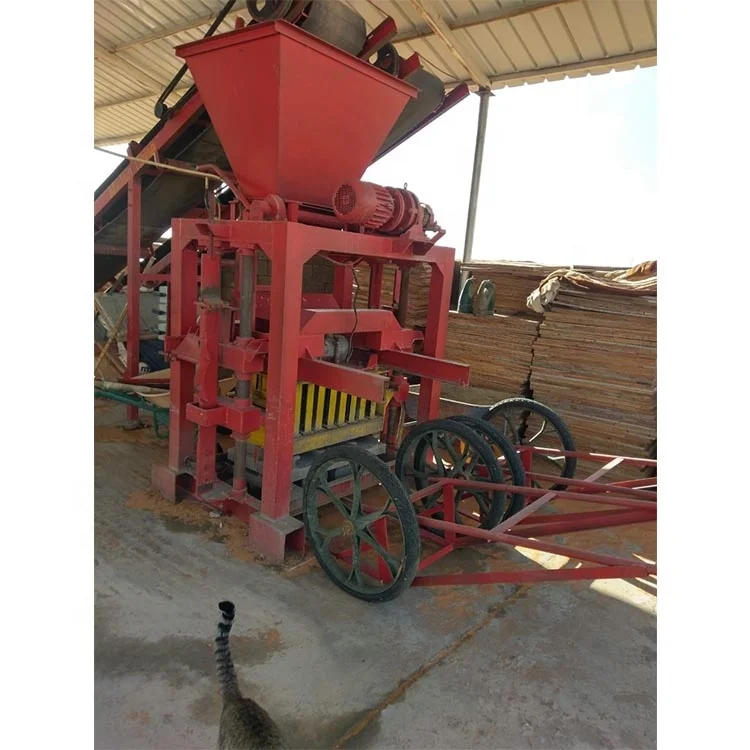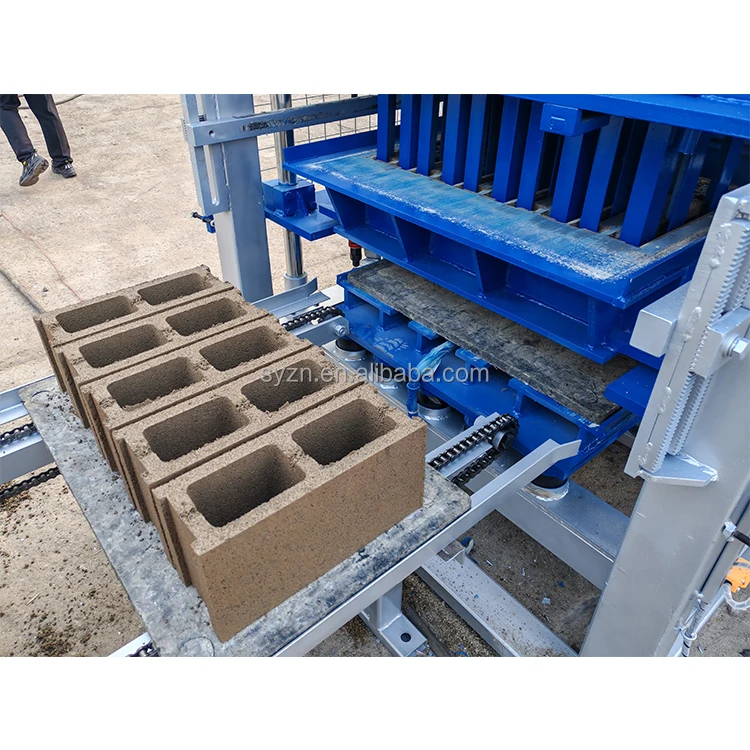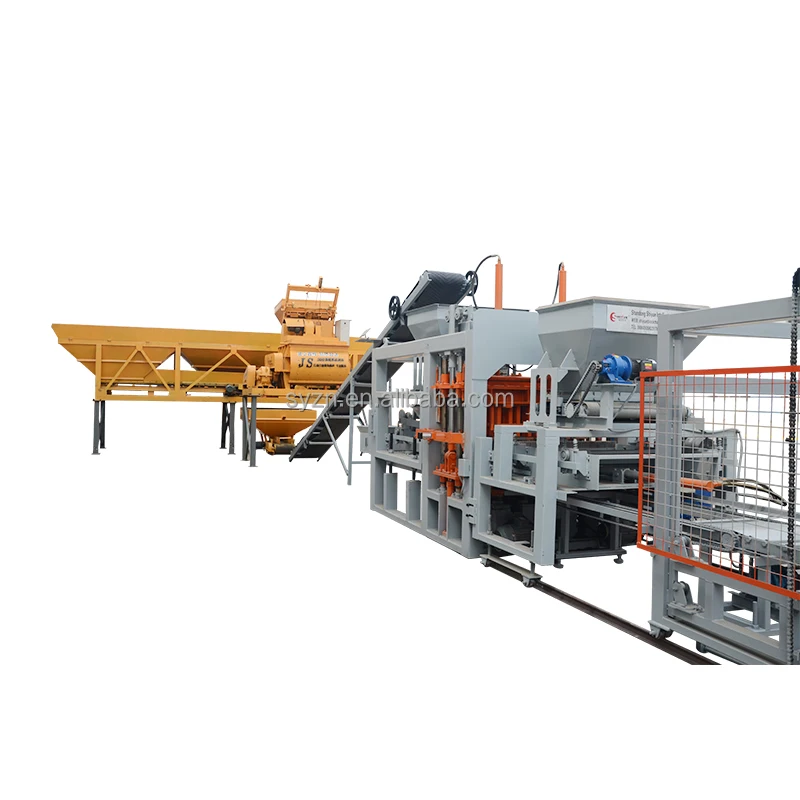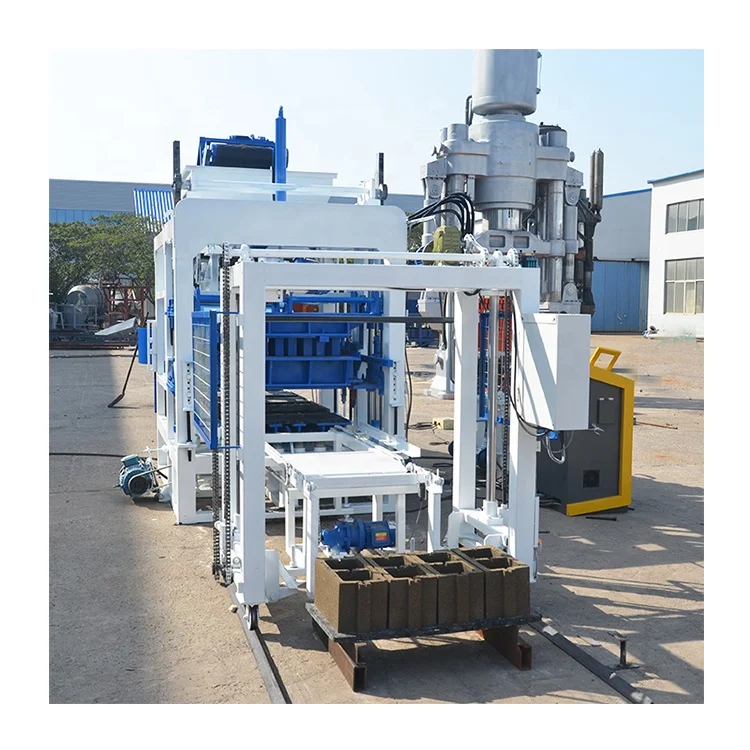


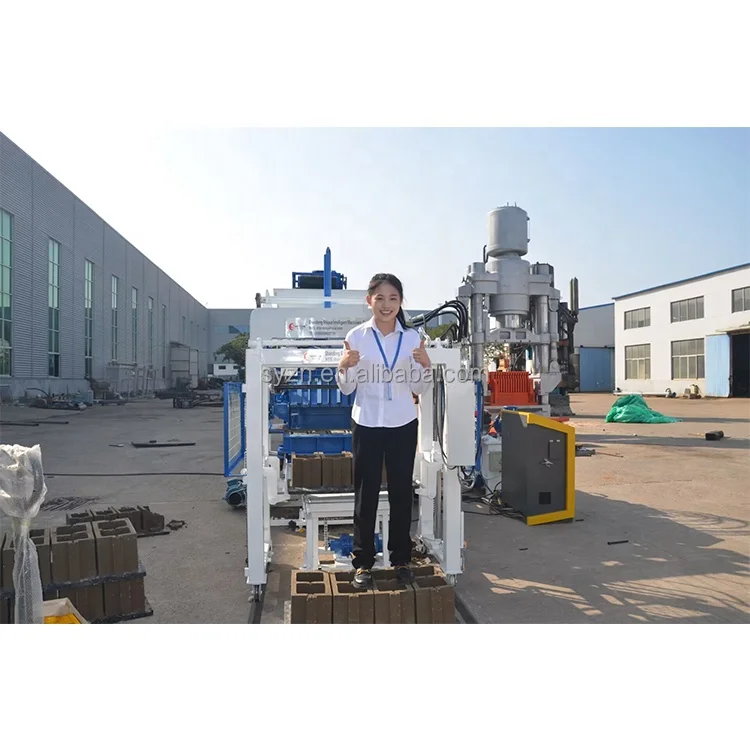
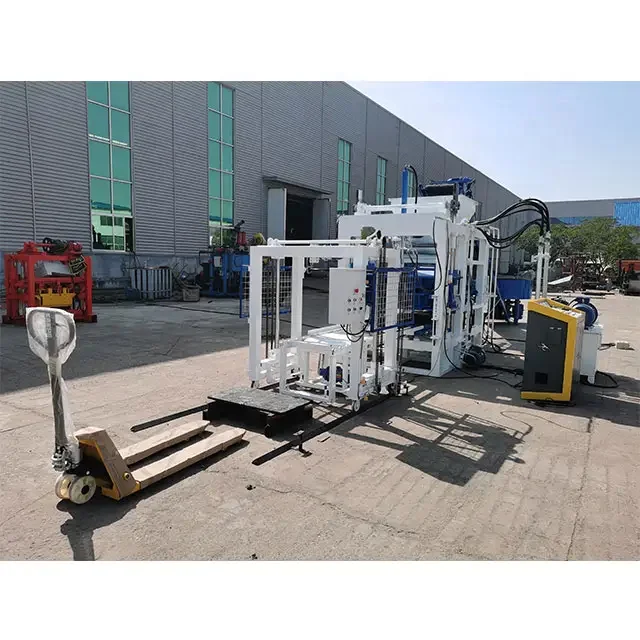
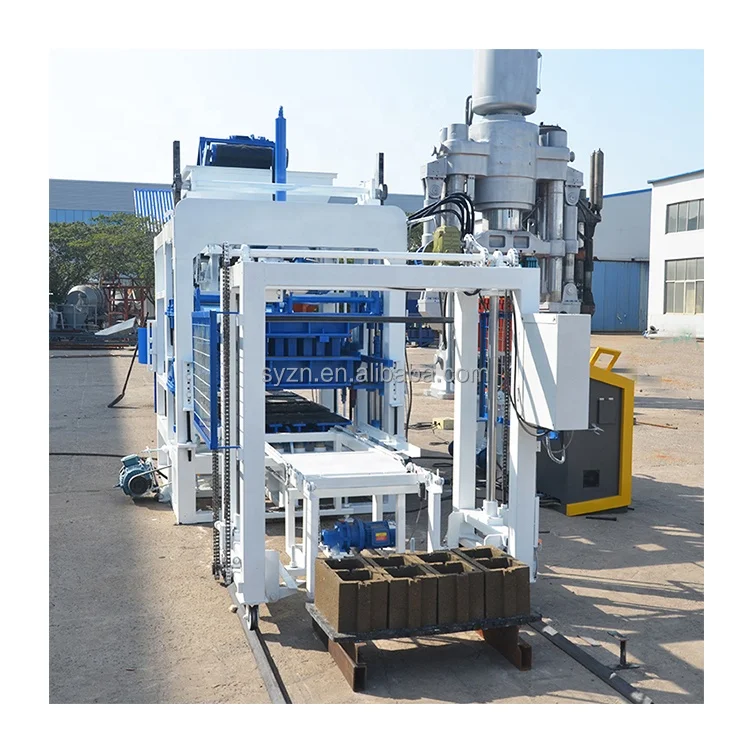
Description
Mould-Matched Configuration — QT4-18 capacity figures are calculated per block format with stated dimensions, not a single cycle rate that hides what the machine actually produces on your product mix.
Technical Specifications
| Parameter | Value |
|---|---|
| Model | QT4-18 |
| Product Type | Hydraulic Concrete Block Making Machine |
| Rated Power | 24 kW |
| Overall Dimensions | 3900 × 1600 × 2300 mm |
| Net Weight | 3 T |
| Vibration Force | 40–50 kN |
| Cycle Time | 15–25 s |
| Pallet Size | 850 × 550 × 25 mm |
| Mixer Model | JQ350 |
| Automation Level | Semi-automatic |
| Hydraulic System | Equipped with hydraulic station |
| Raw Materials | Crushed stones, sand, cement, dust, fly ash |
| Mould Format | Hollow block, solid brick, paver, curbstone |
| Output (400×200×200 mm hollow block) | 1200–1680 pcs/h; 9600–13440 pcs/8 hr |
| Output (400×150×200 mm hollow block) | 1800–2400 pcs/h |
| Output (240×115×53 mm solid brick) | 3240 pcs/h |
| Control System | (basis not stated in source — confirm PLC configuration) |
| Voltage & Frequency | (basis not stated in source — confirm electrical specifications) |
| Certification | (basis not stated in source — confirm CE or other certifications) |
Application Suitability
| Application | Material or Output |
|---|---|
| Medium-scale hollow block plant | 400×200×200 mm and 400×150×200 mm hollow blocks from crushed stone, sand and cement |
| Solid brick production for masonry | 240×115×53 mm solid bricks using fly ash or stone dust blends |
| Paver and curbstone manufacturing | Interlocking pavers and kerbstones for municipal and landscaping projects |
| On-site construction block supply | Housing project contractors producing blocks locally with semi-automatic operation |
What "Pieces per Hour" Actually Means on the QT4-18
Every capacity number must name the block it was measured on, or it means nothing.
Sellers routinely quote a hydraulic block making machine specifications sheet with a single headline figure — say, 3240 pieces per hour — without revealing that number assumes a small 240×115×53 mm solid brick. A buyer who actually needs 400×200×200 mm hollow blocks will discover, after commissioning, that the same machine produces closer to 1680 pieces per hour on that format. Daily output drops, contracts slip, and the blame lands on the operator [NEED_CITE: common causes of block plant output shortfalls in emerging markets]. The QT4-18 documentation states the block format behind each figure so the buyer sizes the line against real market demand, not a catalogue illusion.
Matching Mould Format to the Blocks Your Market Actually Buys
The QT4-18 accepts moulds for hollow blocks, solid bricks, pavers and curbstones, and each format changes cycle time, vibration dwell and hydraulic pressure profile. A hollow block mould with larger void area needs longer vibration to consolidate the web walls, while a solid brick mould demands higher pressure for density. Listing hydraulic block making machine specifications per format ensures the buyer knows whether switching from pavers to hollow blocks mid-shift is a ten-minute job or a half-day teardown.
Why Pallet Size Decides Curing Logistics Before the Machine Arrives
The 850 × 550 × 25 mm pallet is not an arbitrary number — it governs how many wet blocks travel to the curing yard per trip, which forklift tine spacing is required, and whether existing curing racks accept the pallet footprint. A yard designed around 900 × 600 mm pallets will reject the QT4-18 pallets on day one, forcing a full rack replacement [NEED_CITE: block plant pallet standardisation and curing yard compatibility]. Confirming pallet dimensions against the buyer’s current handling equipment removes the most common post-delivery surprise.
Reading the Core Specs Without the Marketing Filter
Vibration force rated at 40–50 kN, paired with a dedicated hydraulic station, determines the compacting energy delivered to each block. Higher kN produces denser blocks with greater compressive strength, but only when the mix design supplies enough fines to fill voids between aggregate particles. Cycle time between 15 and 25 seconds reflects the range across formats — a 240×115×53 mm solid brick cycles faster than a 400×200×200 mm hollow block because the mould cavity fills and compacts more quickly. The 24 kW rated power covers the hydraulic pump, vibration motor and mixer drive simultaneously, so electrical supply must sustain continuous load, not just peak draw.
The Hidden Cost of Skipping the Format Conversation
When a machine is ordered against a single capacity number and the buyer later requests a different block format, the mould change may expose limitations in vibration amplitude or hydraulic ram stroke that the original quotation never addressed. Output drops, block edges chip, and the semi-automatic pallet feed misaligns because the new mould sits at a different height. Rectifying these issues on site costs more in downtime and replacement parts than specifying the full format list before production begins [NEED_CITE: block machine retrofit costs when mould formats are added after delivery].
Why Buyers Spec the QT4-18 Through This Channel
Block machinery is the single focus here, so the QT4-18 press, its moulds, pallets and JQ350 mixer are specified as one matched system rather than assembled from separate quotations. Configuration starts from the buyer’s actual aggregate sample and target block strength, not a catalogue default. Mould design covers the exact formats the buyer’s market sells, including custom drawings when standard dimensions do not match local building codes. Automation level is selectable, allowing a semi-automatic start with a documented upgrade path. Installation support includes operator training on format changeover and hydraulic pressure adjustment, not just a power-on check.
Documentation & Verification
- Line layout drawing with capacity table stating each block format and assumed cycle time
- Mould dimension drawing and full format list before tooling fabrication begins
- Pallet specification sheet matched to buyer’s curing rack spacing and forklift capacity
- Voltage, frequency and PLC display language confirmation signed before assembly
- Factory test record running buyer’s block format with measured output and block weight
- Hydraulic and electrical schematic for on-site troubleshooting and spare part ordering
Installation, Commissioning & Support
- Foundation pad sized to 3900 × 1600 mm footprint with anchor bolt template provided before machine arrival
- Dedicated 24 kW circuit at confirmed voltage and frequency with phase rotation checked at main panel
- Hydraulic station pre-filled and pressure-tested at factory; oil grade confirmed for local ambient temperature range
- First-shift commissioning runs the buyer’s block format to verify cycle time and compressive strength against target
- Operator training covers mould change procedure, vibration dwell adjustment and pallet feed alignment
- Wear parts list identifies hydraulic seals, vibration springs and pallet scraper blades with reorder part numbers
Before You Request a Quote
Tell us which block formats your market moves by volume, the daily piece count you need for each, and the local aggregate you intend to use — river sand, crushed stone, fly ash or a blend. Confirm your existing pallet size, curing yard dimensions, and site voltage and frequency so the hydraulic block making machine specifications can be locked before production starts.
Frequently Asked Questions
Q: How is the capacity figure calculated and which block format does it assume?
A: Each output number on the QT4-18 sheet is tied to a specific block dimension — for example, 1200–1680 pieces per hour is measured on a 400×200×200 mm hollow block, while 3240 pieces per hour assumes a 240×115×53 mm solid brick. Cycle time, mould cavity count and pallet area all factor into the calculation.
Q: What pallet size and material should I choose for my existing curing setup?
A: The standard pallet is 850 × 550 × 25 mm. Before confirming material — bamboo, PVC or steel — measure your curing rack spacing and forklift tine width so the pallets integrate with handling equipment already on site, avoiding rack replacement after delivery.
Q: How long does a mould change take and what tools are required?
A: Mould changeover on the QT4-18 involves releasing the clamp bolts, lifting the old mould with an overhead hoist, seating the new mould and re-torquing to specification. Typical time is under one hour with two operators, assuming the correct mould adapter plate is already in inventory.
Q: Can the machine be configured for my local aggregate and mix design?
A: Yes. Vibration force between 40 and 50 kN and adjustable hydraulic pressure allow tuning to aggregates ranging from fine fly ash to coarse crushed stone. Providing a sample mix before production lets the factory set parameters that deliver target compressive strength without over-compacting or under-filling the mould.
Q: What voltage and PLC language options are confirmed before shipment?
A: Voltage, frequency and PLC display language must be confirmed in writing before assembly begins. This prevents commissioning delays caused by mismatched motor windings or an interface the operator cannot read [NEED_CITE: common electrical specification gaps in exported block machinery].