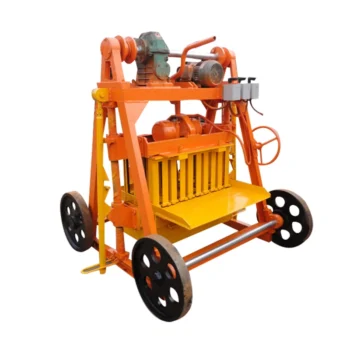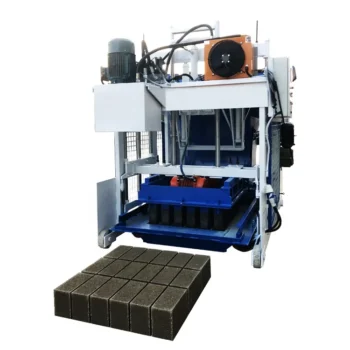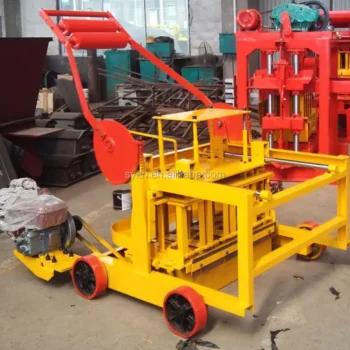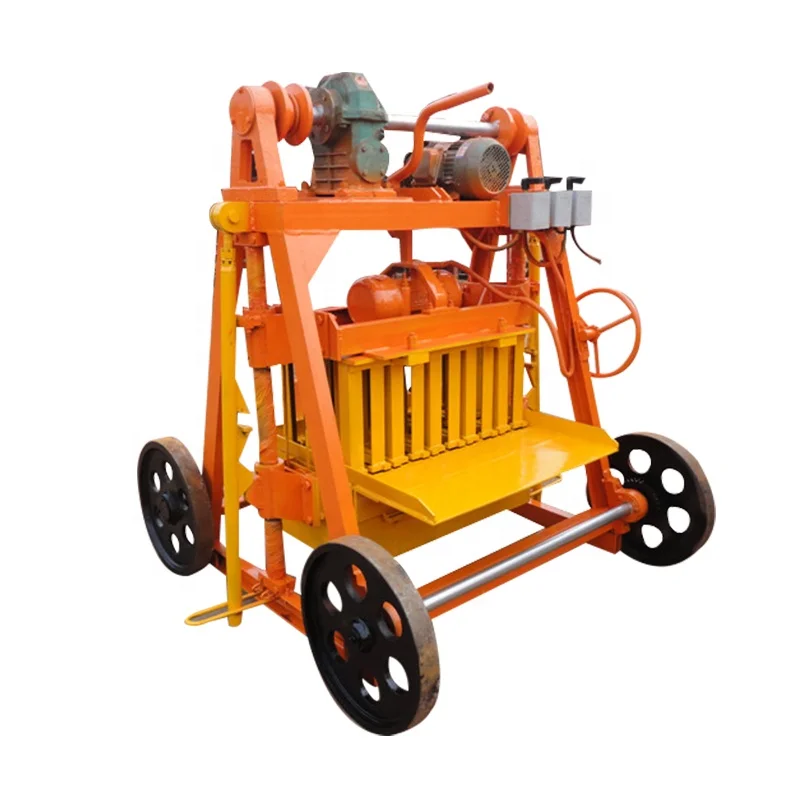

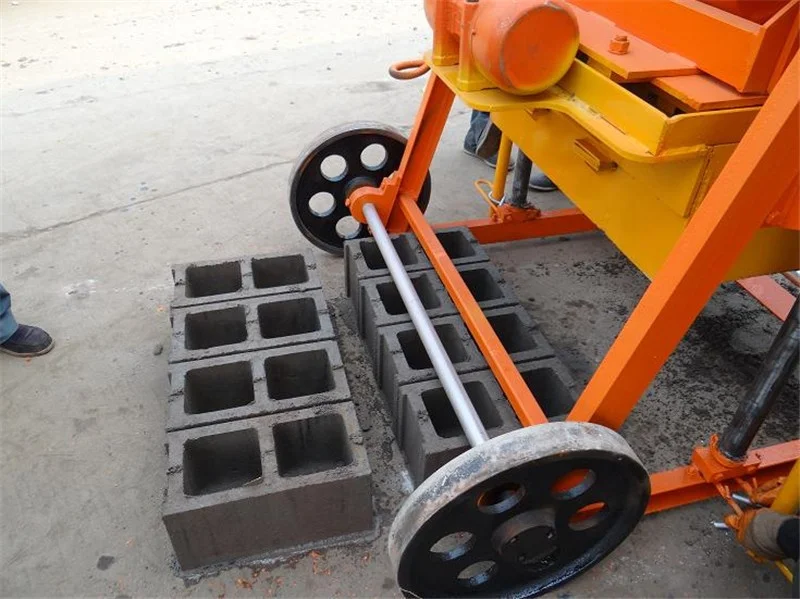


Description
Matched to your mix and format — the QMJ4-45 egg laying block machine is configured against your local aggregate and target hollow block size, so the capacity you see on paper matches what you produce on site.
Technical Specifications
| Parameter | Value |
|---|---|
| Model | QMJ4-45 |
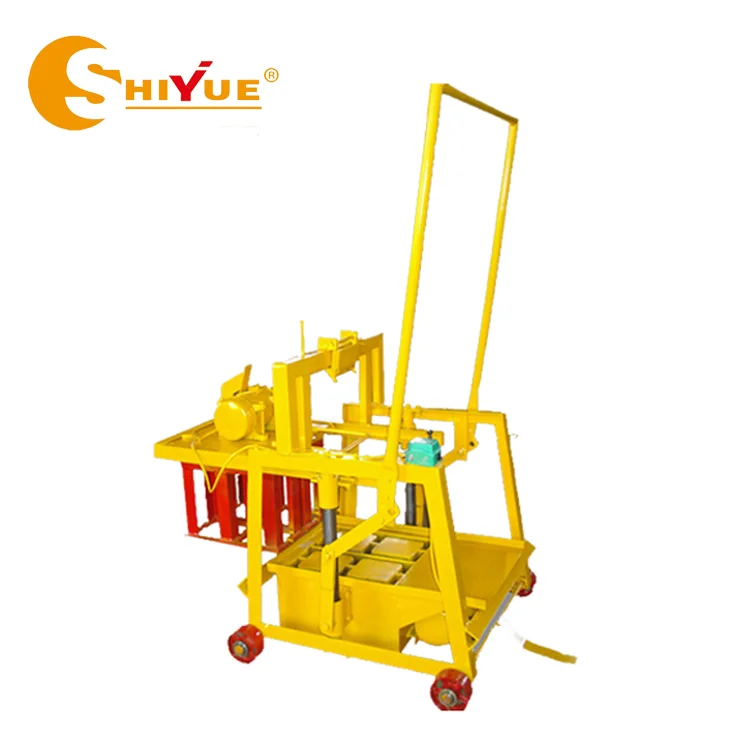
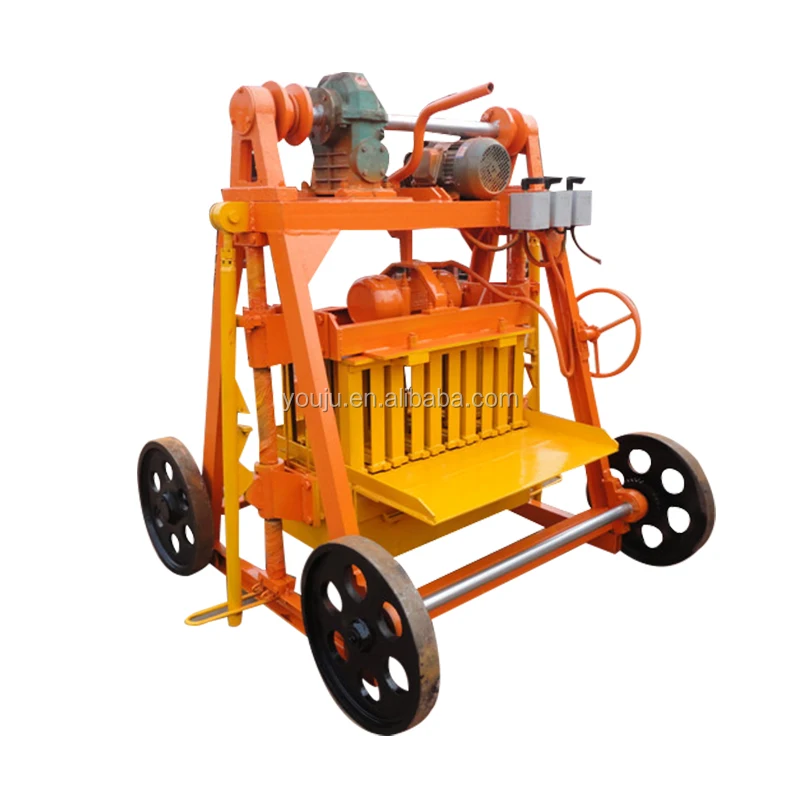
| Product Type | Egg Laying Block Making Machine |
| Molding Capacity | 4 pcs per mold |
| Vibration Frequency | 2400 r/m |
| Vibration Type | Twice-vibration of molding core |
| Productivity | 2600–4000 pcs/day (basis not stated in source — confirm block format and material) |
| Hydraulic Method | Mold vibration |
| Molding Cycle | 45 seconds |
| Demold Method | Manual |
| Turning Method | Manual |
| Automation Level | Manual |
| Total Power | 6 kW |
| Power Source | Diesel or petrol engine |
| Pallet Requirement | None (egg laying type) |
| Warranty | One year for the whole machine |
| Certification | CE |
Application Suitability
| Application | Material or Output |
|---|---|
| On-site hollow block production for building contractors | Hollow blocks 400×200×200mm, 400×150×200mm, 400×120×200mm from crushed stone, sand and cement |
| First block plant setup with minimal investment | Multicellular bricks and standard solid bricks from locally available aggregate |
| Housing and development project sites | Paving bricks produced directly where construction is taking place |
Why "4000 Pieces per Day" Can Mislead You
Capacity means nothing until it is tied to the exact block format you intend to sell.
When I helped commission a mobile egg-laying unit in South Asia, the brochure promised a daily output the buyer planned his entire logistics chain around. Once we loaded his local coarse aggregate into the mixer, the vibration could not compact it properly and block edges collapsed during demoulding. The machine was not at fault — the specification sheet had simply never stated which block format or mix design the egg laying block making machine specifications assumed. Every productivity figure on this page is therefore tied to a specific hollow block size and must be verified against your actual raw material before you commit [NEED_CITE: block density testing standards for concrete masonry units].
Pallet-Free Production That Actually Works on Rough Ground
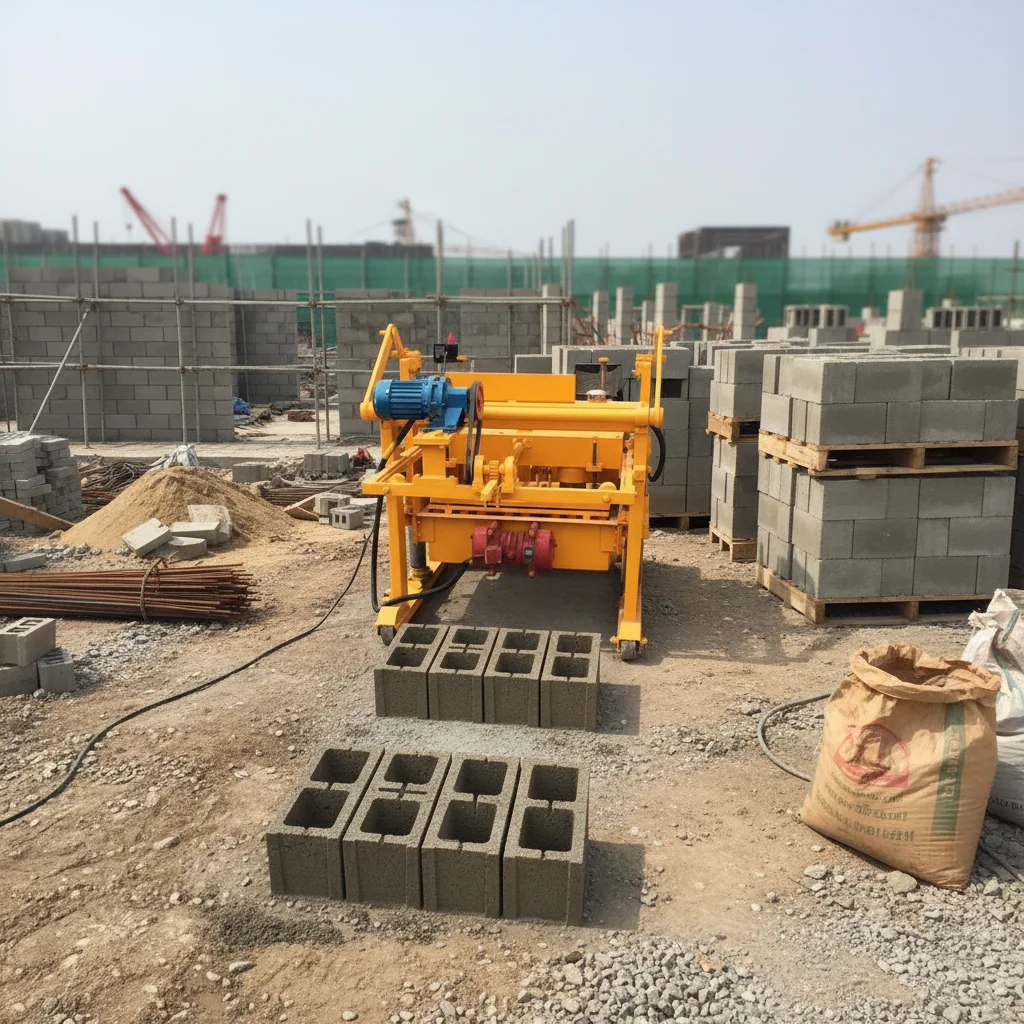
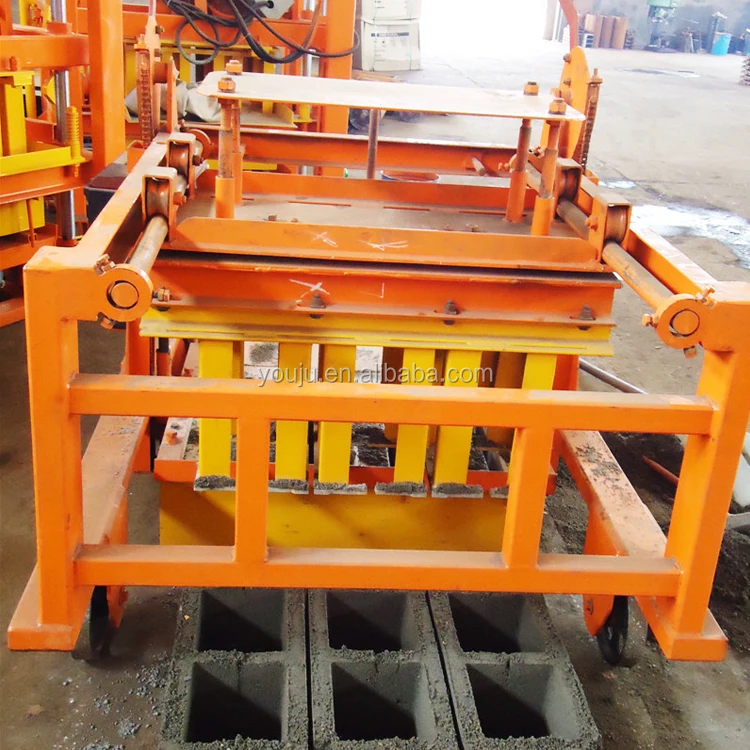
The egg laying block machine category exists for sites where pallets, racks and forklifts are not available and will not be arriving. The QMJ4-45 lays each molded block directly onto a leveled concrete floor and moves forward on its own wheels, leaving the block to cure in place. This eliminates the pallet return loop that occupies a full worker on stationary presses and removes the pallet investment entirely. The twice-vibration of the molding core is what holds the block together during that critical moment when the mold lifts away without pallet support, producing edges that survive the demolding transition.
Sizing the Engine to Your Site Reality
A diesel or petrol engine rated at 6 kW means this machine does not wait for grid electricity to reach your project site. That matters for housing developments on the outskirts of cities where power connections are installed last, and for rural construction where generators are the only option. Engine choice affects fuel consumption and service intervals, both of which change with local fuel availability and ambient temperature. Confirming engine type before dispatch prevents the situation where a petrol unit arrives at a site that only stocks diesel, or where altitude derates the engine below the power the vibration motor requires [NEED_CITE: small diesel engine derating at altitude for construction equipment].
What 45 Seconds per Cycle Actually Requires
The 45-second molding cycle covers vibration, compaction and demolding — but assumes an operator who has already fed the mold cavity evenly and leveled the top. With four blocks per mold, a consistent cycle rhythm keeps daily output predictable. The vibration frequency of 2400 r/m is tuned for fine-to-medium aggregate; if your local sand is coarse or high in fines, the cycle will need adjustment through mix proportioning rather than machine settings. The manual demold and turning design keeps the machine simple enough for a two-person team, but also means operator fatigue becomes the limiting factor during long shifts in hot weather.
The Cost of Getting the Aggregate Wrong
I have watched machines of this class produce strong, square blocks for the first week and then deteriorate as the quarry source changed and nobody adjusted the mix. When the vibration force and aggregate grading do not match, the result is not an immediate failure but a gradual decline in block density that shows up as breakage during transport or wall laying. The buyer blames the machine; the real cause is a specification that was never matched to local material. Confirming your aggregate sieve analysis before the machine leaves the factory allows the mold clearance and vibration timing to be set for what you will actually be feeding [NEED_CITE: aggregate grading requirements for concrete block production].
Why This Machine Is Supplied as a Matched Set
The QMJ4-45 is quoted with the mold, engine and spare wear parts specified together rather than assembled from separate purchase orders. That means the mold drawing is checked against the block format your local market actually buys, the engine is rated for the vibration load at your altitude, and the wear parts list covers the first replacement cycle so production does not stop while you wait for a shipment. Configuration is set against your target block size and mix design, not a catalogue default that may suit a different aggregate entirely.
Documentation & Verification
- Factory test record running your specified hollow block format before dispatch
- Mould drawing and format list confirming dimensions against your market demand
- Engine specification sheet matched to site altitude and ambient temperature
- Wear parts list covering the first replacement cycle with part numbers
- Operation manual with mix proportion guidance for local aggregate types
Installation, Commissioning & Support
- Level concrete floor required, minimum thickness to suit the 400×200mm block footprint and machine weight
- Engine commissioned on site with fuel type confirmed before first production run
- Mould fitted and aligned during commissioning with operator trained on 45-second cycle rhythm
- Vibration frequency verified under load with your local aggregate mix design
- Wear parts inventory checked against the supplied list before commissioning team departs
- One-year warranty covering the machine body, vibration motor and mould assembly
What We Need from You to Move Forward
Tell us which hollow block format your market buys most — the three standard sizes listed in the specifications are a starting point, not a complete range. We also need to know what aggregate you can source locally, including the sand grading, so we can confirm whether the vibration settings need adjustment. Finally, let us know whether diesel or petrol is the practical fuel choice at your site and whether any altitude derating applies, so the engine shipped is the one you actually need.
Frequently Asked Questions
Q: How is daily output calculated and which block format does it assume?
A: The 2600–4000 pieces per day figure appears in source documentation without a stated block format or material basis. Before ordering, we run a capacity calculation using your specific hollow block size, wall thickness, and mix design so the daily output we quote reflects what you will actually produce on your site with your aggregate.
Q: Can the mould be changed to produce different block sizes?
A: Yes, the QMJ4-45 accepts different moulds for hollow blocks, multicellular bricks, paving bricks and standard bricks. Mould change is manual and takes one operator a portion of a shift. We supply a format list and mould drawing so you can confirm which sizes your local market needs before the machine ships.
Q: What local aggregate and mix design does this machine need?
A: The twice-vibration core is effective with fine-to-medium aggregate. If your local sand is coarse or contains high fines, the mix proportions must be adjusted to maintain block density. We ask for a sample or sieve analysis of your aggregate before dispatch so we can confirm the settings match your material.
Q: Is the diesel engine included and what fuel consumption should I expect?
A: The machine is available with either a diesel or petrol engine rated at 6 kW total power. Fuel consumption depends on engine type, load cycle and ambient conditions. Confirming your preferred fuel type and site altitude before production ensures the engine shipped is rated for your actual operating environment.
Q: What block strength can I achieve with my local raw material?
A: Block strength depends on the interaction between aggregate grading, cement content, vibration force and curing conditions rather than the machine alone. We configure the mould clearance and vibration timing against your mix design and target strength requirement, and provide test guidance so you can verify results on site.