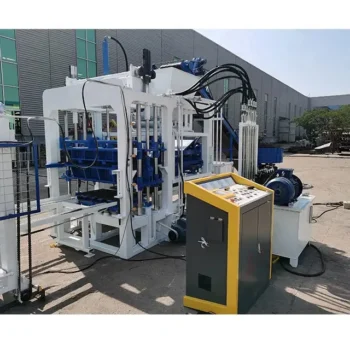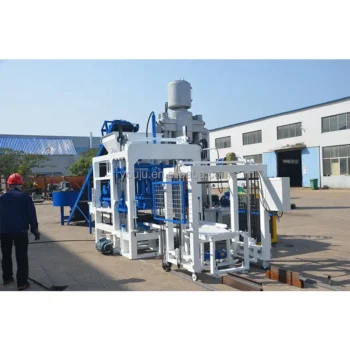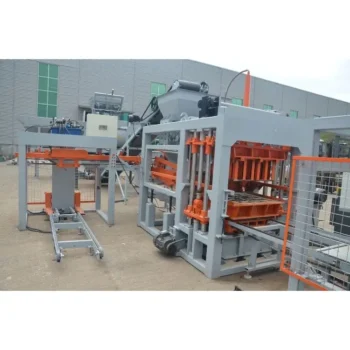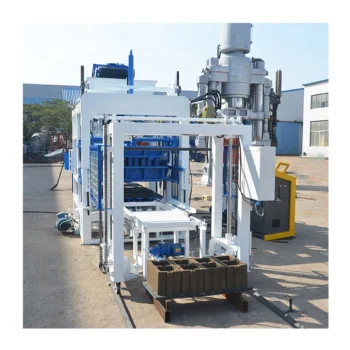
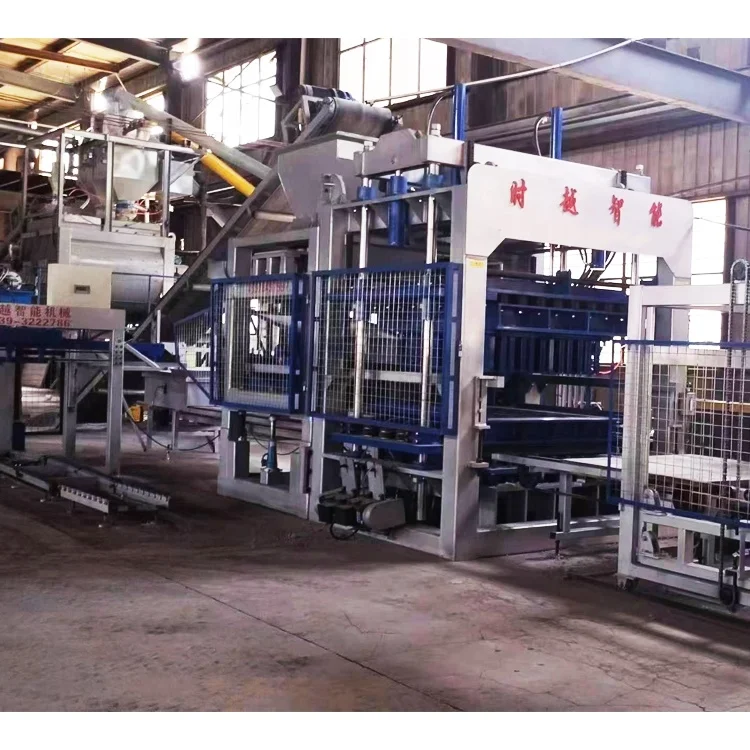
Description
Matched system configuration — The QT15-15 automatic block machine specifications are calculated against your target block format and local aggregate, not quoted from a generic cycle chart.
Technical Specifications
| Parameter | Value |
|---|---|
| Model | QT15-15 |
| Product Type | Fully Automatic Brick Production Line |
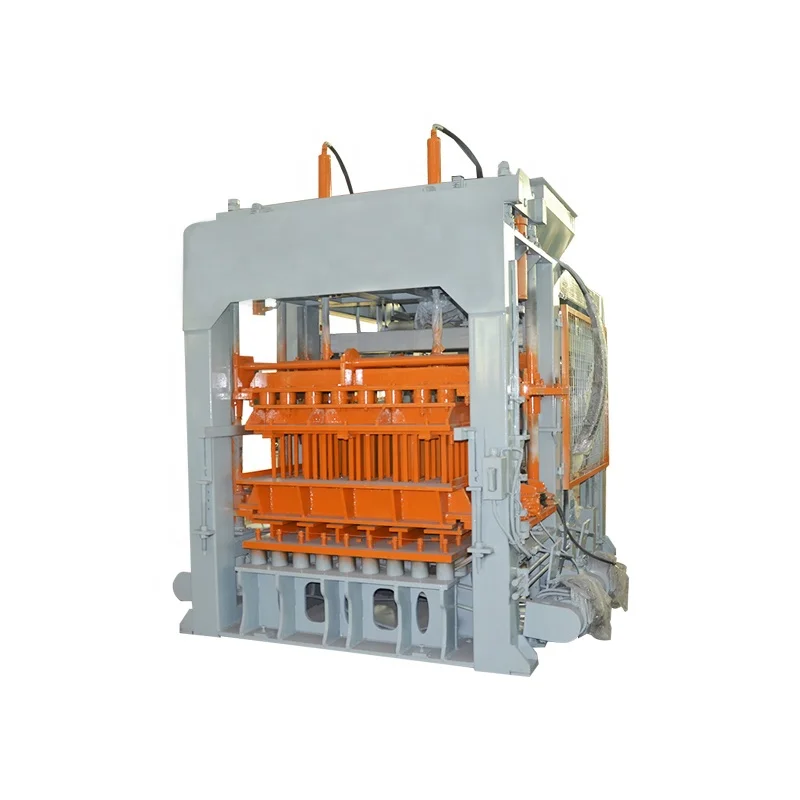
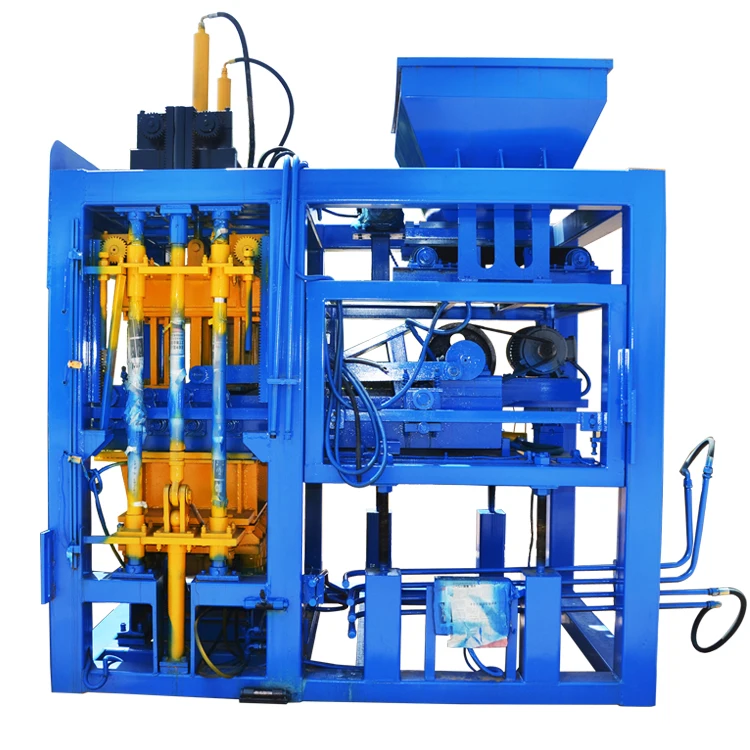
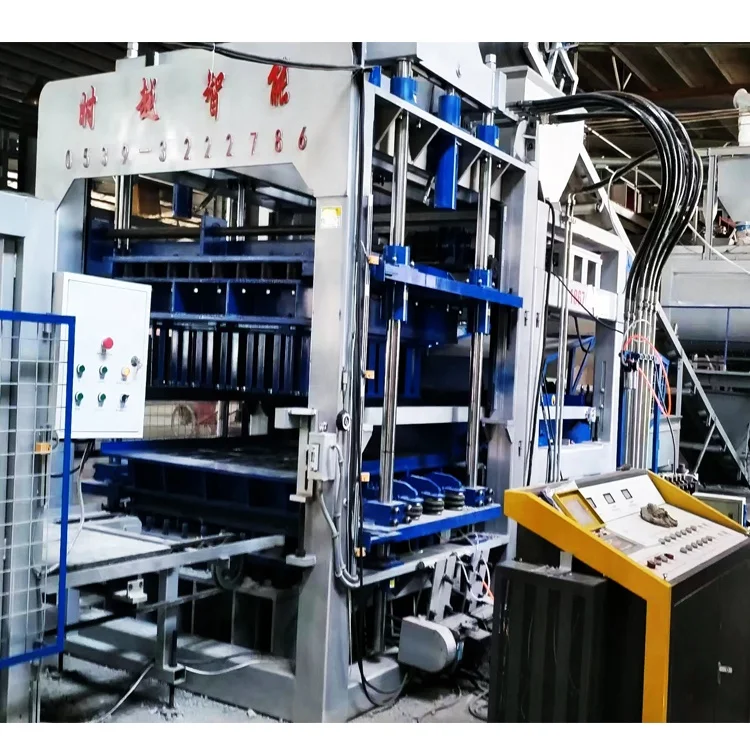
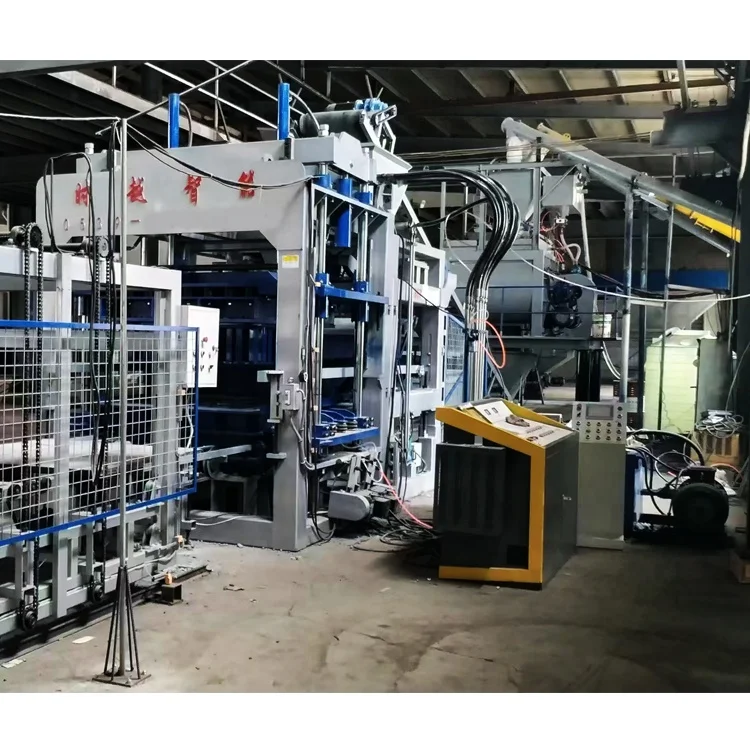
| Machine Structure | Super-strong steel structure with imported original parts |
| Control System | PLC aptitude control with human-machine interface dialogue system |
| Vibration System | Vertically synchronous vibration, frequency conversion and braking, synthetic output compounded with double vibration sources |
| Hydraulic System | Computer control flow pressure, special hydraulic loading unit |
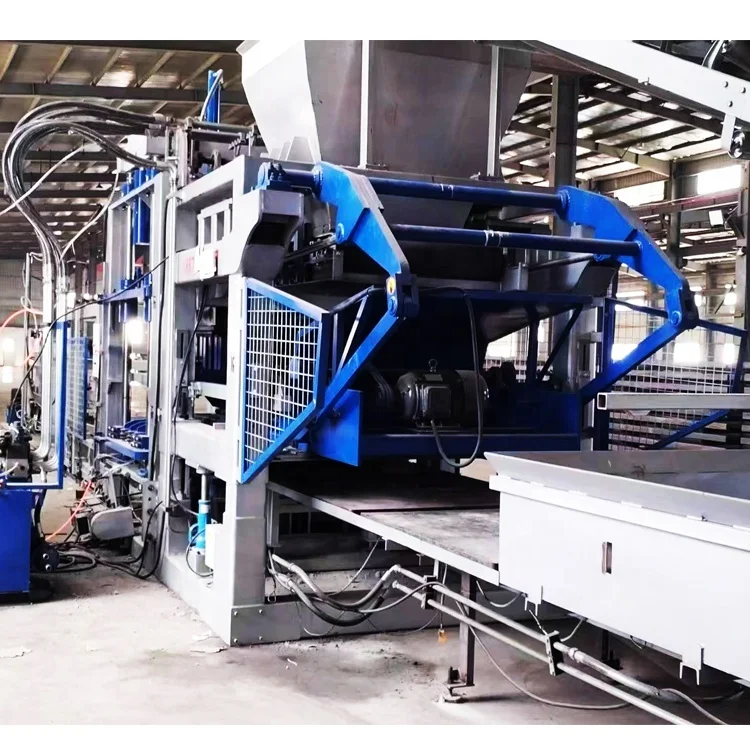
| Feeding/Cloth System | Semi-closed screen reticular rotational feeding unit, forced feeding with evenness and even speed |
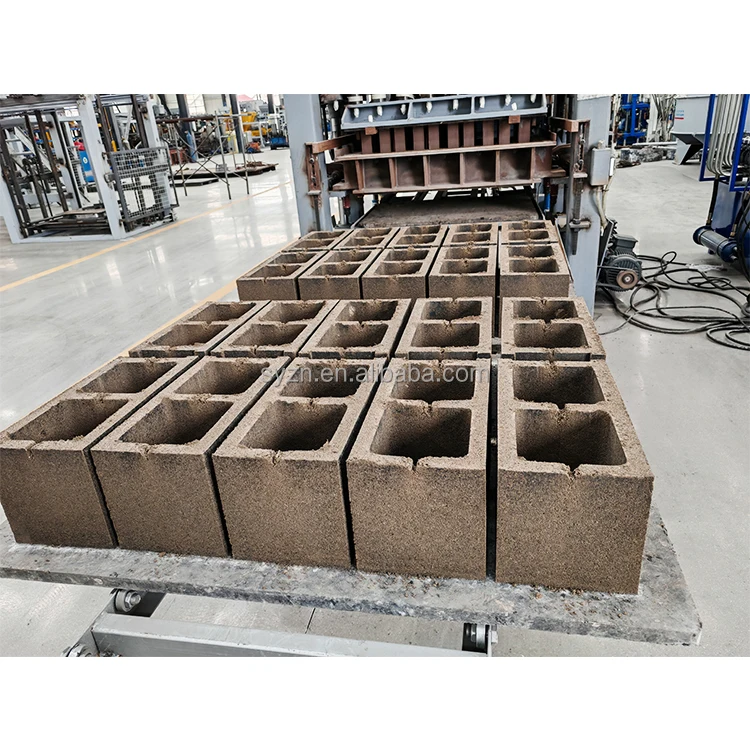
| Mould Format (Hollow block) | 400x200x200 mm |
| Mould Format (Solid brick) | 240x115x50 mm |
| Molding Cycle (Hollow block) | 15-20s |
| Molding Cycle (Solid brick) | 15-20s |
| Qty/Mould (Hollow block) | 15 pcs |
| Qty/Mould (Solid brick) | 80 pcs |
| Output Capacity (Hollow block) | 2700-3600 pcs/hour (based on 400×200×200mm hollow block, 15-20s cycle, 15 pcs/mould) |
| Output Capacity (Solid brick) | 14400-19200 pcs/hour (based on 240×115×50mm solid brick, 15-20s cycle, 80 pcs/mould) |
| Daily Output / 8hr (Hollow block) | 21600-28800 pcs (based on 400×200×200mm hollow block) |
| Daily Output / 8hr (Solid brick) | 115200-153600 pcs (based on 240×115×50mm solid brick) |
| Automation Level | Fully automatic, mass production with hydraulic loading unit |
Application Suitability
| Application | Material or Output |
|---|---|
| Large-scale hollow block plants | Crushed stone, cement, and local aggregate for 400×200×200mm structural blocks |
| High-volume solid brick manufacturing | River sand, fly ash, or desert sand mixes for 240×115×50mm solid bricks |
| Paving block production for municipal projects | High-strength concrete mixes for interlocking pavers and kerbstones |
| On-site production for housing developments | Locally sourced aggregate for mass automatic production of building formats |
Why "Cycles Per Hour" Can Mislead Your Plant Layout
A machine’s cycle time only matters when you know exactly which block format and mould size that number assumes.
I have stood on project sites where the daily output was half the brochure claim because the quotation listed a cycle time for a small solid brick while the buyer’s market actually demanded large hollow blocks. The automatic block machine specifications QT15-15 must be tied to a specific format—like the 400×200×200mm hollow block yielding 15 pieces per mould—otherwise the capacity calculation is just a theoretical maximum that your curing racks and forklifts cannot support. When vibration force and hydraulic pressure are not matched to the density required by your specific mix design, the machine might complete the cycle, but the blocks will fail the drop test [NEED_CITE: concrete block compressive strength testing standards].
Matching the Press to the Block Format You Actually Sell
Sizing a fully automatic brick production line starts with the product your market buys, not the machine’s peak mechanical speed. The QT15-15 operates on a 15-20 second molding cycle, but the daily throughput shifts dramatically depending on whether you are running 15 hollow blocks or 80 solid bricks per stroke. Understanding these automatic block machine specifications ensures your raw material batching plant and pallet return system are scaled to the correct volume.
Vibration and Hydraulic Pressure as a Matched Pair
The vertically synchronous vibration system uses frequency conversion and double vibration sources to compact the concrete, while the computer-controlled hydraulic flow pressure provides the clamping force. If the vibration frequency is too high for a fine desert sand mix, the material liquefies and the block loses its edge; if the hydraulic pressure is too low, the block density will not meet structural standards [NEED_CITE: relationship between vibration frequency and concrete mix design]. The QT15-15 allows these parameters to be adjusted together so the block strength matches your local building codes.
How Feeding Uniformity Dictates Block Density
The semi-closed screen reticular rotational feeding unit forces material into the mould cavity at an even speed. In large 400×200×200mm hollow block moulds, uneven feeding creates density variations where one corner of the block is weaker than the rest. This forced feeding mechanism ensures that the automatic block machine specifications translate into consistent product intensity across every pallet that leaves the press.
The Hidden Cost of Ignoring Pallet and Curing Logistics
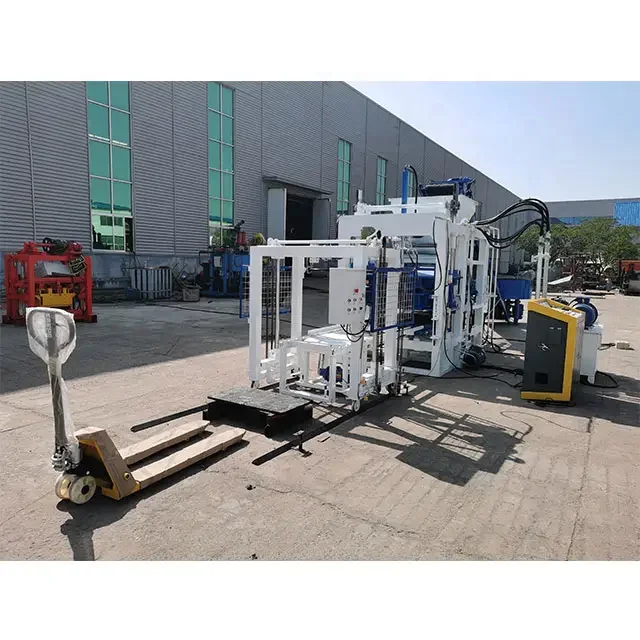
Specifying the press without confirming pallet size and material often leaves buyers stacking wet blocks by hand. If the QT15-15 is configured with a pallet that does not match your existing curing racks or forklift dimensions, the automatic stacking and cubing systems cannot function, turning a fully automatic line into a manual bottleneck. This logistical mismatch frequently delays commissioning and forces unbudgeted equipment purchases [NEED_CITE: material handling integration in concrete block plants].
Why Procurement Focuses on the Complete System
We configure the QT15-15 around your actual mix design and local aggregate rather than a catalogue default, ensuring the vibration and hydraulic settings produce blocks that pass local strength tests. Mould design is supplied for the specific formats your market sells, including custom drawings if your regional standard differs from the 400×200×200mm hollow block. The automation level is selectable, allowing a plant to start with the core press and upgrade pallet handling later. Installation includes operator training on the PLC human-machine interface so your team can monitor process signals and adjust parameters independently.
Documentation & Verification
- Line layout and capacity calculation explicitly stating the 400×200×200mm hollow block format assumption.
- Mould drawing and format list confirming available cavities and custom design options.
- Factory test record running your specified local aggregate mix before dispatch.
- Voltage, frequency, and PLC display language confirmation sheet signed prior to production.
- Hydraulic and electrical schematic matching the installed computer control flow pressure unit.
Installation, Commissioning & Support
- Foundation design must support the super-strong steel structure and dynamic vibration loads of the QT15-15.
- Dedicated power circuit required for the special hydraulic loading unit and PLC control cabinet.
- Commissioning includes matching the vertically synchronous vibration frequency to your specific raw material mix.
- Operator training covers the human-machine interface dialogue system for real-time signal analysis and fault tracking.
- Wear parts list provided for the semi-closed screen reticular rotational feeding unit and mould liners.
Sizing the Line to Your Project Constraints
To finalize the automatic block machine specifications QT15-15 for your site, we need to know the exact block formats your market requires and the daily volume you must sustain over an eight-hour shift. Provide a sample of your local aggregate and cement type so we can calculate the correct vibration frequency and hydraulic pressure settings. Finally, confirm your facility’s voltage and the preferred language for the PLC interface to ensure the line is ready for production the moment it is wired.
Frequently Asked Questions
Q: How is daily output calculated for each block format, and what cycle time does it assume?
A: Daily output is calculated using a specific mould cavity count and a 15-20 second cycle. For example, 21,600 to 28,800 pieces per 8-hour shift assumes the 400×200×200mm hollow block format with 15 pieces per mould. If you switch to a different format, the daily volume must be recalculated based on that new mould’s cavity count.
Q: How do you match vibration force and hydraulic pressure to my local aggregate?
A: We require a sample of your local sand, crushed stone, or fly ash to test in our lab before finalizing the automatic block machine specifications. The QT15-15 uses frequency conversion to adjust vibration and computer-controlled flow pressure to match the compaction force to your specific mix, preventing the blocks from cracking or failing strength tests.
Q: What mould formats are available, and can you design custom moulds?
A: The standard range includes 400×200×200mm hollow blocks and 240×115×50mm solid bricks. We also provide custom mould design to your drawings if your local market requires interlocking pavers, kerbstones, or non-standard porous bricks, ensuring the feeding unit and vibration table are matched to the new mould’s weight and cavity depth.
Q: How long does a mould change take on the QT15-15, and what tools are needed?
A: The mould change system is designed to minimize downtime so you can switch formats without losing a full shift. The PLC control system guides the operator through the unclamping sequence, and standard hand tools are used to secure the new mould. We validate the changeover time during factory testing to ensure format flexibility is practical.
Q: What pallet size is specified, and how does it relate to my curing area?
A: Pallet size is chosen based on the QT15-15 mould footprint and your existing curing rack dimensions. We confirm the pallet material and thickness against the block weight and your forklift capacity, ensuring the automatic stacking and handling equipment integrates smoothly with your current plant logistics without requiring facility modifications.