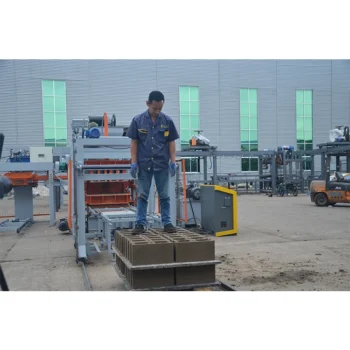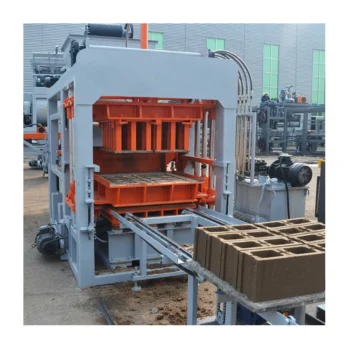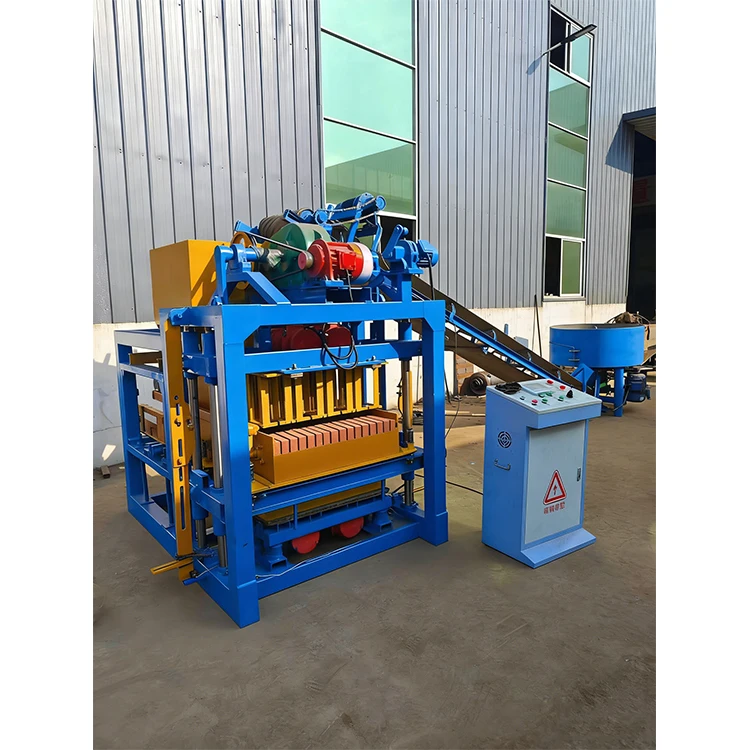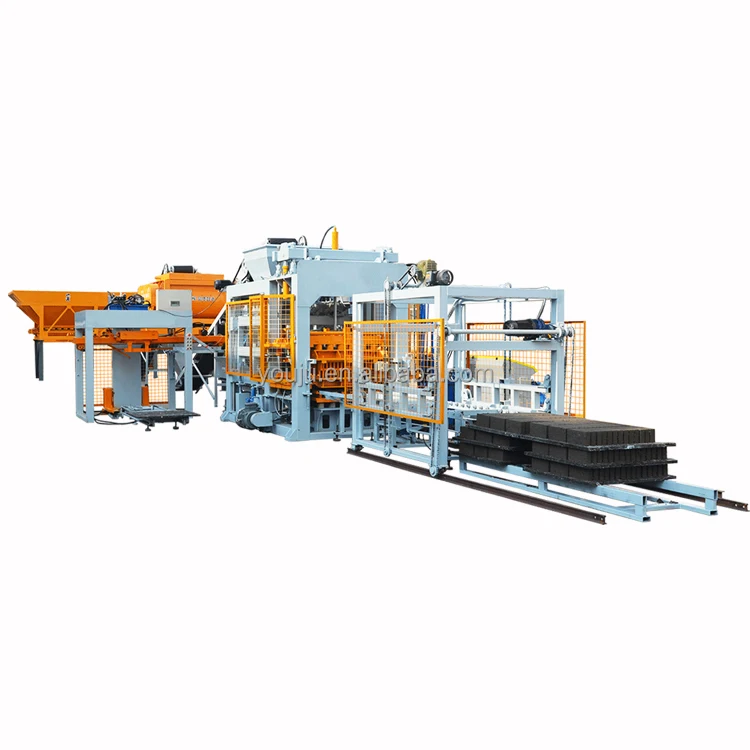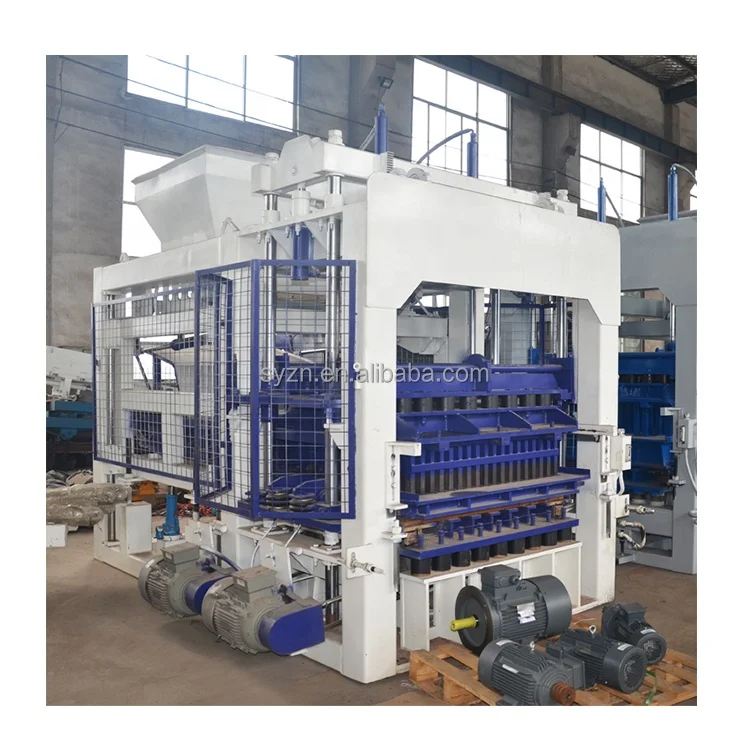
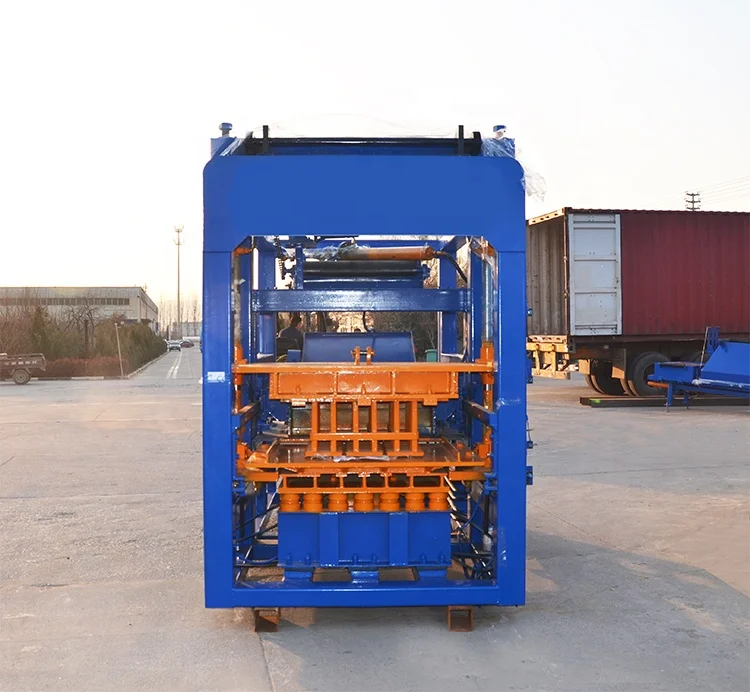
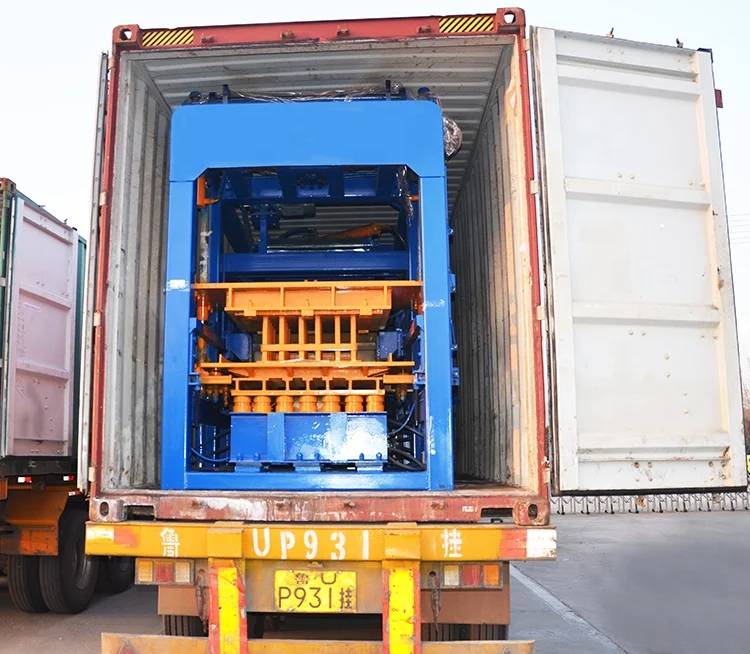
Description
Matched System Sizing — Every QT6-15 output figure ties directly to a specific block format, pallet layout, and cycle time, so your daily capacity is verifiable before the machine ships.
Technical Specifications
| Parameter | Value |
|---|---|
| Model | QT6-15 |
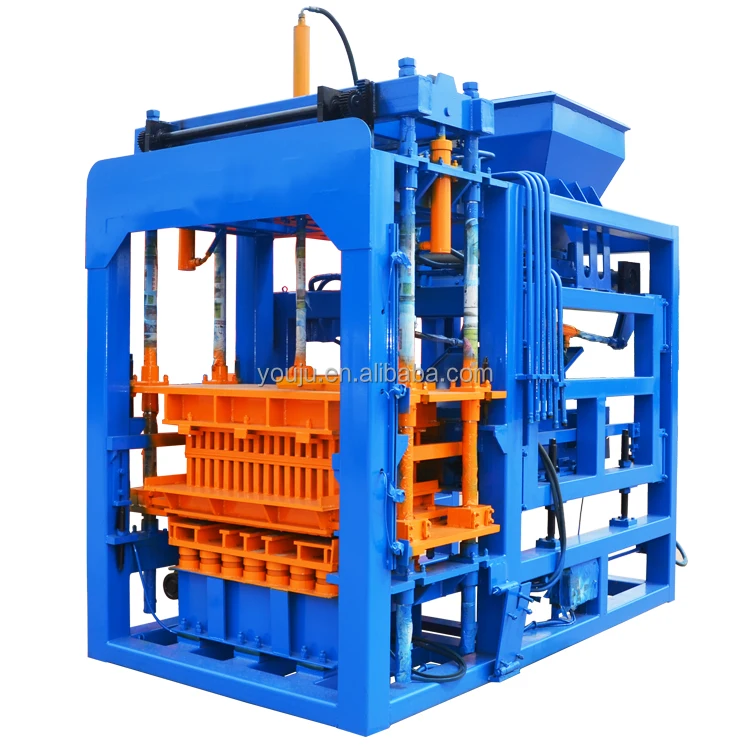
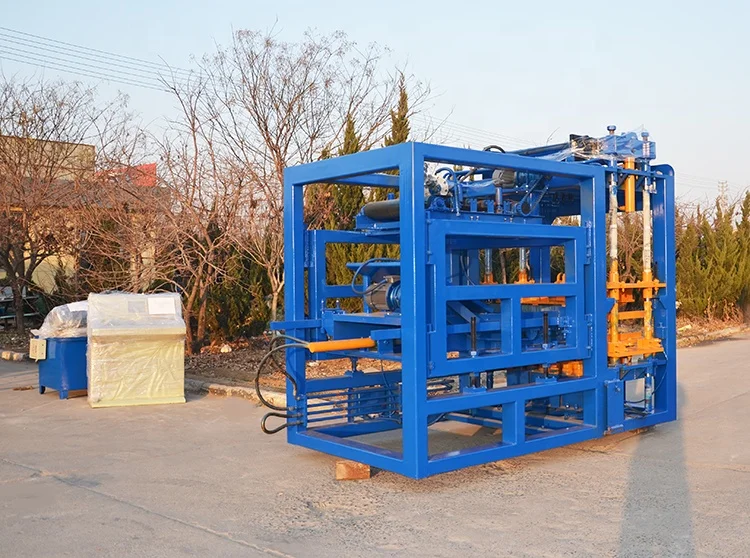
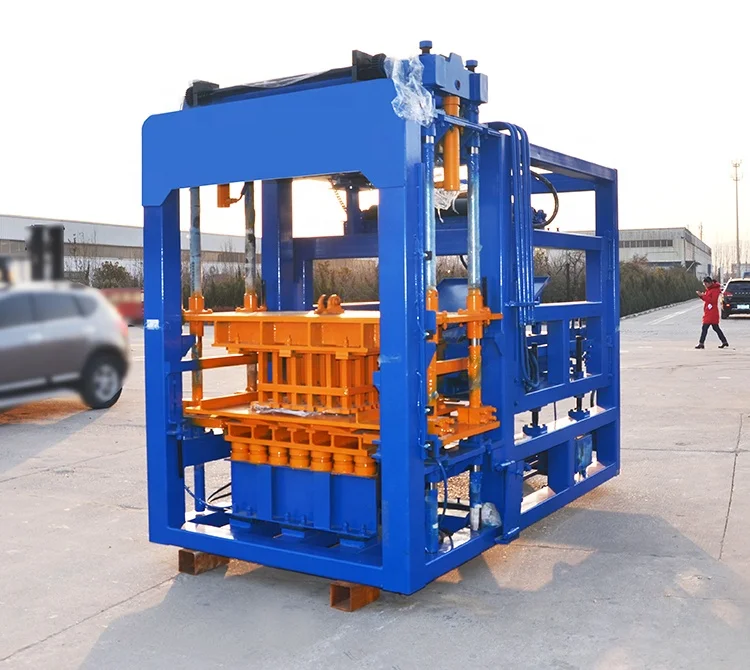
| Product Type | Automatic Concrete Block Making Machine |
| Molding Method | Vibration and hydraulic pressing |
| Rated Pressure | 21 MPa |
| Molding Cycle | 15s–20s (basis not stated in source — confirm block format, material, and thickness) |
| Pallet Size | 900 × 700 mm |
| Main Machine Weight | 6,000 kg |
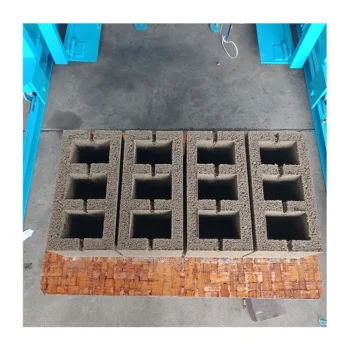
| Hollow Block Output (400×200×200 mm) | 6 pcs/pallet, 1,440 pcs/h, 11,520 pcs/8h (theoretical, basis not stated in source) |
| Paving Brick Output (200×100×60 mm) | 21 pcs/pallet, 5,040 pcs/h, 40,320 pcs/8h (theoretical, basis not stated in source) |
| Solid Brick Output (240×115×53 mm) | 32 pcs/pallet, 7,680 pcs/h, 61,440 pcs/8h (theoretical, basis not stated in source) |
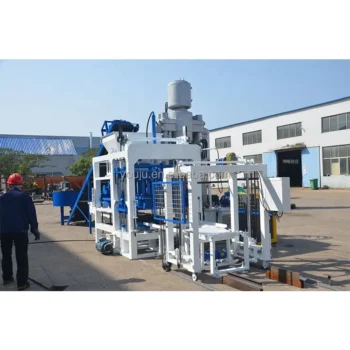
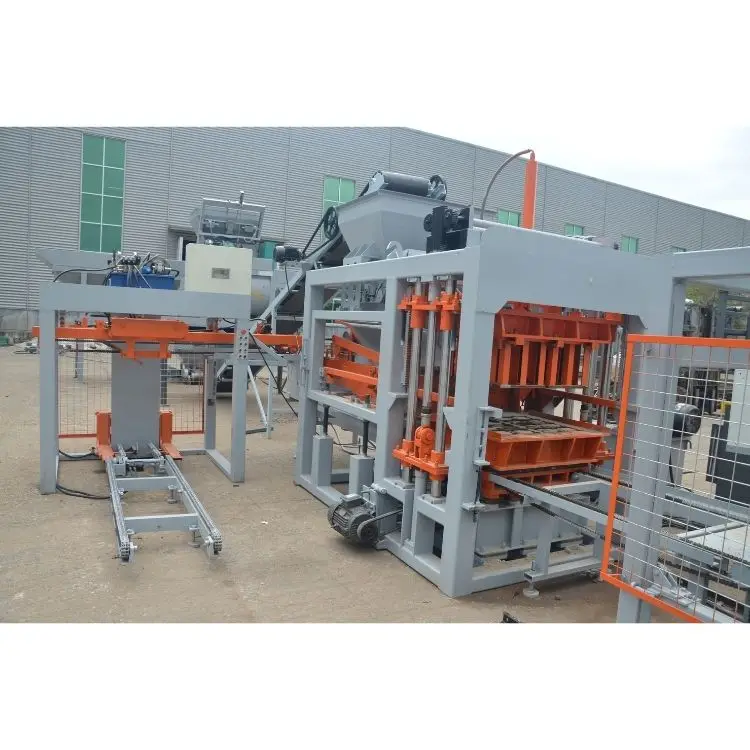
| Automation Level | Automatic line with JS500 mixer, 8 m belt conveyor, automatic stacker; higher configuration adds cement silo, screw conveyor, cement scale, batching machine, pallet loader, pallet separator |
| Raw Materials | Cement, sand, fly ash, stone powder, slag |
| Voltage | Customizable to local voltage (exact value to be confirmed) |
| Warranty | 1 year excluding wear parts |
Application Suitability
| Application | Material or Output |
|---|---|
| Hollow block production for load-bearing and partition walls | Concrete mixes with cement, sand, fly ash, and crushed stone powder |
| Paving brick production for walkways, parking lots, and plazas | Aggregate-rich mixes with stone powder and slag |
| Solid brick production for structural masonry | Dense concrete blends with cement and fine sand |
| Curbstone production for road and kerb applications | High-strength mixes with coarse aggregate (mould change required) |
What QT6-15 Automatic Block Machine Specifications Don’t Tell You Without Format Context
Capacity is meaningless until it is anchored to the exact block size your market buys.
I once watched a plant in the Gulf region commission a press that promised a certain hourly figure based on hollow blocks, only to find that their primary product — a 60 mm paving brick with a face-mix layer — ran a completely different cycle. The real output settled well below the brochure number. That gap is not a defect in the machine; it is a gap in how the QT6-15 automatic block machine specifications are communicated when format and cycle are left undefined [NEED_CITE: block cycle time variation by format and mix design].
Matching Press Force to Your Local Aggregate and Mix
The 21 MPa rated hydraulic pressure works in combination with vibration to compact the concrete mix inside the mould cavity. When the local sand carries a high fines content — something I have encountered repeatedly across sites in the Middle East — the water demand shifts and the compaction behavior changes. The QT6-15 automatic block machine specifications become meaningful only when the pressure and vibration settings are adjusted against your actual mix, not a generic laboratory formula. A machine configured for clean river sand will underperform with desert sand unless the parameters are reset accordingly.
Why Pallet Size Dictates Your Curing Workflow
The 900 × 700 mm pallet is the physical link between the press and your curing area. If your existing forklift tines are spaced for a different pallet dimension, every pallet move becomes a manual correction. If your curing racks are built around a different size, the mismatch compounds across thousands of cycles per day. The pallet material — whether bamboo, steel, or composite — affects both the block surface finish and the pallet lifespan under repeated vibration. Selecting the right pallet for the QT6-15 is a decision that must align with the infrastructure already on your floor [NEED_CITE: pallet material selection criteria for concrete block curing].
Reading the Specs Beyond the Brochure Numbers
The molding cycle of 15–20 seconds covers a range that depends on block height, mix workability, and the degree of face-mix or color layer application. A solid brick at 53 mm height fills and compacts faster than a 200 mm hollow block, which requires longer vibration to consolidate the thin webs. The main machine weight of 6,000 kg reflects the structural mass needed to absorb vibration forces over continuous shifts without frame fatigue. Voltage customization must be confirmed before production begins — arriving with a 380 V motor in a country running 440 V three-phase means weeks of delay before the first block is made. The JS500 mixer in the standard line is sized to keep pace with the press at typical cycle times, but adding a cement silo and batching machine at higher configuration levels improves batch-to-batch consistency when you are running multiple formats in a single shift.
The Hidden Cost of a Mould Change That Eats a Shift
A machine that offers format flexibility on paper can still lose most of a production day if the mould change procedure was never demonstrated during commissioning. I have seen operators struggle with bolt patterns and alignment pins because the quick-change system was not part of the original specification. When the QT6-15 is ordered with multiple moulds for hollow blocks, pavers, and kerbstones, the changeover method needs to be agreed upfront — otherwise the format flexibility you paid for gets cancelled by the downtime it takes to use it [NEED_CITE: mould changeover time impact on block plant productivity].
Why This Configuration Approach Fits Your Project
The QT6-15 is specified as a matched system rather than a standalone press. The mixer, conveyor, stacker, and pallet handling are sized together so the press is not left waiting between cycles. Capacity is calculated per block format with the pallet layout stated, not quoted as a single headline number. Moulds are designed for the formats your local market actually sells, and custom drawings are accepted when standard formats do not match. Voltage, frequency, and PLC display language are confirmed before the machine enters production, eliminating the most common cause of commissioning delays. Wear parts and mould replacement lists are provided so the first reorder does not become an emergency.
Documentation & Verification
- Line layout drawing showing each station from mixer to stacker with capacity per stated block format
- Mould drawing and format list confirming cavity count and pallet arrangement for each product
- Machine specification sheet listing hydraulic pressure, vibration force, pallet size, and cycle time per format
- Voltage, frequency, and PLC language confirmation sheet signed before production starts
- Factory test record with blocks produced using your confirmed mix design and target format
- Hydraulic and electrical schematic for your maintenance team before the container arrives
Installation, Commissioning & Support
- Foundation plan specifying load points for the 6,000 kg main machine and vibration isolation requirements
- Electrical panel connection matched to your confirmed voltage and dedicated circuit rating
- Machine reassembly and alignment after container transport with mould fitment verification
- First-run parameter tuning using your local aggregate and confirmed mix design across each block format
- Operator training covering mould change procedure, PLC navigation, and daily maintenance checkpoints
- Wear parts list with hydraulic seals and mould liner reorder intervals for your planning
What We Need From You to Quote Accurately
Send the block format or formats your market demands, including dimensions and any face-mix or color requirements. Confirm your local raw materials — particularly sand type and available aggregate — along with any lab test results you already have. Share your site voltage, frequency, and the language your operators need on the PLC display. If you have an existing curing area and forklift, provide the pallet dimensions you currently use so the 900 × 700 mm pallet can be evaluated against your workflow.
Frequently Asked Questions
Q: How is output capacity verified per block format and what cycle time applies to each?
A: Each capacity figure is calculated against a specific block size and pallet layout. The 15–20 second cycle range covers formats from thin pavers to tall hollow blocks, and the exact cycle for your product is confirmed during factory testing using your mix design. We publish the output per format rather than a single headline number.
Q: How are moulds selected to match the block formats my market sells?
A: Moulds are specified based on the block dimensions and cavity count that fit the 900 × 700 mm pallet. Standard formats include hollow blocks, pavers, and solid bricks. If your local market requires a non-standard shape or dimension, custom moulds can be designed to your drawings and tested before shipment.
Q: How is the machine configured against my local raw material and mix design?
A: Before production begins, we review your local sand type, aggregate grading, and available cement. The hydraulic pressure and vibration settings are adjusted to match your confirmed mix. This prevents the common situation where a machine configured for one material fails to achieve target strength with a different local source.
Q: What pallet size and material should I choose based on my curing setup?
A: The standard 900 × 700 mm pallet must align with your curing racks and forklift tine spacing. Pallet material — bamboo, steel, or composite — is selected based on your block surface finish requirements and expected handling intensity. We confirm pallet compatibility before the line is finalized.
Q: What documentation is provided with the QT6-15?
A: You receive a line layout with capacity per format, mould drawings, a full machine specification sheet, voltage and PLC language confirmation, factory test records using your mix, hydraulic and electrical schematics, and a wear parts list. All documents are provided before or at shipment to support your installation team.