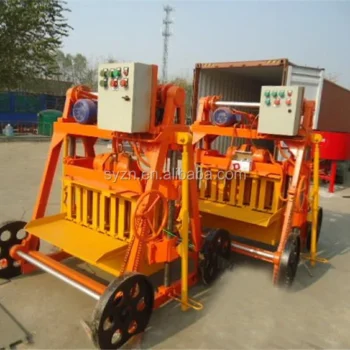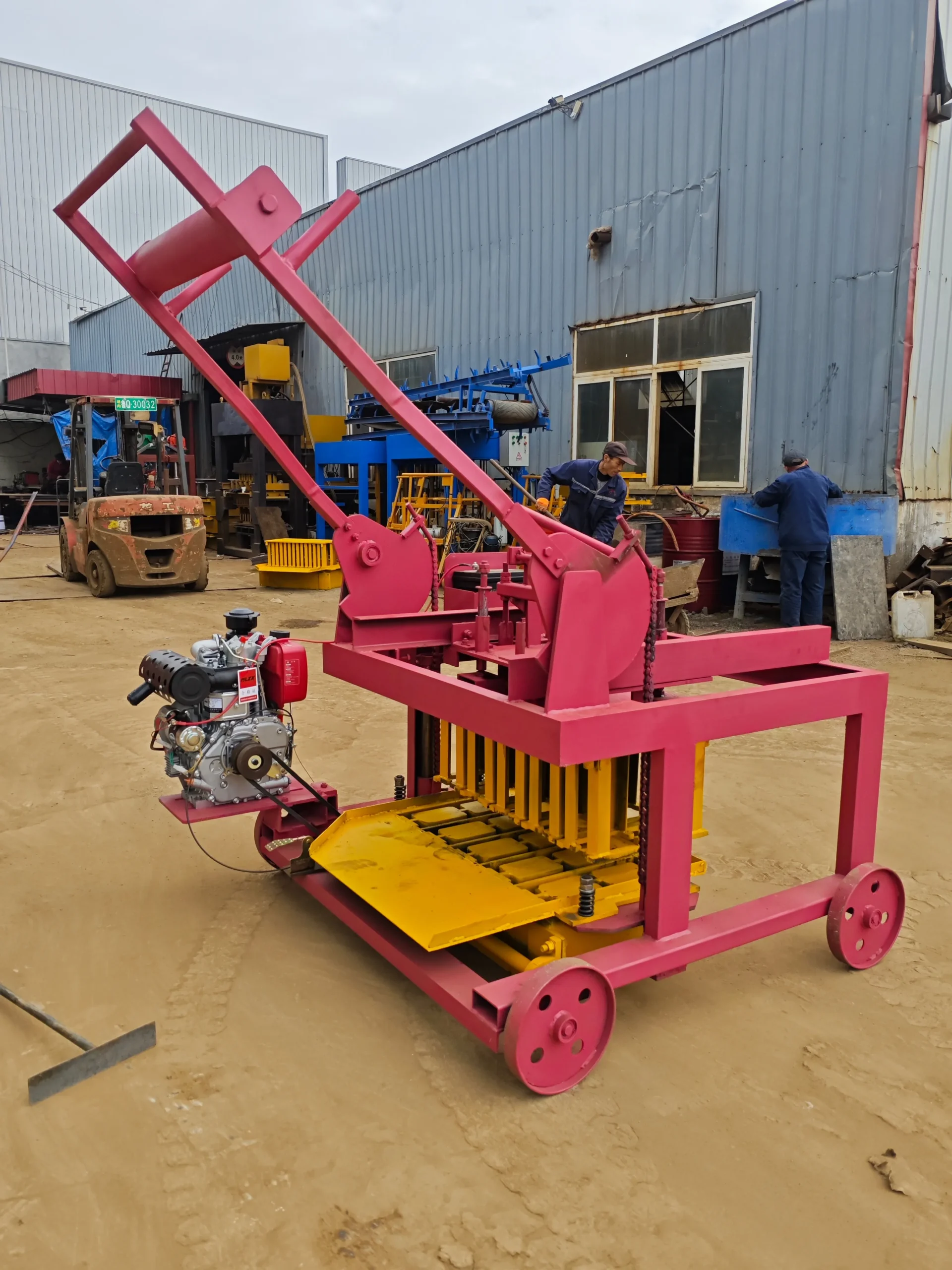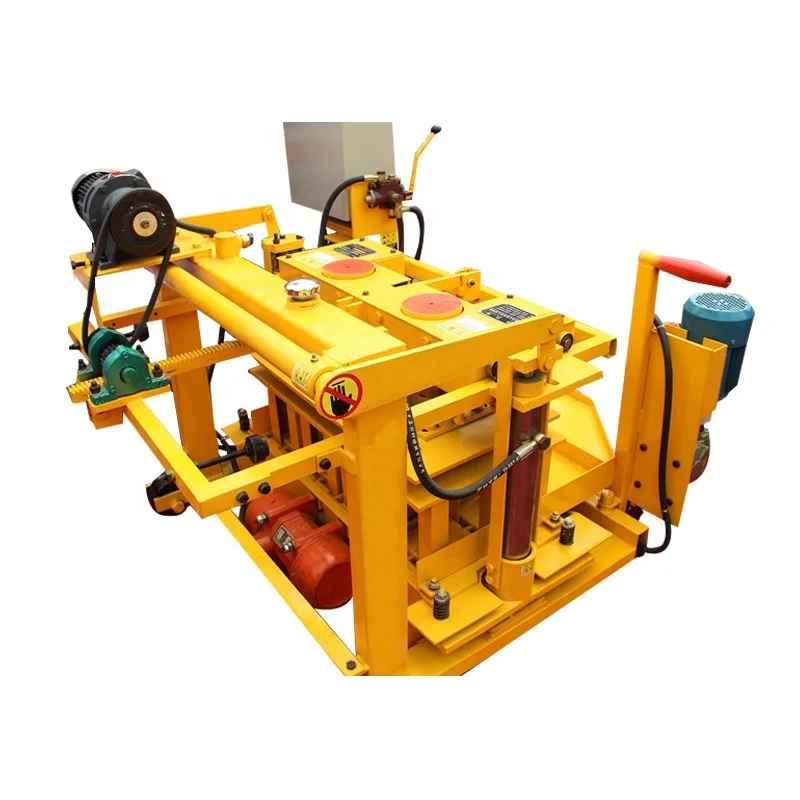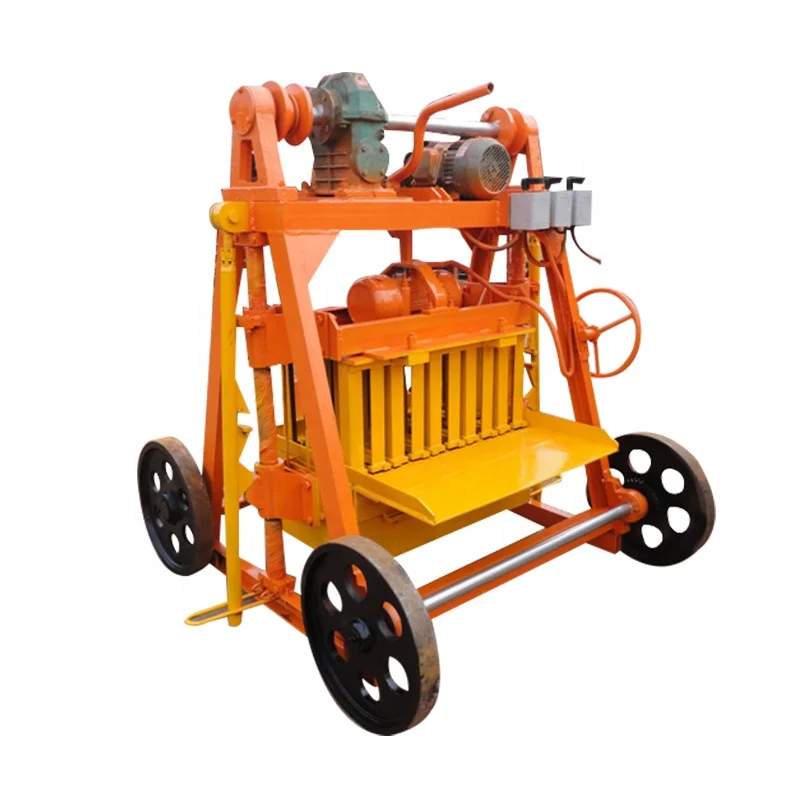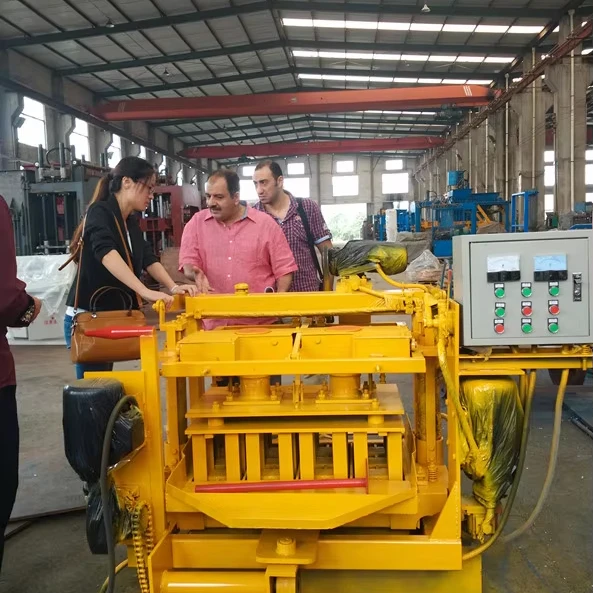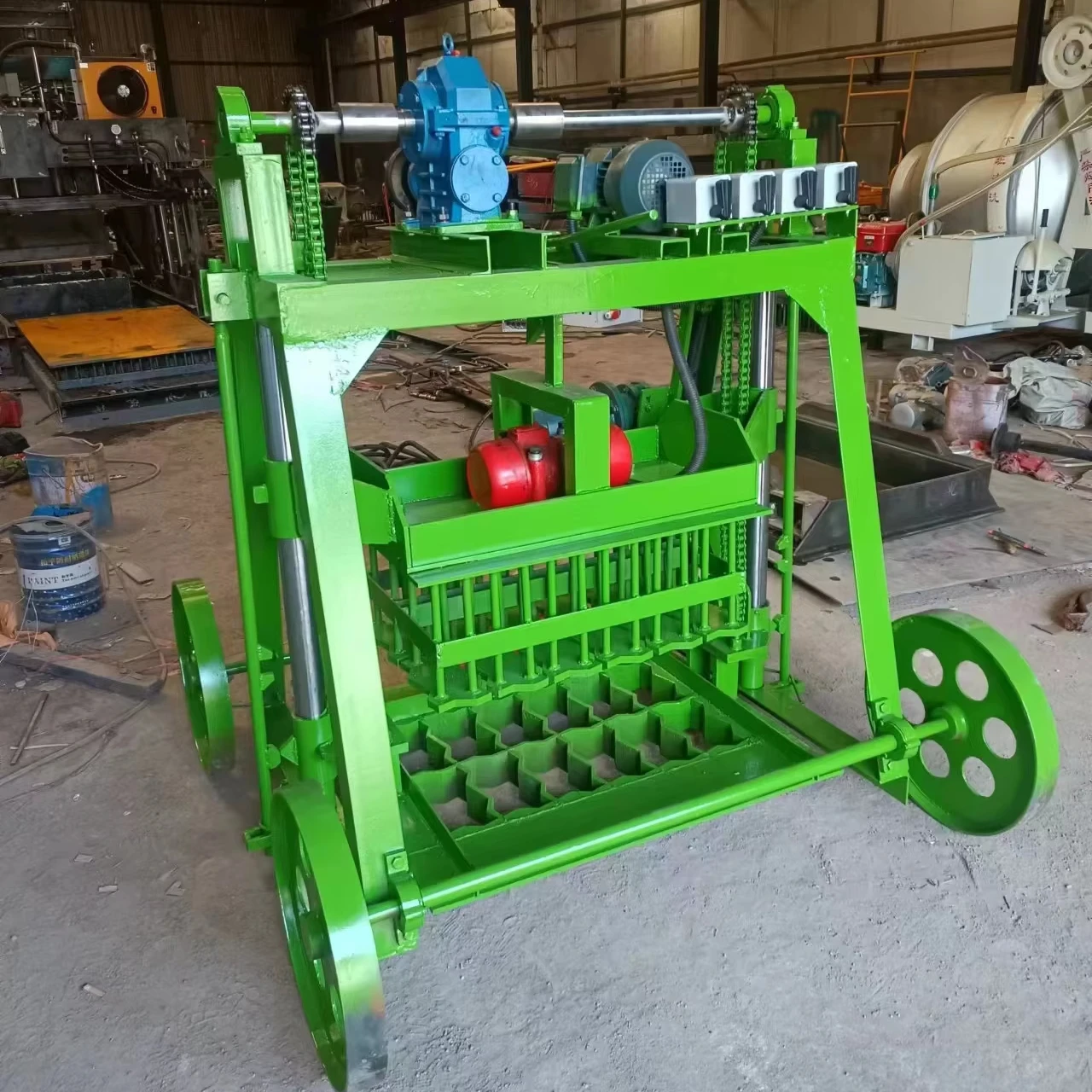
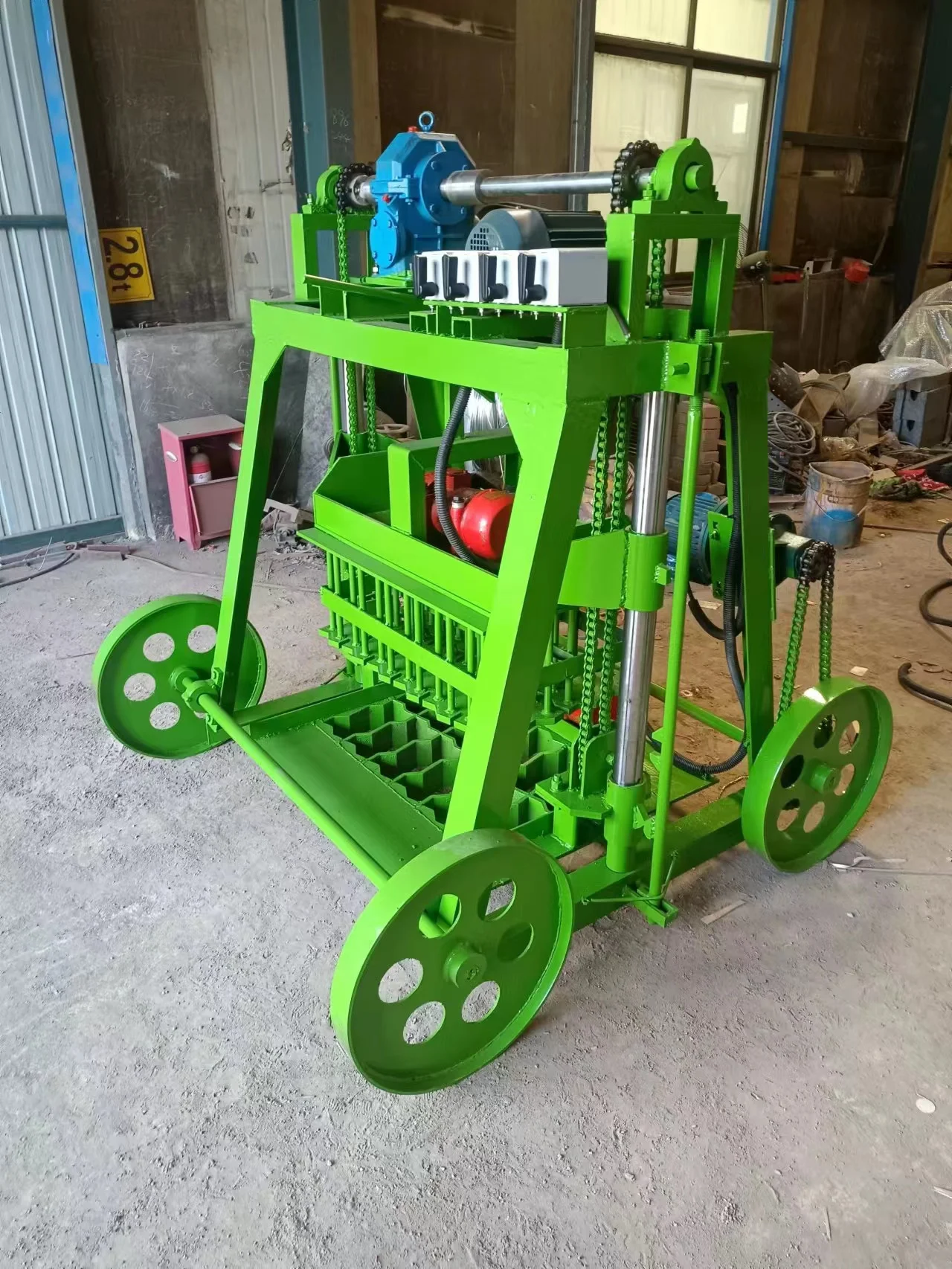
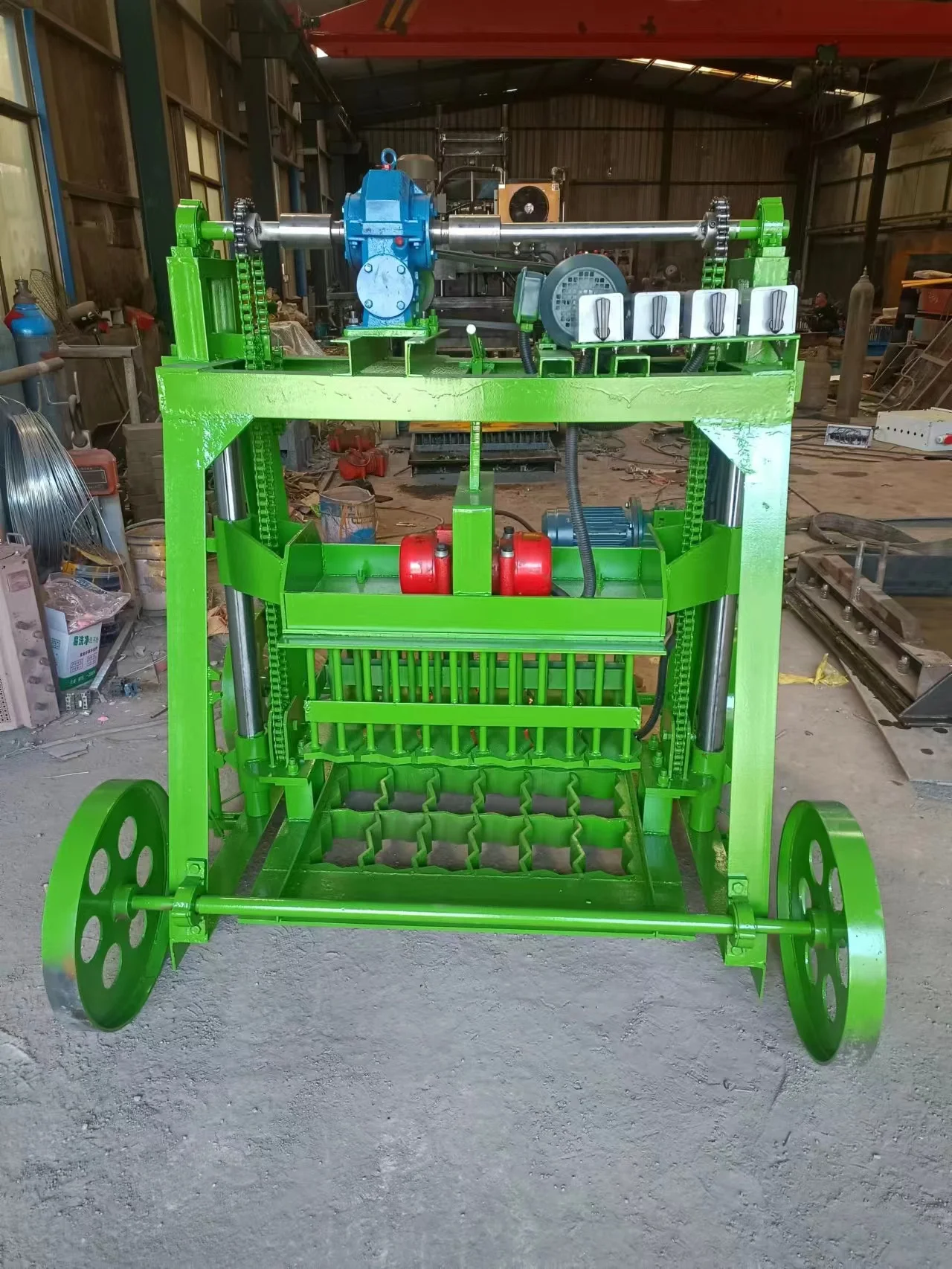
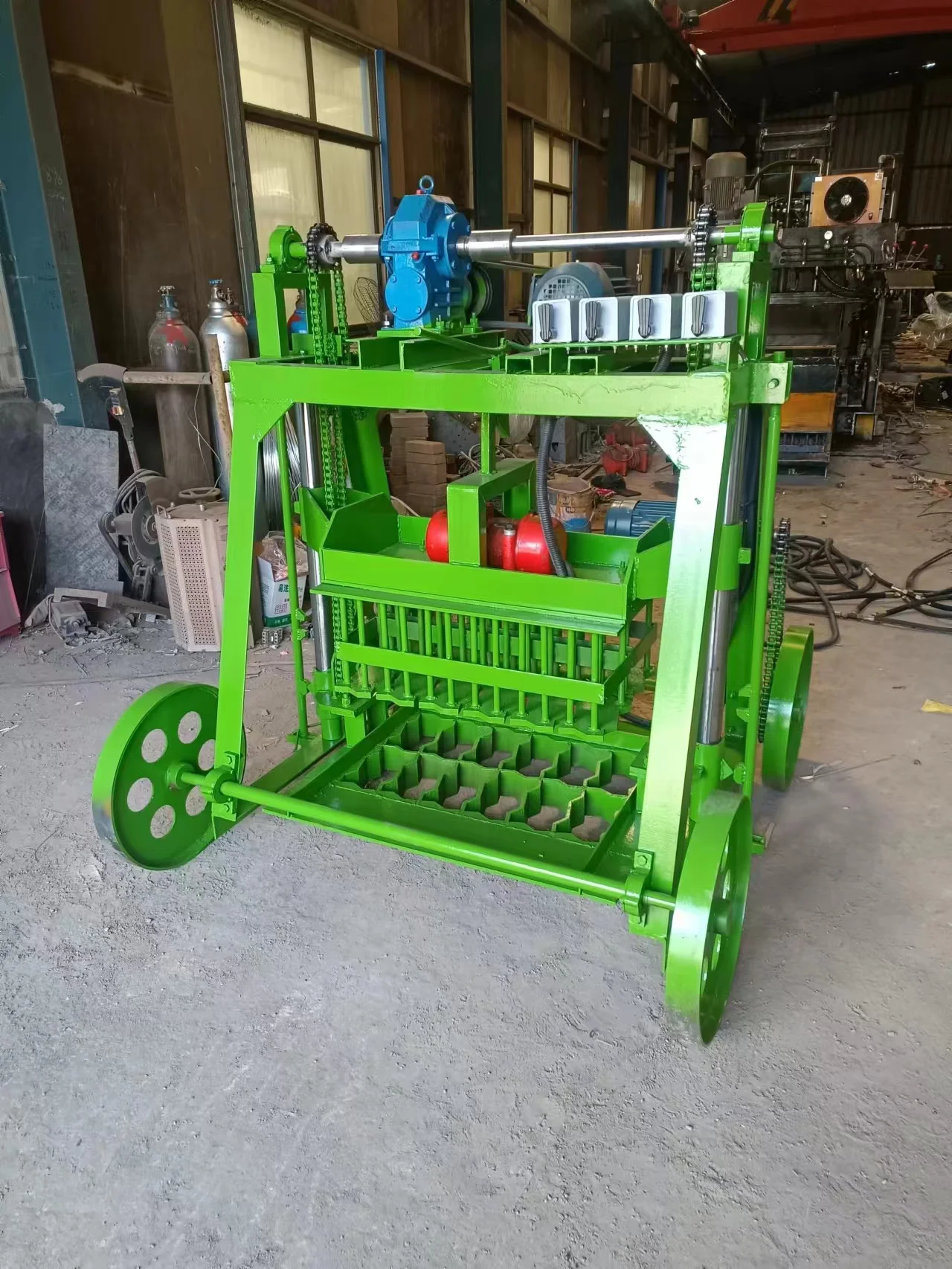

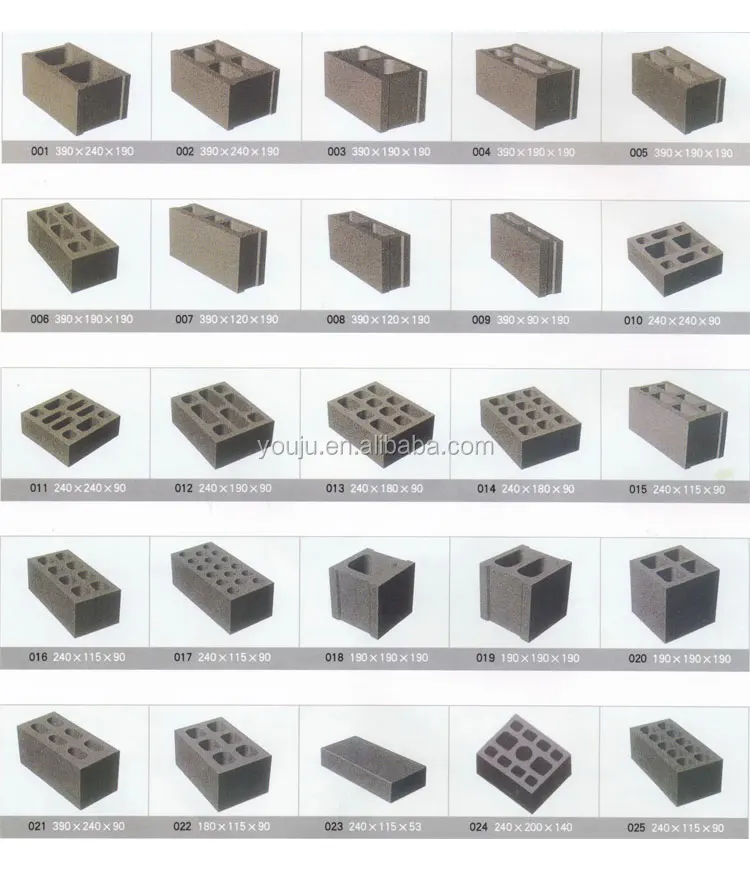
Description
Matched Mould and Output — Every capacity figure here names the hollow block size it was measured on, so site-level planning starts from real daily counts rather than a headline cycle rate.
Technical Specifications
| Parameter | Value |
|---|---|
| Model | QMJ4-45 |
| Product Type | Mobile Egg Laying Block Making Machine |
| Molding Capacity | 4 pcs per mold (based on 400×200×200mm hollow block) |
| Molding Cycle | 40–45 s |
| Daily Output — 400×200×200mm hollow block | 3000 pcs / 8 h shift |
| Daily Output — 400×150×200mm hollow block | 3500 pcs / 8 h shift |
| Daily Output — 400×120×200mm hollow block | 4500 pcs / 8 h shift |
| Vibration Frequency | 2400 r/min |
| Vibration Method | Mold vibration with twice-vibration core |
| Demold Method | Manual |
| Turning Method | Manual |
| Total Power | 6 kW |
| Power Source | Diesel or petrol engine |
| Pallet Requirement | None — egg-laying directly on ground |
| Automation Level | Manual operation |
| Warranty | One year for the whole machine |
| Certification | CE (scope to be verified with manufacturer) |
Application Suitability
| Application | Material or Output |
|---|---|
| On-site hollow block production for housing projects | Crushed stone, river sand, cement — output up to 3000 pcs/day on 400×200×200mm format |
| Remote work sites without grid electricity | Diesel or petrol powered; no pallet inventory needed |
| Small-scale entrepreneurial block plants | Multiple hollow block formats from one machine base |
| Contractor self-supply for masonry walls | Local aggregate matched to site conditions |
What "3000 Blocks a Day" Actually Means on Site
The number only holds when the block format, mix design, and ground condition are all specified together.
Most mobile block machine quotations lead with a single daily capacity figure and leave the block size ambiguous. I have watched contractors in Southeast Asia take delivery, run their first shift, and realise the output on the thicker wall block their market demands is well below what they budgeted for. The QMJ4-45 mobile egg laying block making machine specifications listed above tie each output number to a specific hollow block dimension — 3000 pieces per day on the 400×200×200mm format, rising to 4500 on the narrower 120mm wall. When your project requires a format outside that list, the cycle time and daily count must be recalculated before the machine ships [NEED_CITE: block format and cycle time correlation in mobile egg-laying machines].
How Egg-Laying Changes the Site Logistics
A fixed plant needs pallets, a pallet return system, and a covered curing area sized to hold a full day’s output. The QMJ4-45 removes that entire chain. Blocks are laid directly onto a level concrete floor and left to cure in place. This means your ground preparation becomes the most important setup task — a flat, hard surface free of standing water. On a project site in Cambodia, I spent more time supervising floor levelling than machine assembly, because an uneven surface produces blocks with inconsistent wall thickness and weak corners.
Matching Vibration Force to Your Local Aggregate
The 2400 r/min mold vibration is the core of block density on this machine. But vibration alone does not guarantee strength. The mix design — cement ratio, aggregate gradation, moisture content — must be tuned so the vibration energy compacts the material fully within the 40–45 second cycle. In one commissioning case, local river sand with high silt content absorbed vibration energy and produced hollow blocks that failed the compressive strength test. The mix had to be reworked with washed sand and adjusted water content before the output met the project specification [NEED_CITE: effect of aggregate silt content on concrete block compressive strength].
Reading the Specs That Matter for Daily Operation
The 6 kW total power draw tells you the engine sizing — a small diesel or petrol unit that can run independently of any site electrical infrastructure. This is the defining advantage of the mobile egg laying block making machine configuration: production continues even when the grid is unreliable or absent entirely. The manual demold and manual turning methods mean two operators are the minimum crew. Mould vibration at 2400 r/min, combined with the twice-vibration core, delivers compaction from both the mold wall and the internal shoe, which is what gives the hollow block its structural integrity without hydraulic top pressure. The 4-pc-per-mold layout on the 400×200×200mm format keeps each mold weight manageable for manual handling during format changes.
When the Wrong Format Decision Costs You a Season
Choosing a mobile machine sized only for the smallest block format in your market seems like a safe investment. The problem arrives when the contractor or housing project specifies a thicker wall block for load-bearing walls. You either run the same machine at lower output and miss delivery deadlines, or you bring in a second machine and double your crew costs. Buyers who confirm their full format list — including the largest wall thickness their market sells — before ordering avoid this mismatch [NEED_CITE: common causes of block machine underperformance on construction sites].
Why Buyers Source This Machine Through Our Configuration Process
Block machinery is our single focus, which means the QMJ4-45 is never quoted as a standalone press — it is specified alongside the mould formats your market actually requires and the engine type matched to local fuel availability. We set the configuration against your real mix design and local aggregate, not a catalogue default. Custom moulds are designed to your drawings when standard formats do not cover your product range. Every machine ships with a factory test record that documents actual cycle time on each mould format included in your order. Installation support includes operator training on-site, so the crew understands ground preparation, mix tuning, and mould change procedure before the first production shift.
Documentation & Verification
- Line layout showing ground area needed per day’s egg-laying output
- Capacity calculation sheet stating block format behind each daily figure
- Mould drawing and format list confirming included and optional sizes
- Factory test record with cycle time per mould before dispatch
- Engine specification matched to local diesel or petrol fuel grade
- Operation and maintenance manual in operator language
Installation, Commissioning & Support
- Level concrete floor required; minimum area sized to your chosen daily output on 400×200×200mm format
- 6 kW diesel or petrol engine — no dedicated electrical circuit needed on site
- Machine arrives assembled; two operators can begin production same day
- First-shift commissioning covers mix adjustment to local aggregate and sand source
- Mould change procedure trained on-site with your full format set
- Wear parts list provided with recommended replacement intervals per mould
What to Prepare Before Requesting a Quotation
Share the hollow block dimensions your market buys most — wall thickness, length, and height — along with your target daily output per format. Tell us whether your site has grid power or if engine operation is required. Describe your local aggregate type and cement supply so the mix design can be confirmed before the machine is built.
Frequently Asked Questions
Q: How is the daily capacity figure calculated, and which block format does it assume?
A: Each daily output number is based on an eight-hour shift running the QMJ4-45 at its 40–45 second molding cycle. The 3000-piece figure assumes 400×200×200mm hollow blocks; narrower wall formats yield higher counts because more units fit per mold. We provide a written capacity calculation tied to your specific format before you commit.
Q: Which hollow block sizes can this machine produce, and how long does a mould change take?
A: The QMJ4-45 supports multiple hollow block formats through interchangeable moulds, including 400×200×200mm, 400×150×200mm, and 400×120×200mm. Mould change is manual and involves unbolting the current mold and fitting the replacement. A trained two-person crew typically completes the swap within a single break period once familiar with the procedure.
Q: How do I match vibration force to my local aggregate for consistent block strength?
A: The 2400 r/min mold vibration must work together with a mix design suited to your sand, stone, and cement. High silt content in river sand, for example, dampens compaction. We recommend a trial batch with your actual materials so moisture ratio and cement content can be adjusted before full production begins.
Q: What ground preparation is needed for egg-laying, and how does curing work without pallets?
A: A flat, hard concrete surface is essential. Blocks are laid directly on this floor and left in place for the curing period. The floor area must accommodate one full day’s output with enough spacing for air circulation. No pallets, pallet return conveyors, or rack systems are required.
Q: Can I add more mould formats later, and are custom moulds available?
A: Yes. Additional moulds can be ordered at any time to expand your product range. Custom moulds are manufactured to your drawings when your market requires non-standard dimensions or special block profiles. Each new mould is tested at the factory with cycle time documented before shipment.