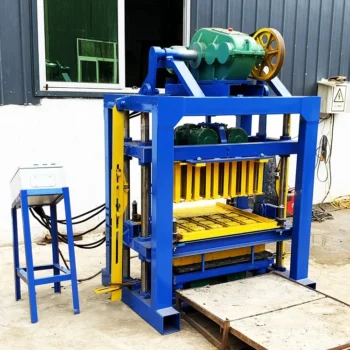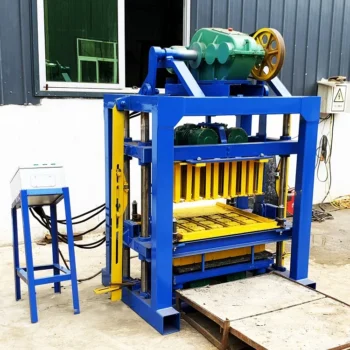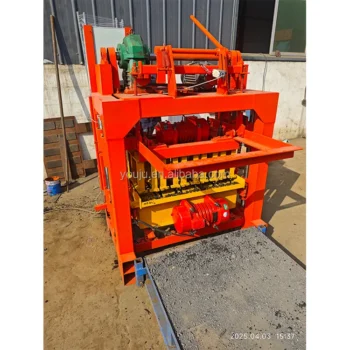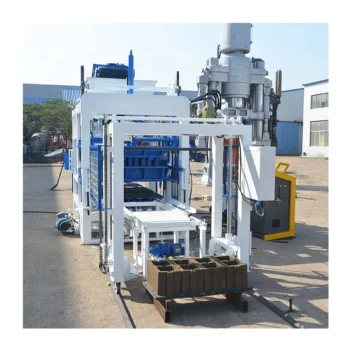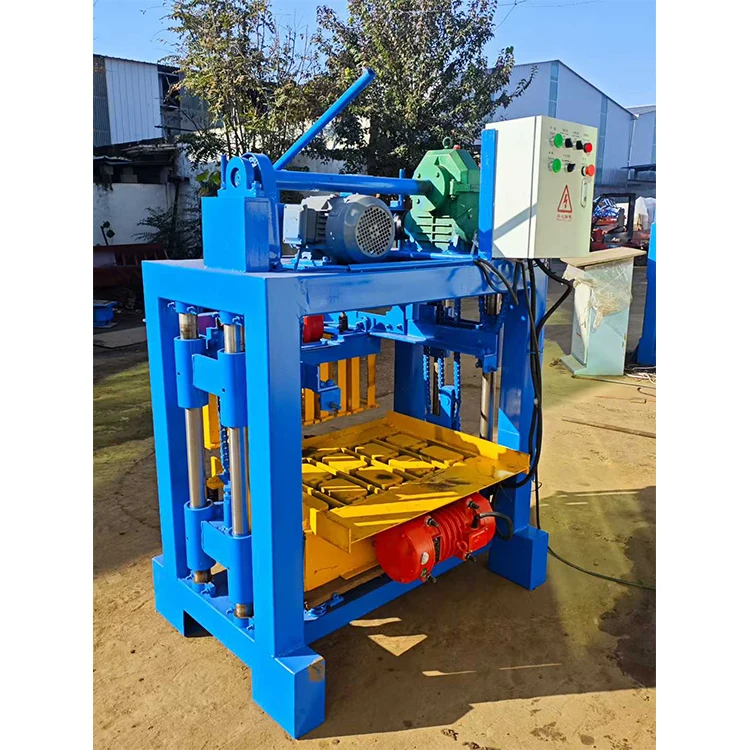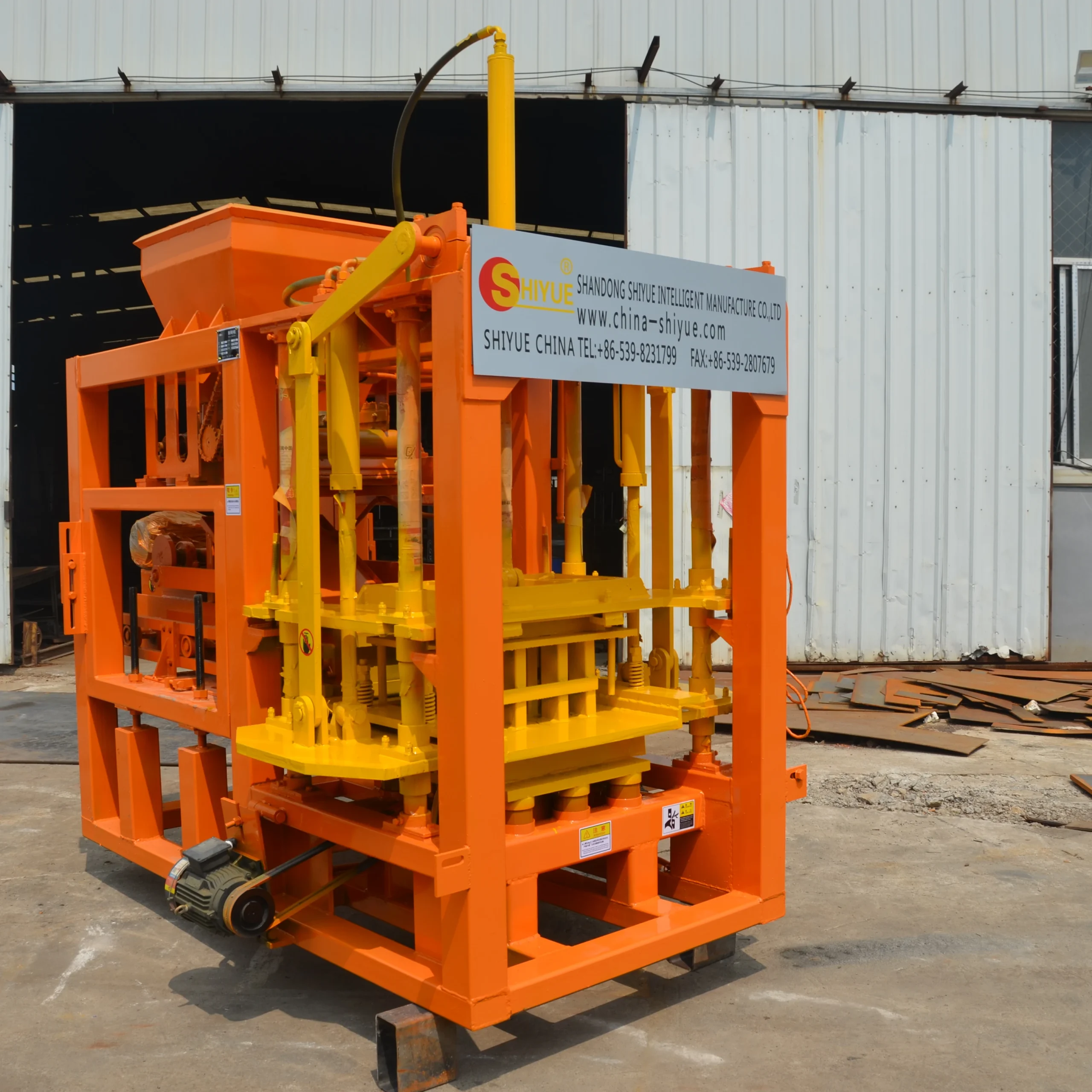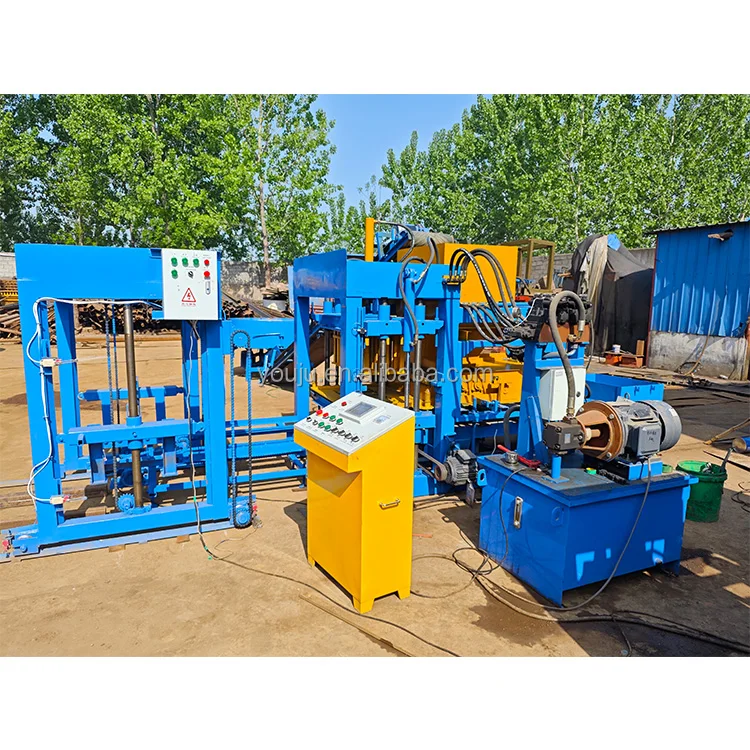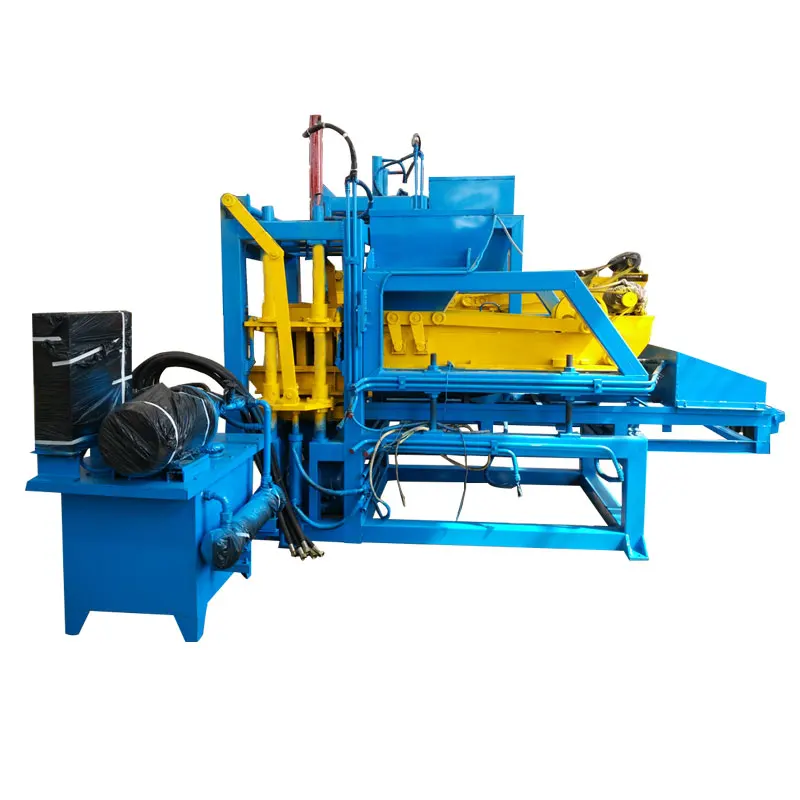

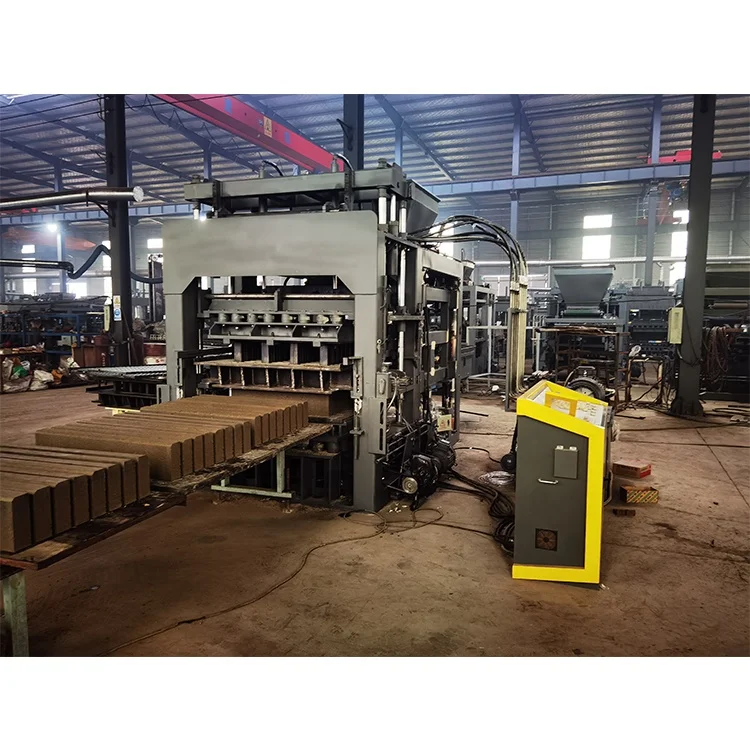
Description
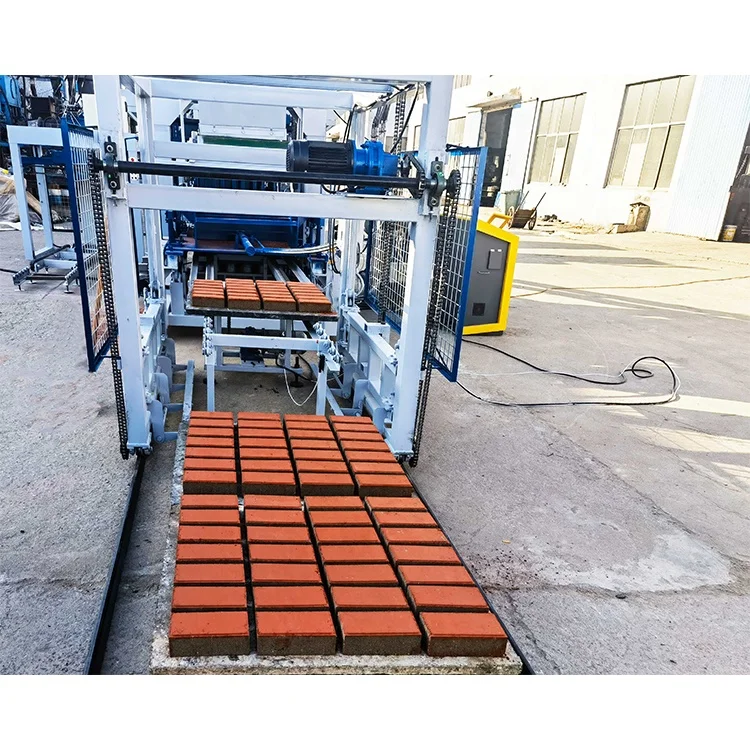
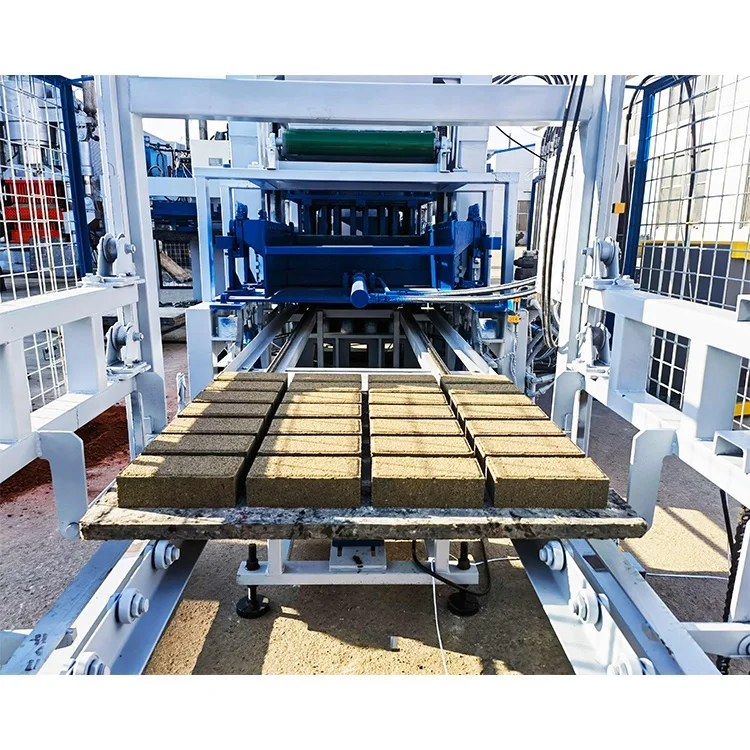
Pallet Size Matched First — the 950 × 900 mm pallet is specified against the buyer’s curing rack spacing and forklift capacity before the QT8-15 automatic block making machine specifications are finalized, preventing handling bottlenecks after arrival.
Technical Specifications
| Parameter | Value |
|---|---|
| Model | QT8-15 |
| Product Type | Automatic Concrete Block Making Machine |
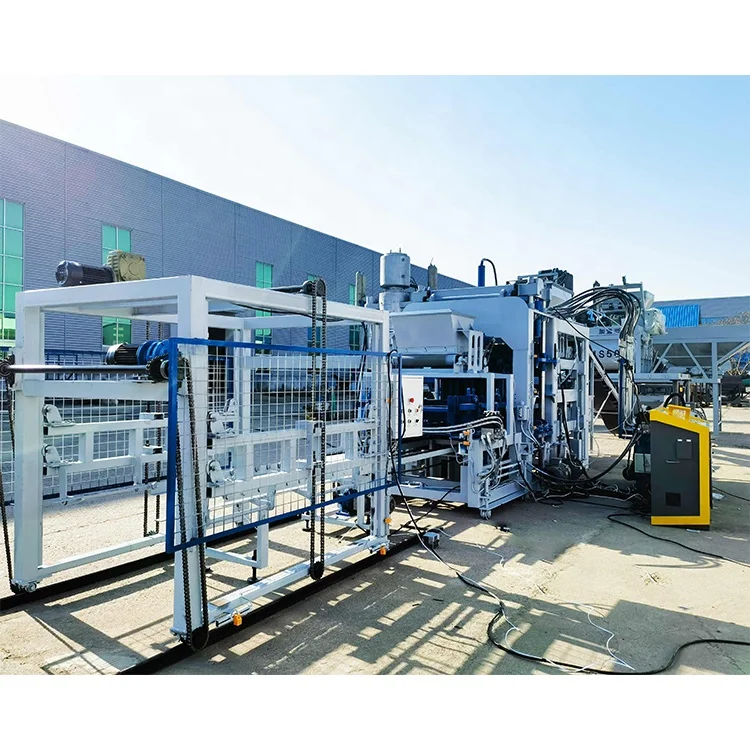
| Overall Dimensions (L×W×H) | 8300 × 1860 × 3000 mm |
| Rated Pressure | 21 MPa |
| Main Vibration Form | Platform Vibration |
| Vibration Frequency | 2800 ~ 4500 r/min |
| Vibration Force | 60 kN |
| Pallet Size | 950 × 900 mm |
| Molding Cycle | 15–25 s (basis not stated in source — confirm block format / material / thickness) |
| Overall Power | 55.5 kW |
| Total Mass | 9 T |
| Demolding Method | Hydraulic |
| General Water Consumption | 12 T/Day |
| Factory Area Required | 600 m² |
| Control System | PLC with human-machine interface (dialogue system) |
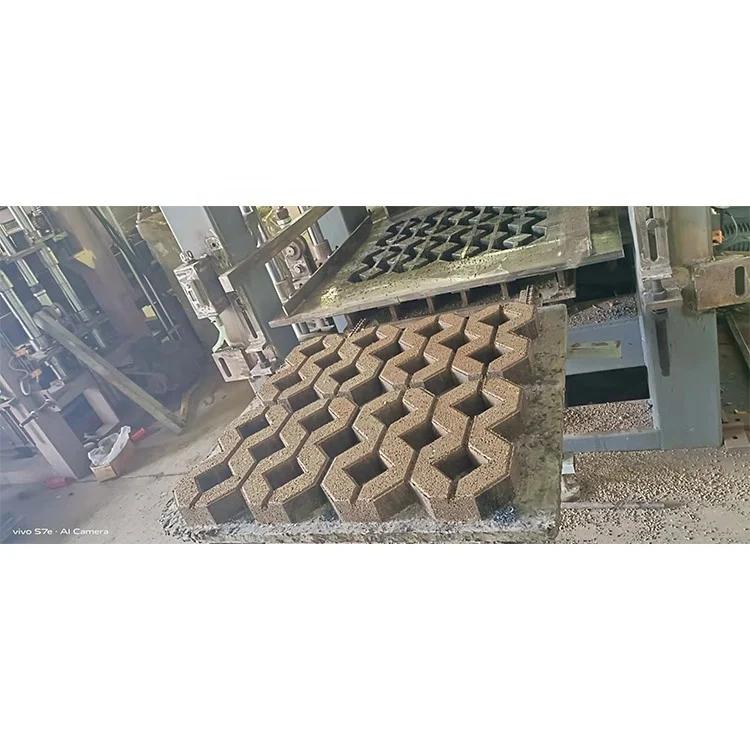
| Applied Products | Concrete blocks, hollow blocks, solid blocks, pavers, interlocking blocks, curbstone, colored pavers |
| Raw Materials | Crushed stone, sand, cement, dust, fly ash, gravel, slag |
| Automation Level | Fully automatic (automatic material feeding and immediate block stacking) |
| Voltage & Frequency | Configurable (to be confirmed before production) |
| PLC Display Language | Configurable (to be confirmed before production) |
Application Suitability
| Application | Material or Output |
|---|---|
| Hollow block production for masonry walls | Crushed stone, sand, cement, fly ash mixes |
| Solid block manufacturing for load-bearing structures | Gravel, cement, slag-based mixes |
| Interlocking paver production for driveways and walkways | Fine aggregate, cement, pigment blends |
| Curbstone and kerb formatting for road infrastructure | Coarse aggregate, cement, high-density compaction |
| Colored paver runs for landscaping projects | Cement, sand, iron oxide pigment additions |
What "15–25 Seconds Cycle Time" Actually Means for Your Block Format
The QT8-15 automatic block making machine specifications list a molding cycle range, but the real output depends entirely on which block format fills the 950 × 900 mm pallet.
A 400 × 200 × 200 mm hollow block fills fewer cavities per pallet than a 200 × 100 × 60 mm paver, so the same cycle window produces vastly different hourly counts. I once saw a buyer in West Africa receive a QT8-15 quoted at a single daily output figure that assumed standard hollow blocks. His actual product mix included thicker interlocking pavers requiring longer vibration holds, and his daily output dropped noticeably below the quoted number. [NEED_CITE: capacity calculation methods for concrete block machines by format] Without a per-format breakdown on the quotation, the buyer carries all the risk of that gap.
Pallet Size and Curing Area Alignment
The 950 × 900 mm pallet defines every downstream decision. Curing rack spacing, forklift fork width, and stacking height all flow from this dimension. If your existing facility was built around a different pallet standard, the QT8-15 automatic block making machine specifications require you to either adapt your curing infrastructure or select a machine sized to your current setup. Confirming this match before order placement avoids costly retrofits after commissioning.
Vibration Tuning Across Block Formats
Platform vibration at 2800–4500 r/min with 60 kN force covers a wide compaction range, but the frequency and hold time must be dialed to the specific block density target. Hollow blocks need shorter, sharper vibration to consolidate thin webs, while solid pavers demand sustained lower-frequency energy to fully compact dense mixes. [NEED_CITE: vibration frequency effects on concrete block density and strength] The PLC dialogue system allows these parameters to be stored per mould, so operators switch recipes rather than guess settings on each changeover.
Reading the Hydraulic and Vibration Partnership
The 21 MPa rated pressure and 60 kN vibration force work together, not independently. Hydraulic pressure sets the static compaction baseline while vibration fluidizes the mix so particles settle into a tighter matrix. For high-slag or fly ash mixes that are less free-flowing than pure crushed stone, the vibration frequency range becomes critical — insufficient frequency leaves voids that reduce block strength below local standards. The total mass of 9 T provides the inertial resistance needed to absorb vibration energy without frame flex, which matters over years of continuous cycling. Water consumption at 12 T/Day reflects typical curing demands for a plant running the full 600 m² factory area, though actual consumption shifts with local climate and block porosity targets.
The Cost of Skipping Mix-Specific Configuration
When vibration force and hydraulic pressure are set to catalogue defaults rather than the buyer’s actual aggregate and cement ratio, blocks leave the press looking acceptable but fail compressive strength tests after curing. [NEED_CITE: concrete block compressive strength testing standards by region] I have seen plants run for weeks before a routine sample test revealed substandard blocks already in the market. The rework cost and reputational damage far exceed the time required to send raw material samples and receive matched settings before the machine ships.
Why Procurement Here Differs
Block machinery is our single production focus, so the QT8-15 is specified as part of a matched system — press, mould, pallet, and handling equipment engineered together rather than assembled from separate vendors. Configuration is set against your actual mix design and local aggregate, not a catalogue default. Mould design covers the formats your market sells, with custom drawings available for non-standard dimensions. The automation level is selectable, allowing a buyer to start with the fully automatic material feeding and stacking configuration and plan upgrades from there. Installation support includes operator training on the PLC dialogue system so your team can manage parameter adjustments independently. [NEED_CITE: CE machinery directive requirements for industrial block making equipment]
Documentation & Verification
- Line layout showing pallet flow from QT8-15 press through curing rack to stacking area
- Capacity calculation sheet stating output per block format, not a single aggregate figure
- Mould drawing pack with dimensional confirmation for each included block format
- Hydraulic and electrical schematics matching the as-built QT8-15 configuration
- Voltage, frequency, and PLC display language confirmation record before production
- Factory test record on your specified block format and pallet before dispatch
Installation, Commissioning & Support
- Foundation pad must support 9 T static mass plus dynamic vibration loads across 8300 mm length
- 55.5 kW total power requires dedicated circuit with confirmed voltage and frequency before energizing
- Machine arrives dismantled for container loading; reassembly sequence covered during commissioning
- PLC dialogue system calibrated on-site with your block format recipes loaded into memory
- Operator training covers mould change procedure, vibration parameter adjustment, and fault diagnosis
- Wear parts list provided with recommended replacement intervals for hydraulic seals and vibration components
What to Include in Your Inquiry
Tell us which block formats your market demands, the daily volume for each, and your local aggregate type. Share your existing curing rack dimensions and forklift specifications so we confirm the 950 × 900 mm pallet works with your facility. State your site voltage, frequency, and preferred PLC display language so these are locked before production begins.
Frequently Asked Questions
Q: How is QT8-15 capacity calculated per block format?
A: The 15–25 s molding cycle applies differently depending on block size and wall thickness. A large hollow block fills fewer cavities per 950 × 900 mm pallet and requires a longer vibration hold, reducing pieces per hour compared to thin pavers. We provide a per-format capacity sheet rather than a single number.
Q: Which mould formats are available and how long does changeover take?
A: Standard moulds cover hollow blocks, solid blocks, interlocking pavers, and curbstones sized to your local market. Custom moulds are produced from your drawings. Changeover time depends on mould weight and clamping type, and we confirm realistic durations before order so you can plan shift schedules.
Q: How should the machine be configured for local aggregate and mix design?
A: Send us samples or lab reports of your crushed stone, sand, and any fly ash or slag you use. We adjust vibration frequency range and hydraulic pressure settings to match your material’s flow characteristics, ensuring block density meets your local compressive strength standard.
Q: What voltage and control language options are confirmed before shipment?
A: Voltage and frequency are configurable and must be confirmed before production to match your site supply. The PLC display language is set to your preference — English, Spanish, French, Arabic, or others — and verified during the factory test so operators can use the dialogue system immediately on arrival.
Q: What pallet size and material is recommended for my curing setup?
A: The 950 × 900 mm pallet must align with your curing rack spacing and forklift fork width. We confirm pallet material — typically bamboo, steel, or composite — based on your climate, block weight, and expected service life before including it in the quotation.