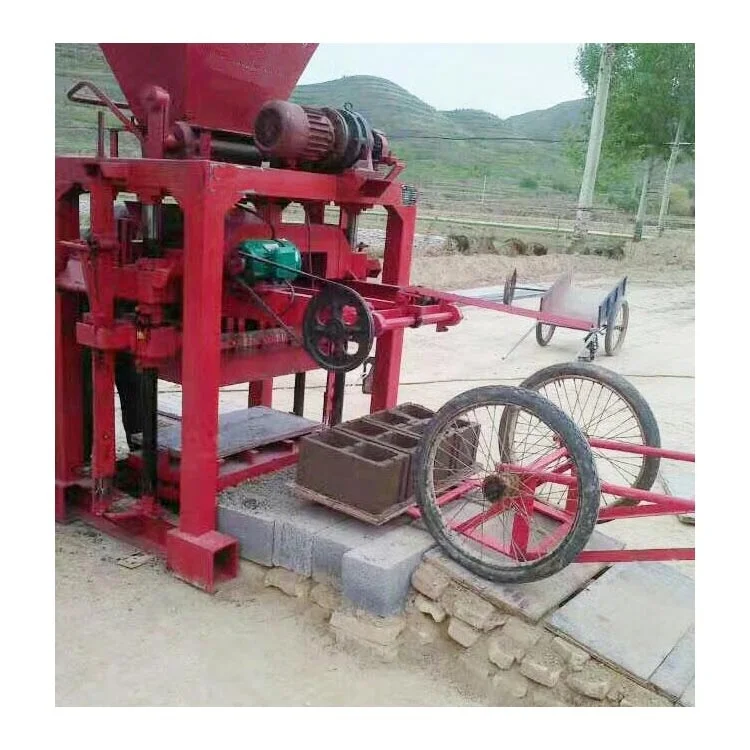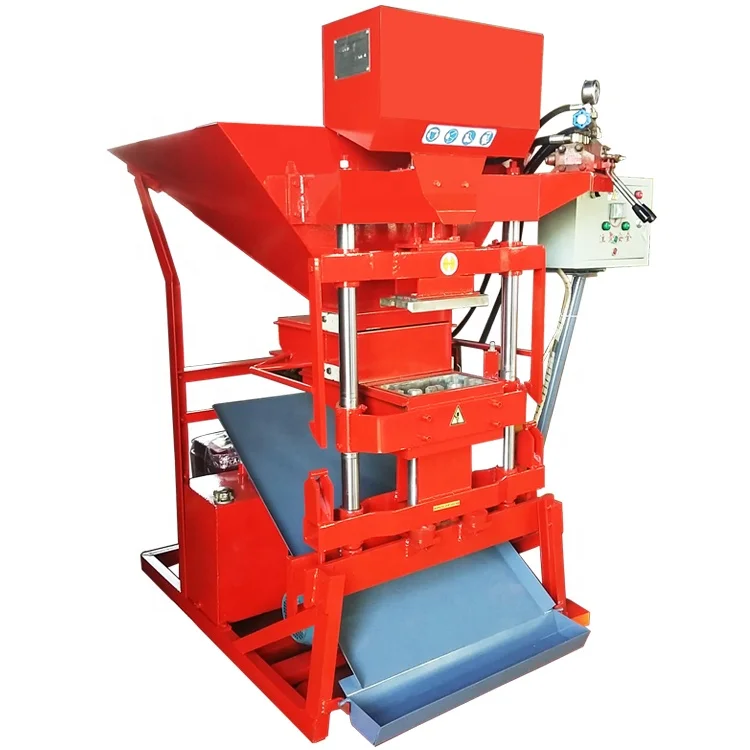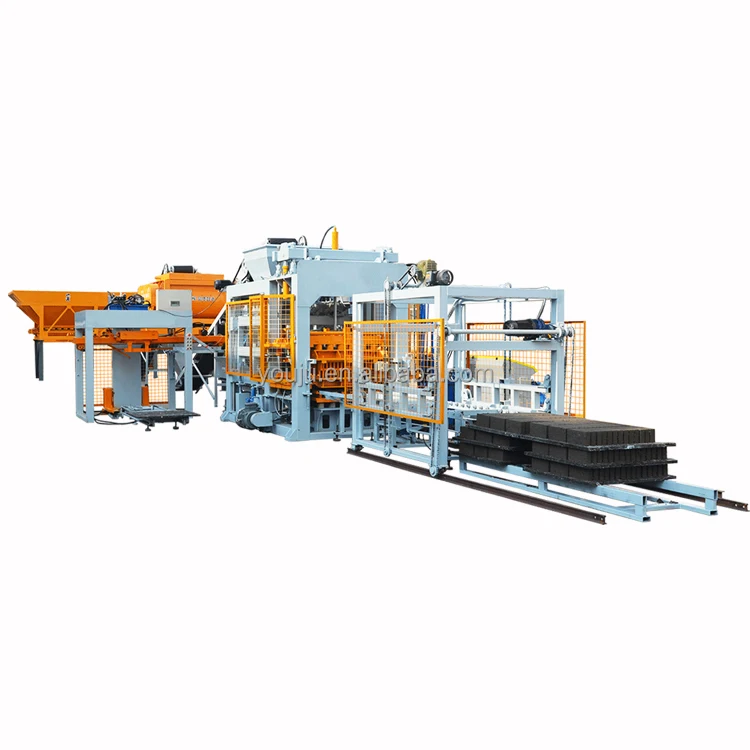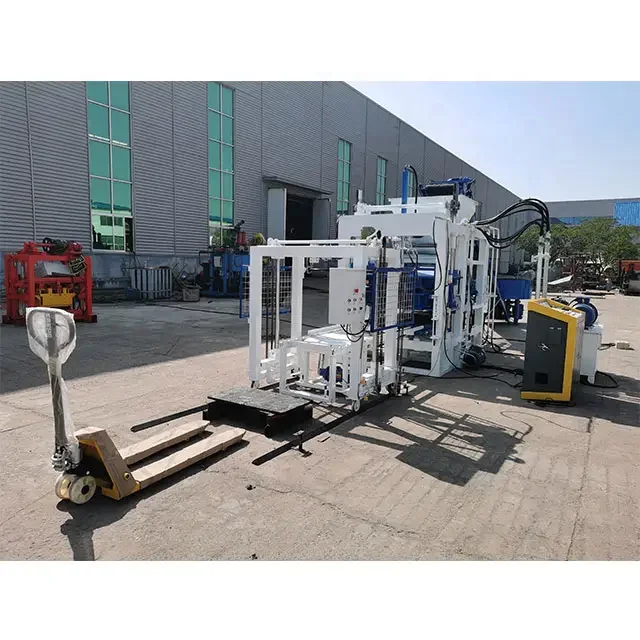
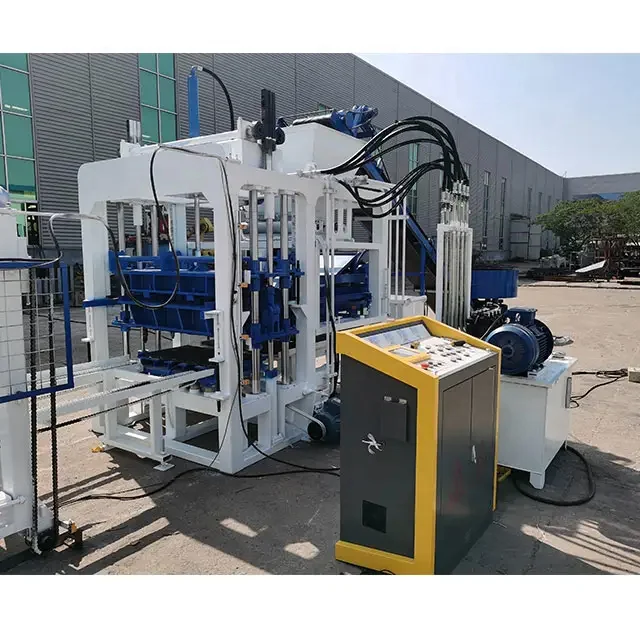
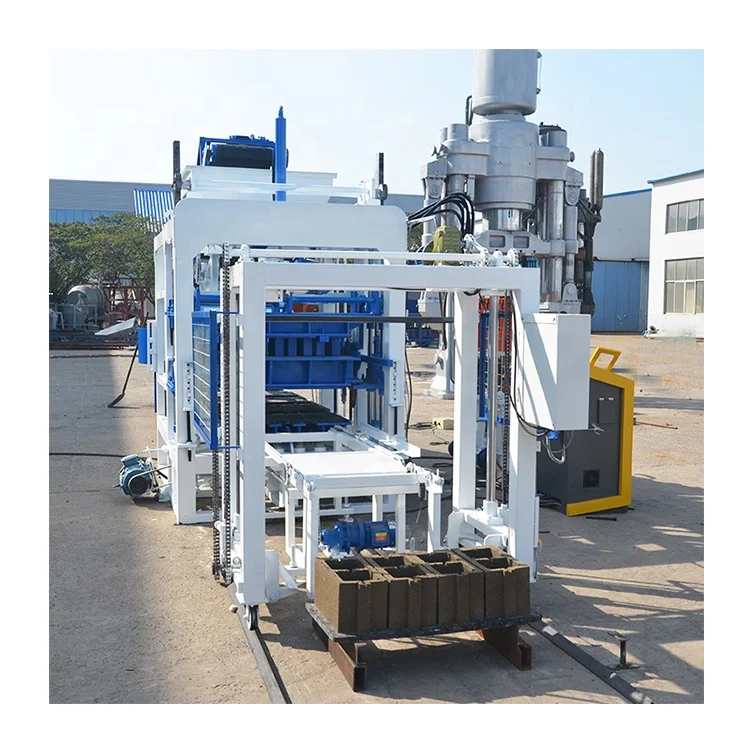
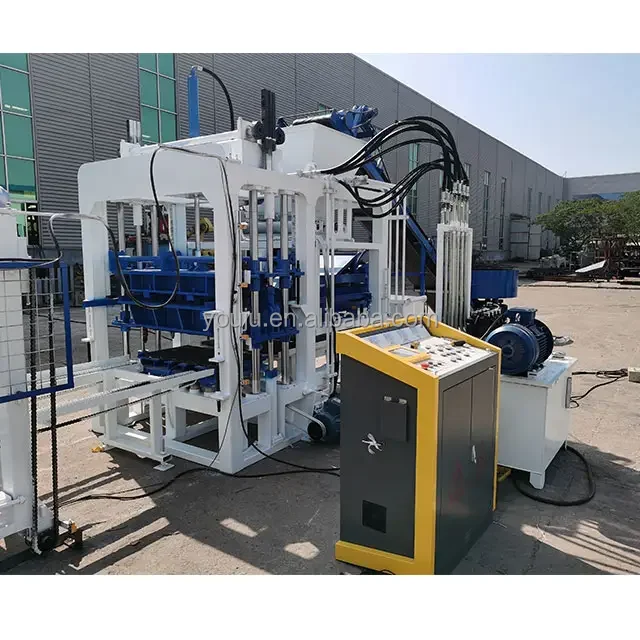
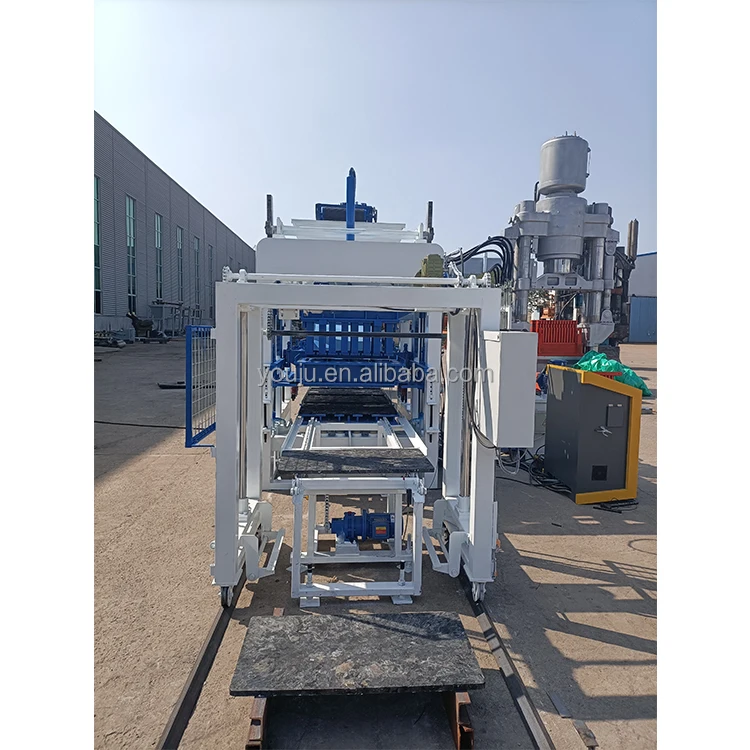
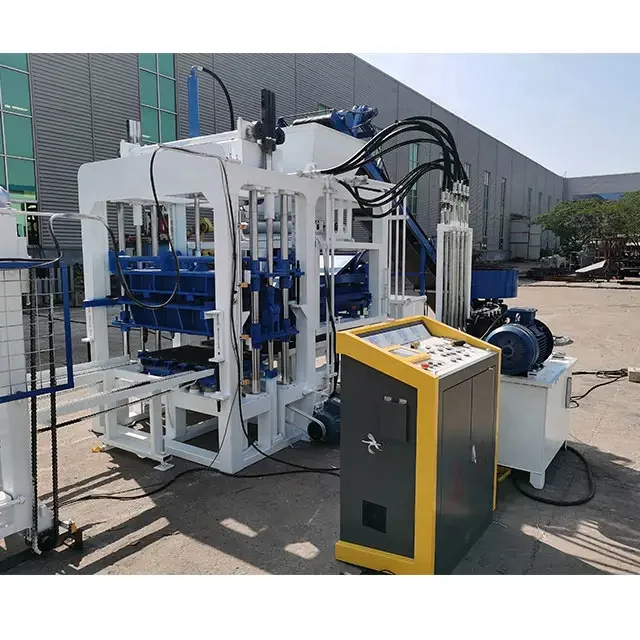
Description
Mould-to-format matching — The QT4-18 cycle time is calculated per block format rather than quoted as a single hourly number that hides the assumption behind it.
Technical Specifications
| Parameter | Value |
|---|---|
| Model | QT4-18 |
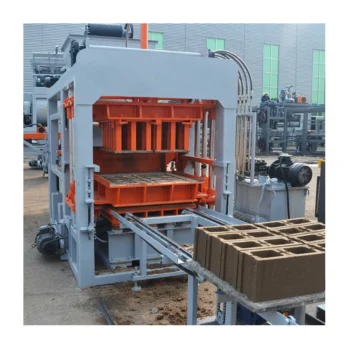
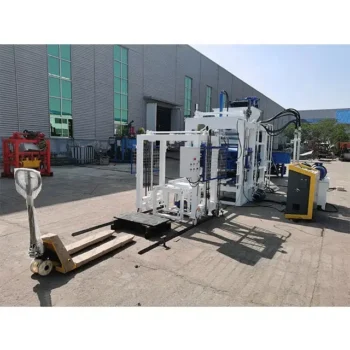
| Product Type | Semi-Automatic Concrete Block Making Machine |
| Overall Dimensions (L×W×H) | 2500×1750×2200mm |
| Rated Pressure | 16MPa |
| Vibration Form | Platform Vibration |
| Pallet Size | 950×550mm |
| Molding Cycle | 18–25s (varies by block format and material density) |
| Overall Power | 27.5kW |
| Control System | PLC with frequency converter |
| Electrical Components | Schneider brand |
| Mould Lifting Mechanism | Double-sided synchronous gears |
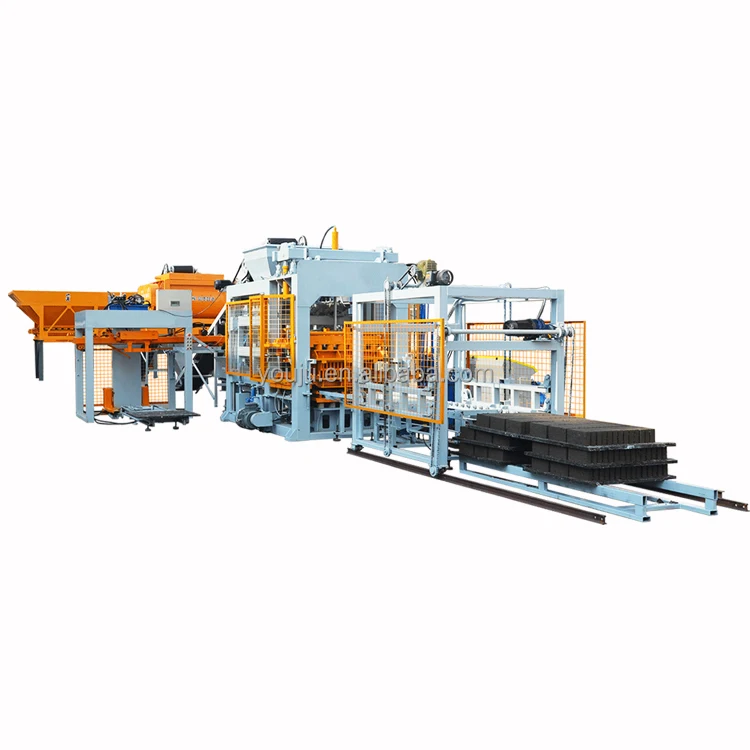
| Material Feeder System | Hopper, feeding box, feeding platform, conveyor system |
| Block Receiver | Frame, conveyor system, idler wheels with motor and reducer |
| Pallet Feeder Drive | Hydraulic cylinder |
| Automation Level | Semi-automatic (manual or machinery convey to curing yard) |
| Supporting Equipment Options | JQ500 concrete pan mixer, 8m/6m belt conveyor, stacker, block clamper, extra molds, trolley, cement silo, batching plant |
| Output Capacity | basis to be confirmed — depends on block format, wall thickness, and aggregate type |
| Vibration Force (kN) | basis to be confirmed |
| Mould Change Time | basis to be confirmed |
| Voltage & Frequency | basis to be confirmed |
| Net Weight | basis to be confirmed |
Application Suitability
| Application | Material or Output |
|---|---|
| Hollow block production for commercial and residential walls | Crushed stone, sand, cement, and water at controlled ratios |
| Solid block production for load-bearing structures | Dense aggregate mixes with cement binder |
| Paving block production for walkways and yards | High-density aggregate blends requiring maximum compaction |
| On-site production for housing and development projects | Locally sourced aggregate tested for compaction response |
| Small-plant or first-time block entrepreneur setup | Standard concrete masonry unit mixes at workshop volume |
What "18–25 Seconds per Cycle" Actually Means for Your Daily Tally
Cycle time shifts depending on which block format sits in the mould, and the QT4-18 semi-automatic block machine specifications only make sense when tied to a specific product.
I have watched buyers compare two quotations side by side, pick the one promising the shorter cycle, then discover on commissioning day that the figure assumed a thin paving block while their market needs thick hollow blocks. The vibration dwell alone adds seconds when the aggregate is heavier or the wall thickness increases. A semi-automatic block machine specifications sheet that lists a single cycle number without naming the block format is not a specification — it is a marketing guess. [NEED_CITE: concrete block molding cycle time variables by format and aggregate density]
Matching Cycle Time to the Block Your Market Actually Buys
The QT4-18 runs a molding cycle between 18 and 25 seconds on platform vibration at 16MPa rated pressure. A standard hollow block with typical wall thickness will sit near the upper end of that range because the vibration must fully consolidate the mix through a deeper cavity. Solid blocks and thinner pavers generally complete faster since the compaction path is shorter. When you request a capacity calculation, ask for it stated per format — hollow, solid, and paver — so you can weight the numbers against your actual product mix.
Pallet Size Decides More Than You Expect
The 950×550mm pallet is the footprint every block leaves the press on, and it must match the curing racks and forklift tines already in your yard. A pallet that is too wide for your existing rack slots means rebuilding the curing area before the first block is produced. We confirm pallet dimensions against your site layout before the order is finalized, not after the machine arrives. [NEED_CITE: pallet sizing for concrete block curing area and forklift compatibility]
Reading the Core Specs Beyond the Brochure Number
The 16MPa rated pressure and platform vibration work as a pair: pressure compacts the mix from above while vibration settles aggregate particles from below. If the vibration force is too low for a dense local aggregate, the block exits the press under-consolidated regardless of how much hydraulic pressure is applied. The PLC with frequency converter lets the operator adjust vibration duration and feeder speed per format, which matters when switching between a lightweight hollow block and a dense paver on the same shift. Double-sided synchronous gears lift the mould evenly, reducing the risk of dragging a freshly pressed block edge during demoulding. Schneider electrical components are specified because replacement contactors and relays are available in most industrial markets, shortening downtime when a part fails.
The Hidden Cost of Skipping the Aggregate Conversation
A machine tuned for river sand and standard gravel will produce weak blocks if your local supply is volcanic pumice, recycled demolition aggregate, or high-clay sand. The vibration amplitude and press dwell that work for one mix will leave air pockets in another. I once saw a semi-automatic press shipped to a region with lightweight volcanic aggregate; the buyer followed the default settings and an entire curing yard of blocks crumbled under handling. Every batch of local material deserves a test run before the machine leaves the factory floor. [NEED_CITE: aggregate type influence on concrete block compaction and strength]
Why Sizing Happens Here Before Shipping Leaves
Block machinery is the single focus of this operation, so the QT4-18 press, mould, pallet, and handling equipment are specified as one matched set rather than assembled from unrelated suppliers. Each configuration is set against your actual mix design and target block format, not pulled from a catalogue default. Mould design covers the formats your regional market demands, including custom drawings when standard shapes do not fit. The automation level is selectable — you can begin with manual pallet conveyance and add a stacker or block clamper later without replacing the press. Installation support includes operator training so the crew understands mould change procedure and daily maintenance before the first production week ends.
Documentation & Verification
- Line layout with capacity calculation stating the block format assumed for each output figure
- Mould drawing and format list confirming which shapes the 950×550mm pallet will produce
- Voltage, frequency, and PLC display language confirmed in writing before production begins
- Hydraulic and electrical schematic matched to the 27.5kW power specification
- Factory test record run on your specified block format before dispatch
- Wear parts and mould list with part numbers for first reorder planning
Installation, Commissioning & Support
- Foundation pad sized to the 2500×1750mm footprint with anchor bolt template provided before arrival
- Dedicated electrical circuit rated for the 27.5kW total draw, voltage and frequency confirmed pre-shipment
- Machine arrives with hopper and feeder platform detached for container loading, reassembled on-site with alignment checks
- First-run commissioning includes mould alignment verification on the double-sided synchronous gear lift system
- Operator training covers PLC parameter adjustment per block format and Schneider component replacement procedure
- Wear parts list supplied at handover so hydraulic seals and mould liners can be reordered before stock runs out
Before You Request a Quote
Send the exact block format your market sells — including outer dimensions, wall thickness, and whether the face is smooth or textured. Provide a sample or description of the aggregate you source locally so the vibration and pressure settings can be matched before the QT4-18 leaves the factory. Confirm the voltage and frequency at your site, the language you need on the PLC display, and whether you already have curing racks and a forklift so the 950×550mm pallet specification can be cross-checked.
Frequently Asked Questions
Q: How is QT4-18 daily output calculated per block format and what cycle time applies to each?
A: The 18–25 second molding cycle shifts depending on block format. Hollow blocks with deeper cavities require longer vibration dwell, pushing toward the upper range. Solid blocks and thinner pavers compact faster. We provide a written capacity calculation that states the assumed format, cycle time, and shifts per day so you can project your own daily number rather than relying on a single unqualified figure.
Q: Which pallet size and material should I specify for my curing area?
A: The standard pallet for this machine is 950×550mm. Before the order is confirmed, we check this dimension against your existing curing rack slots and forklift tine spacing. Pallet material — timber, bamboo, or composite — is selected based on your climate and expected handling cycles so the pallets survive repeated wet-to-dry transitions without warping.
Q: How long does a mould change take on the QT4-18 and what tools are required?
A: The double-sided synchronous gear system lifts the mould frame evenly, which reduces alignment time compared to single-side lift designs. Standard hand tools are sufficient for the swap. Exact changeover time depends on operator familiarity, so we include a supervised mould change during the operator training session at commissioning to establish a realistic baseline for your crew.
Q: How is the machine configured to my local aggregate rather than a catalogue default?
A: We request a sample or detailed description of your aggregate — particle size distribution, density, and moisture behavior. The PLC vibration duration and feeder speed are then set to match that material profile. If your aggregate is lightweight or unusually abrasive, the rated pressure and vibration amplitude are adjusted accordingly before the factory test.
Q: What voltage, frequency, and PLC language will be confirmed before the machine ships?
A: Voltage and frequency are confirmed in writing during the quotation stage to match your site supply. The PLC display language is agreed at the same time so the Schneider-based control panel arrives with labels and menus your operators can read. Any mismatch discovered after arrival delays commissioning, so this step is never left to assumption.