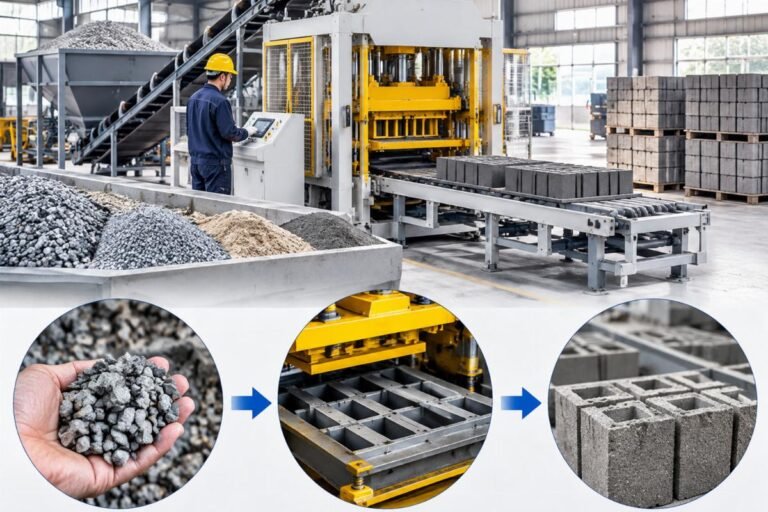
QT10-15 Block Machine for Refugee Housing: Factory Supplier
Higher automation does not guarantee higher uptime in humanitarian zones.
Deploying a QT10-15 block machine for refugee housing requires more than just high-volume output specifications; it demands rigorous adaptation to unstable power grids, strict adherence to localized customs documentation such as Arabic-notarized CE certificates, and simplified operator training protocols to ensure immediate project viability in remote camps.
I still remember the humidity in the Amman port warehouse, watching a shipping container sit idle while a critical shelter project stalled just kilometers away. The machine inside was technically perfect, calibrated to produce thousands of blocks daily, but it was trapped by a paperwork discrepancy that no technical manual had warned us about. That delay wasn’t just an administrative hiccup; it meant families waited longer for walls that could protect them from the desert night. Since then, my approach to selecting a QT10-15 block machine for refugee housing has shifted from focusing solely on cycle times to evaluating the entire logistical and operational ecosystem surrounding the equipment. [NEED_CITE: common causes of customs delays for industrial machinery in MENA regions]
The gap between brochure performance and field reality is where most humanitarian construction projects fail. Buyers often assume that a fully automatic line is the best solution for rapid deployment, yet in many emergency contexts, the complexity of advanced PLC systems becomes a liability when skilled technicians are scarce and power quality is poor. This guide breaks down the critical technical and logistical adaptations necessary to turn a standard concrete block production line into a reliable asset for emergency shelter production.
Why Standard Automation Fails in Remote Camps
Robustness often outweighs sophistication in off-grid or weak-grid environments.
In a typical factory setting, a QT10-15 block machine for refugee housing operates within a stable electrical environment with consistent voltage and frequency. However, refugee camps and remote infrastructure sites frequently rely on diesel generators or fluctuating local grids. I have seen standard programmable logic controllers fail repeatedly because they could not handle the harmonic distortion and voltage spikes common in these settings. The solution is not to downgrade the machine, but to harden its interface with the power source.
Integrating industrial-grade voltage stabilizers and ensuring the hydraulic system has a wide tolerance range for pressure fluctuations is essential. Without these adaptations, the sensitive sensors that automate the feeding and pressing cycles may trigger false errors, halting production entirely. In one instance, a project in a remote area experienced daily stoppages because the generator’s output dipped slightly during peak load. By adjusting the hydraulic relief valves and adding a buffer capacitor bank to the control panel, we stabilized the operation without needing a larger, more expensive generator. [NEED_CITE: impact of power quality on PLC-based industrial machinery]
Furthermore, the environmental conditions in many target regions for humanitarian aid—such as the Middle East and North Africa—present unique challenges. Dust infiltration can short-circuit electronic components and clog pneumatic valves. A standard QT10-15 block machine for refugee housing must be equipped with enhanced sealing on all electrical cabinets and air filters rated for high-particulate environments. This is not an optional upgrade; it is a necessity for maintaining uptime in dusty, arid climates where shelter needs are most acute.
Navigating Customs Compliance in MENA Regions
Missing localized documentation costs more than the freight itself.
The most expensive component of importing heavy machinery is often not the purchase price or shipping fees, but the demurrage charges incurred at the port due to clearance delays. As I learned in Jordan, the absence of an Arabic-notarized CE certificate can halt the release of goods for over a week. For a QT10-15 block machine for refugee housing, this delay translates directly into increased project costs and delayed shelter availability. Customs authorities in MENA countries strictly enforce documentation requirements, and standard English-only certificates are frequently rejected.
To avoid this pitfall, buyers must insist on pre-shipment document audits that include certified translations of all compliance certificates, bills of lading, and commercial invoices. The CE mark must be accompanied by a notarized Arabic translation that matches the specific model number and serial details of the machine. This level of detail ensures that customs brokers can process the clearance without requesting additional clarifications, which often take days to resolve. [NEED_CITE: import documentation requirements for industrial equipment in Jordan and Saudi Arabia]
Additionally, understanding the specific Harmonized System (HS) codes for concrete block making machinery in the destination country is crucial. Misclassification can lead to unexpected duties or further inspections. Working with a local clearing agent who has experience handling industrial equipment can prevent these issues. They can verify that the QT10-15 block machine for refugee housing is classified correctly and that all necessary permits for electrical and mechanical safety are in place before the vessel arrives. This proactive approach minimizes the risk of costly delays and ensures that the equipment reaches the site ready for installation.
Technical Adaptations for Field Durability
Desert conditions require more than just paint; they demand sealed integrity.
Operating a QT10-15 block machine for refugee housing in harsh environments requires specific technical modifications that go beyond standard factory configurations. The intense heat and fine dust prevalent in many humanitarian crisis zones can degrade mechanical components rapidly if not properly protected. Hydraulic hoses, for example, must be rated for high temperatures to prevent bursting under stress, and electrical connections should be sealed with industrial-grade connectors to resist moisture and dust ingress.
One critical adaptation is the modification of the mixing system. In areas where water quality is poor or inconsistent, adding a filtration system to the water supply line prevents sediment from damaging the mixer blades and pumps. Similarly, the aggregate feeding system should be designed to handle varied raw material qualities, which is common when sourcing materials locally in emergency situations. A robust QT10-15 block machine for refugee housing will feature reinforced wear plates in high-abrasion areas and easy-access maintenance points to facilitate quick repairs with basic tools.
Another important consideration is the mold design. For refugee housing, speed and simplicity are key. Using standardized mold sizes that align with common interlocking brick patterns can simplify the construction process for unskilled laborers. These molds should be made from high-strength steel with specialized coatings to reduce sticking and wear, ensuring consistent block quality even after thousands of cycles. This attention to detail in the tooling phase significantly reduces downtime and maintenance costs during the project lifecycle. [NEED_CITE: durability standards for concrete molding equipment in abrasive environments]
From Container to Production: The Turnkey Timeline
Training unskilled labor is part of the machine’s specification.
The success of a QT10-15 block machine for refugee housing project depends heavily on how quickly the local workforce can operate it effectively. In many cases, the operators are refugees or local volunteers with no prior experience in industrial machinery. Therefore, the supplier must provide more than just a manual; they must offer a structured, hands-on training program that simplifies complex operations into manageable tasks. A realistic timeline for deployment includes not only installation and commissioning but also an intensive training period of several days to ensure basic operational competence.
The human-machine interface (HMI) should be intuitive, using visual icons and simple prompts rather than complex text-based menus. This reduces the learning curve and minimizes the risk of operational errors. During the training phase, focus should be placed on daily maintenance routines, such as lubrication and cleaning, which are critical for preventing breakdowns. By empowering local operators with these skills, the project becomes more sustainable and less dependent on external technical support. [NEED_CITE: best practices for vocational training in humanitarian construction projects]
Moreover, the installation process itself should be streamlined for rapid deployment. Modular designs that allow for quick assembly with minimal heavy lifting equipment are ideal for remote sites. Suppliers who offer turnkey solutions, including on-site installation and operator training as a standard package, significantly mitigate the risks associated with deploying complex machinery in challenging environments. This holistic approach ensures that the QT10-15 block machine for refugee housing begins producing viable shelter components within days of arrival, rather than weeks.
Conclusion
Reliability in humanitarian aid is defined by logistical foresight, not just mechanical output.
Selecting a QT10-15 block machine for refugee housing is a strategic decision that impacts the speed and effectiveness of shelter delivery. By prioritizing power stability adaptations, ensuring rigorous customs compliance with localized documentation, and investing in comprehensive operator training, organizations can avoid common pitfalls that delay critical projects. The true value of this equipment lies not in its maximum theoretical capacity, but in its consistent, trouble-free performance in the field.